



Church Pulpit Stand
These church pulpit stand pieces bring a robust ecclesiastical presence into a room, offering a commanding focal point for reading or display.
Church Pulpit Stand
A church pulpit stand typically takes the form of a lectern, reading stand, or podium, built to support heavy books or notes at a raised height. When you search for this phrase, you are looking at sturdy architectural furniture designed for public speaking and liturgical reading.
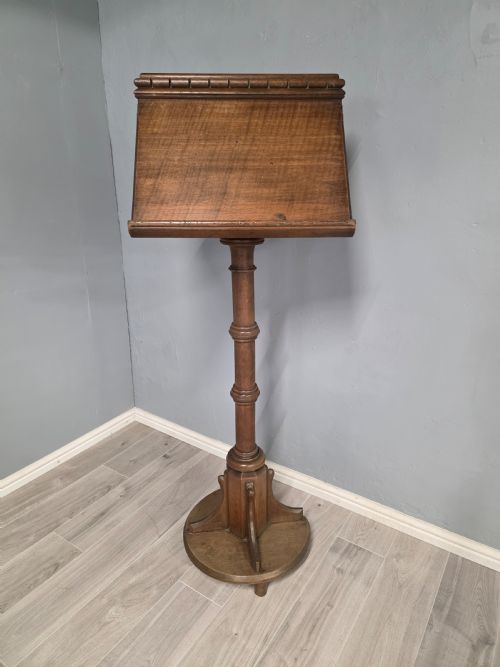
The pieces appearing on this page span the nineteenth century into the twentieth century, taking in Victorian and Edwardian decades. You will frequently encounter heavy timber constructions rooted in the Gothic Revival style, alongside occasional brass examples and later utility forms.
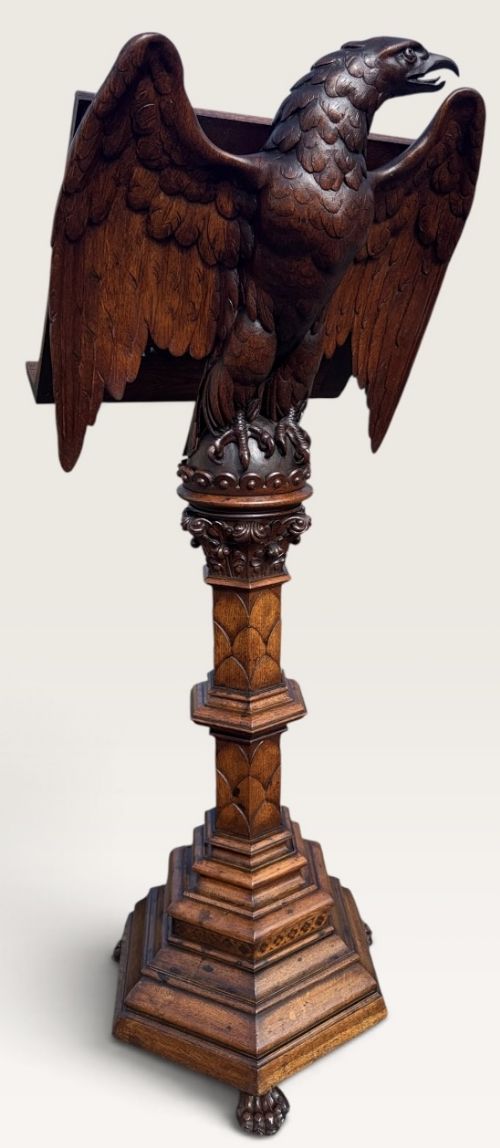
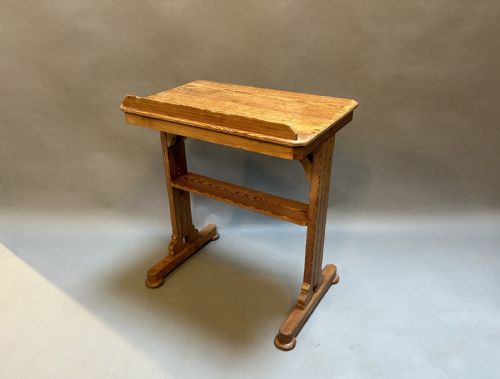
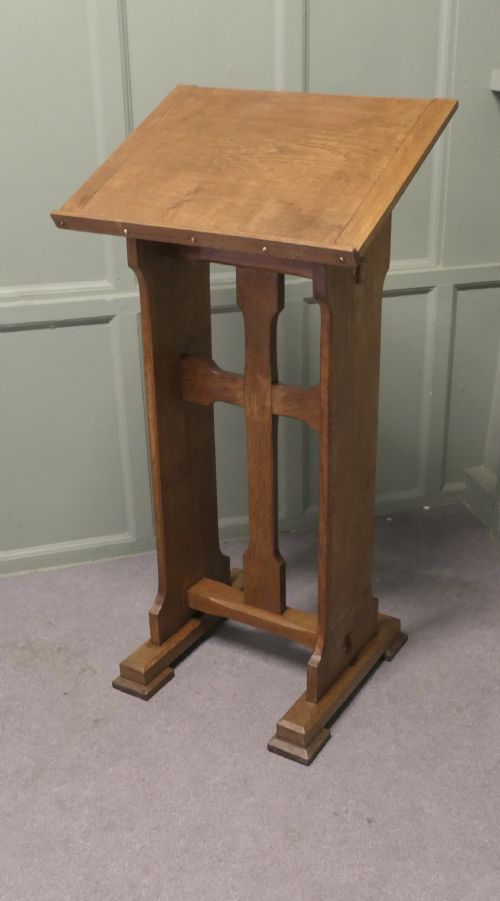
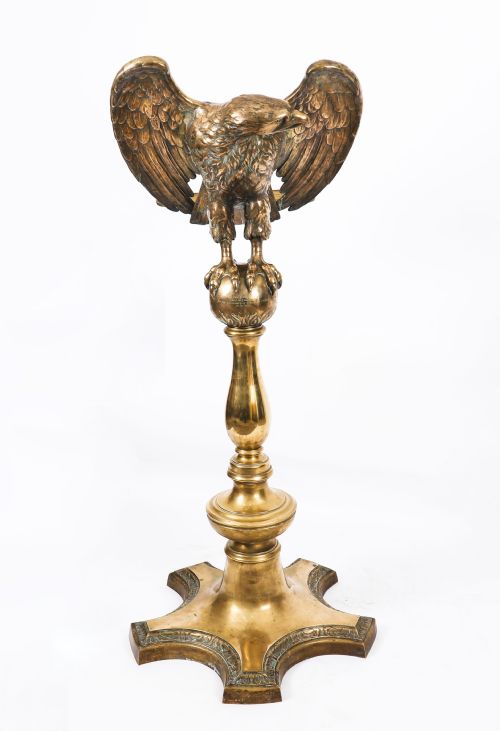
Forms range from carved wooden eagles with outstretched wings to simple sloping desk tables mounted on pedestals or posts. These objects transition easily from historical ecclesiastical settings into modern domestic or commercial reception spaces.
How they were made
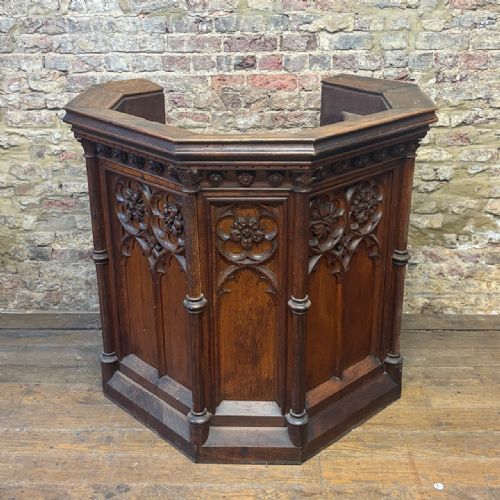
Makers relied heavily on solid oak and pine, shaping sturdy timbers with hand-carved details to withstand regular use in religious interiors. Carpenters applied deep relief carving, particularly for Gothic Revival designs, featuring characteristic pointed arches and tracery.
Brass formed an alternative medium for grander liturgical commissions, cast and polished to create gleaming avian book rests. Iron and mixed woods also appear in secondary structures, ensuring stability beneath heavy sloping desk tops.
Church Pulpit Stand Retail Price Guide 2026
Typical asking prices for church pulpit stand among the pieces listed under this phrase on Sellingantiques today, from the lower quarter to the upper quarter. They describe what is for sale here now, not the wider market.
Materials recorded across the inventory include solid oak, pine, brass, and iron, shaped into lecterns, podiums, and reading stands.
What varies in quality
The depth and conviction of the hand carving separate standard commercial joinery from ambitious ecclesiastical commissions. A sharply detailed wooden eagle with well-defined plumage demonstrates superior craftsmanship compared to a plain, mechanically profiled slope.
Proportion and timber selection dictate the overall visual weight, with dense golden oak or rich dark grain commanding greater presence than utility pine. Intact original structures with uncompromised joints retain a stronger historical integrity.
The Church Pulpit Stand Glossary
- Lectern
- A tall stand with a sloping desk designed to hold a book for reading aloud to a congregation. These range from simple floor-standing pedestals to elaborate carved figures.
- Gothic Revival
- An architectural and decorative style drawing on medieval forms, featuring pointed arches, trefoils, and heavy carved woodwork. This aesthetic dominates nineteenth-century ecclesiastical furnishings.
- Ecclesiastical
- Relating to the Christian Church or its clergy, describing items originally commissioned for worship spaces. Such pieces often display distinct religious symbolism and robust construction.
- Arts and Crafts
- A design movement valuing traditional craftsmanship, visible construction, and simple forms over mass-produced ornamentation. It emerges in select golden oak podiums from the period.
Church Pulpit Stand: Frequently Asked Questions
What is a church pulpit stand used for?
These pieces serve as elevated desks designed to support heavy service books, bibles, or speaking notes for a reader standing before an audience. They provide a stable, angled surface that projects the speaker's voice and keeps texts at a comfortable height.
Today, buyers repurpose them as statement reading desks, restaurant reception greeter podiums, or unique display furniture in home studies and libraries.
How do I date a church pulpit stand?
Dating relies on examining the timber species, construction methods, and stylistic vocabulary present in the woodwork. Pieces displaying heavy tracery and pointed arches typically align with nineteenth-century Gothic Revival tastes, while cleaner, plainer lines often point toward early twentieth-century Edwardian utility.
Secondary materials like iron brackets or brass fittings also offer clues to the manufacturing era, matching the industrial and domestic hardware of their respective decades.
Are these stands suitable for modern homes?
Their commanding vertical presence makes them ideal focal points in large hallways, open-plan living areas, or spacious studies. The sloping top functions well for holding open art books, sheet music, or notes.
Placing one in a room requires adequate floor space to let the architectural form breathe without overwhelming smaller furniture arrangements.
What materials are church pulpit stands made from?
Solid oak and pine form the primary structural materials for the majority of these pieces, often finished with wax or polish to highlight the natural grain. Brass is frequently utilised for figural book rests, offering a bright metallic contrast to dark timber.
Iron occasionally appears in internal brackets and fixings to provide necessary structural reinforcement for heavy book platforms.