
Church Bench Seating
Church bench seating brings robust ecclesiastical character into domestic spaces, offering long lines and sturdy timber construction.
Church Bench Seating
Church bench seating encompasses robust pews, settles, and chapel benches originating primarily from the nineteenth century, alongside Edwardian and late eighteenth-century examples. These pieces serve functional seating roles in hallways, kitchens, and large living spaces, bringing ecclesiastical architectural presence into the home.
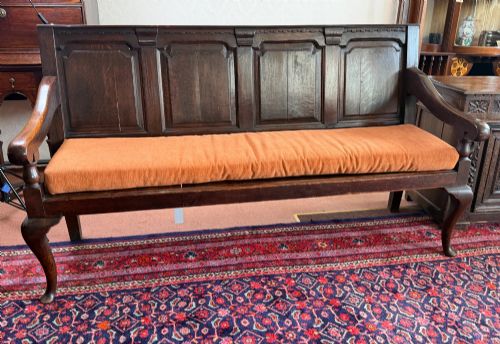
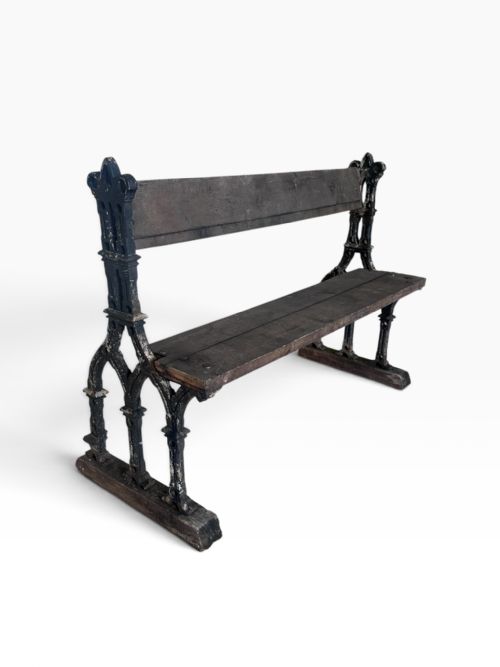
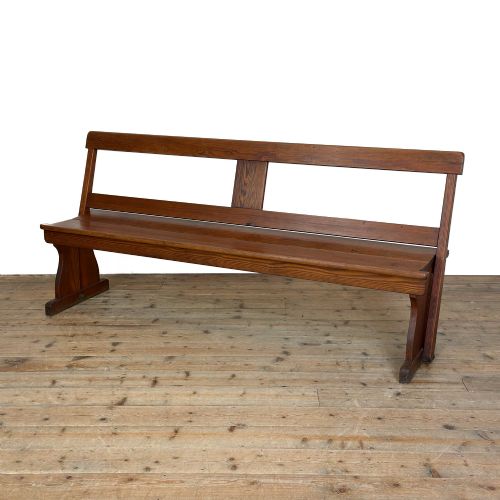
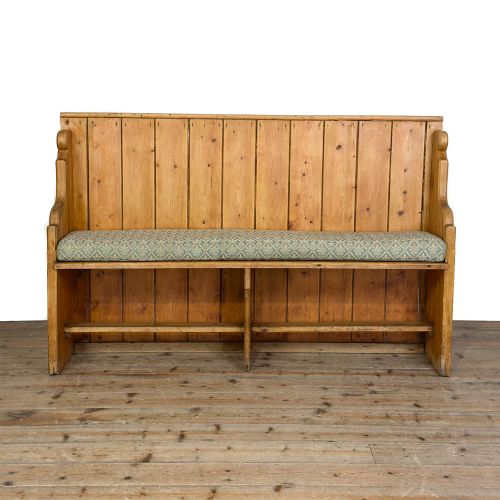
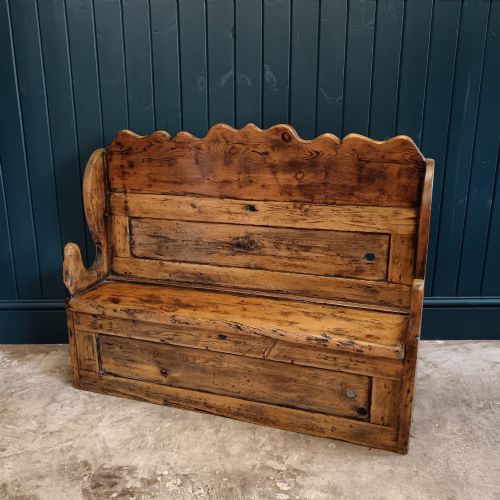
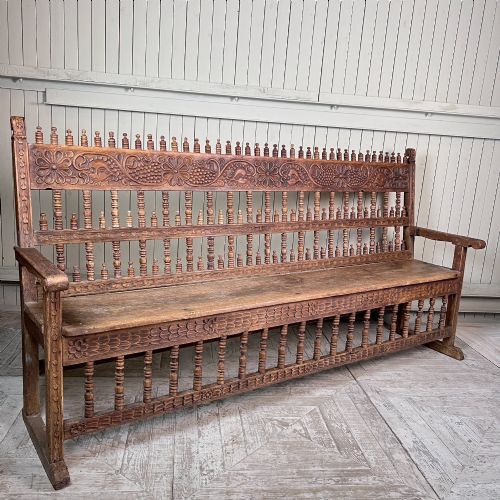
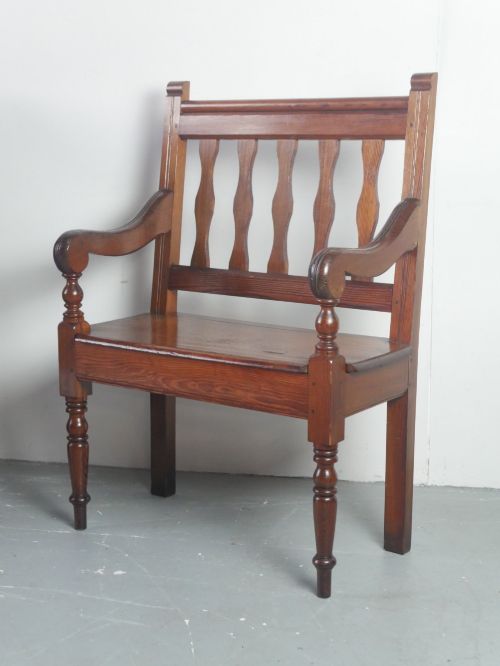
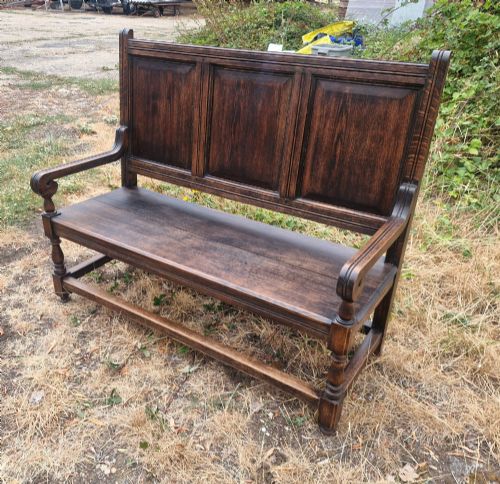
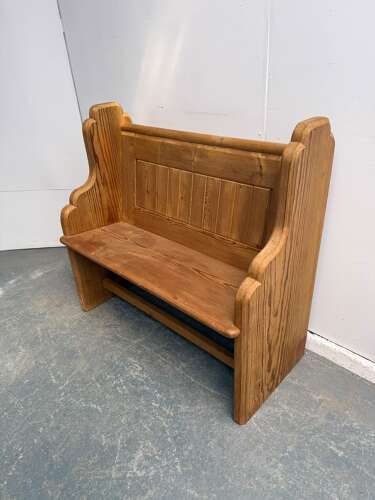
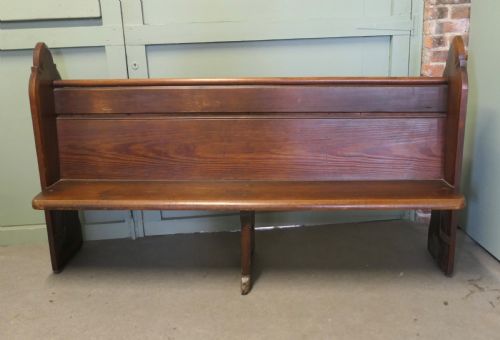
The version most commonly encountered on this page is the nineteenth-century pine or pitch pine church pew, often featuring straight backs, open ends, and simple plank construction. Alongside these, buyers find oak settles with box storage, painted tavern benches, and Gothic revival designs with carved supports.
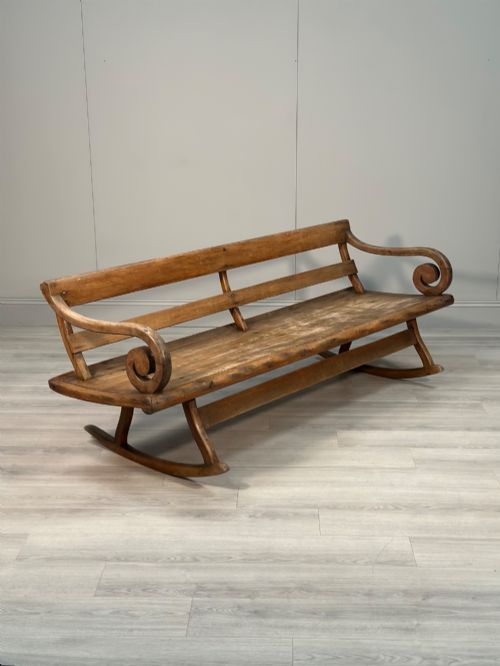
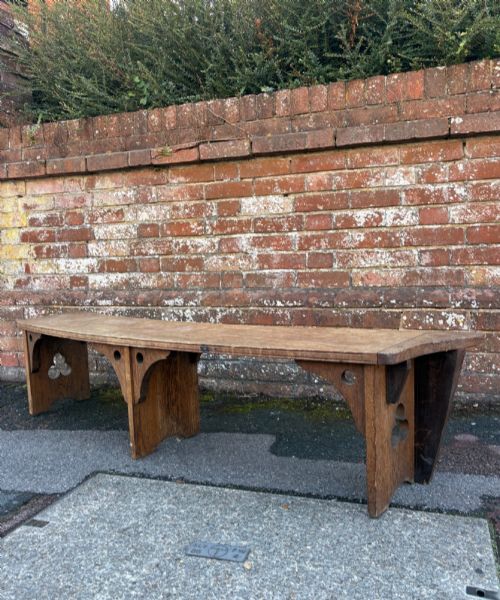
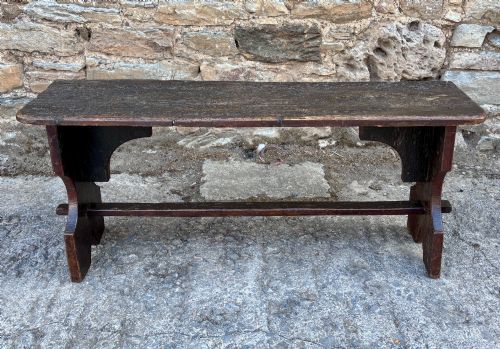
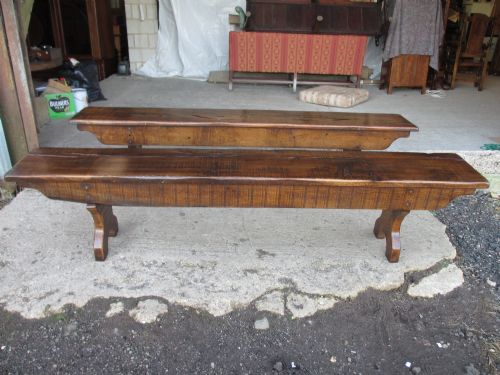
Origins vary from English country workshops to Hungarian and Spanish colonial settings, reflecting diverse regional vernacular traditions. Forms range from compact single-seater chapel pews and organ benches to long refectory tavern benches and curved Arts and Crafts designs.
Materials and Construction
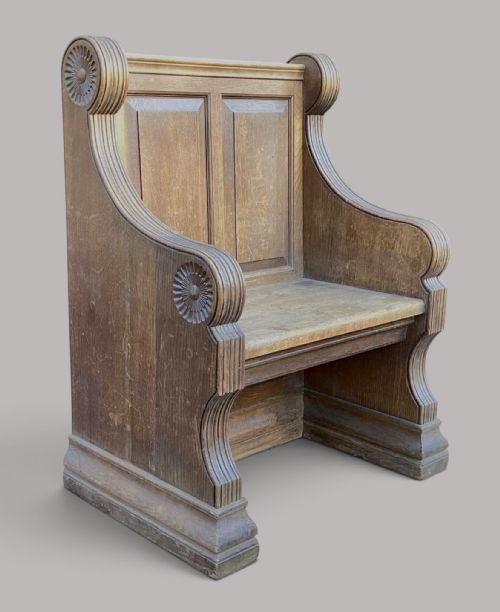
Construction relies heavily on solid native timbers such as pine, pitch pine, and oak, frequently joined with panelled backs, shaped trestle ends, and integrated storage boxes. Elm and chestnut also appear, providing dense grain and structural strength for high-back settle benches and tavern seating.
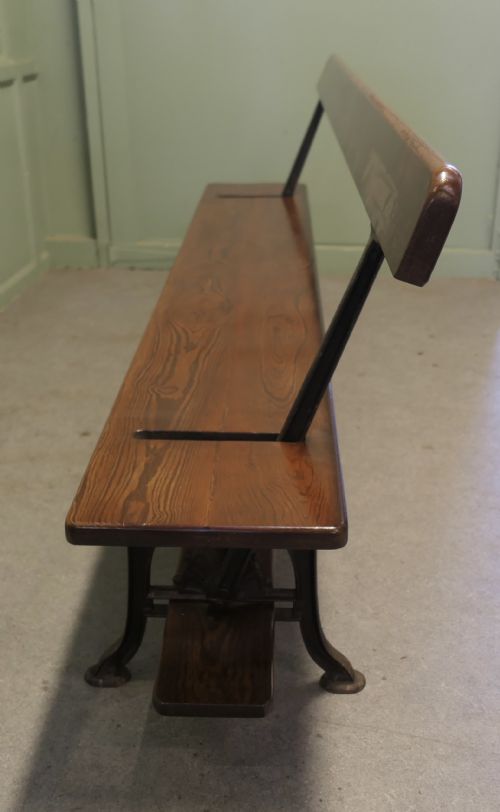
Surface treatments range from waxed and honey-brown patinated finishes to original blue paint and bleached chestnut surfaces, showing the natural grain or historical decoration. Metal elements appear in specific pieces through cast iron frames on garden and tram-style reversible benches.
The page records distinct regional forms including English country oak benches, Hungarian painted seating, and Spanish colonial carved hardwood.
Assessing Quality and Character
Quality rests in the integrity of the timber selection and the purity of the original form, distinguishing honest vernacular utility from later alterations. Solid oak and pitch pine examples with uncompromised structural joinery and deep patination sit at the upper end of the scale.
Refinement of detail elevates certain pieces, such as trefoil carved supports, architectural panelled oak backs, and balanced proportions on Arts and Crafts or Gothic revival commissions. Original painted surfaces or untouched waxed finishes preserve historical character better than stripped or heavily restored timber.
The Church Bench Seating Glossary
- Settle
- A wooden bench with high backs, solid arms, and often a storage box beneath the seat, designed to keep out drafts in older interiors.
- Pew
- A long wooden bench with a back, historically fixed in churches and chapels for congregational seating.
- Trestle
- A structural support consisting of a horizontal beam fixed to two splayed legs, commonly found beneath long tavern and refectory benches.
- Gothic Revival
- An architectural and design style popular during the Victorian period, characterised by pointed arches, trefoil motifs, and heavy timber framing.
- Pitch pine
- A resinous North American pine species valued for its durability, dense grain, and warm golden tone in nineteenth-century seating.
Church Bench Seating: Frequently Asked Questions
Where should I place a church bench?
Church benches suit long hallways, large entryways, and kitchen dining tables where their linear form provides ample seating without crowding the floor space.
High-back settles work particularly well against blank walls in living rooms or boot rooms to create a defined seating nook.
How do I care for antique pine seating?
Maintain waxed pine surfaces by occasionally applying a traditional beeswax to nourish the timber and preserve the honey-brown patina.
Keep wooden benches away from direct heat sources and sudden temperature changes to prevent the timber from splitting or warping over time.
What is the difference between a pew and a settle?
Pews typically feature open sides and simpler panelled backs designed for row seating in ecclesiastical buildings like chapels and churches.
Settles are domestic pieces featuring solid enclosed arms and high backs, occasionally incorporating a hinged box seat for household storage.
Are these benches comfortable for daily dining?
Most antique church benches feature rigid wooden seats and upright backs designed for upright ecclesiastical posture rather than lounging.
Adding loose cushions or fitted squab pads makes them practical for extended seating around a kitchen or dining table.