



Chrome Walnut Clock
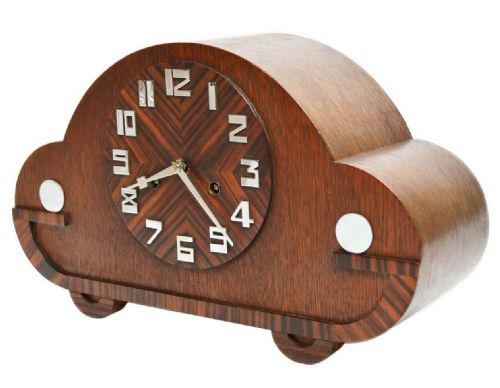
A chrome walnut clock brings the bold geometric lines of the Art Deco period straight into a modern interior.
Chrome Walnut Clock
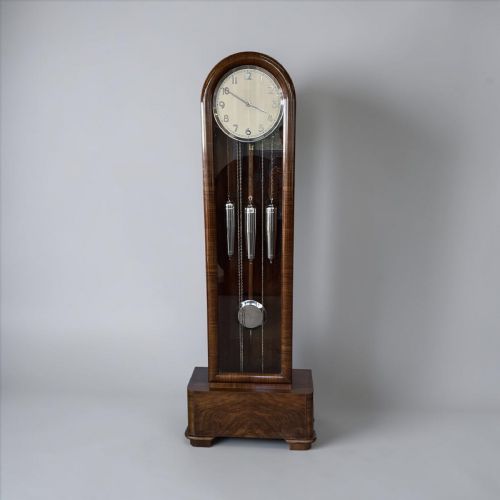
A chrome walnut clock is a timepiece defined by the materials and styles of the Art Deco era, originating primarily from the nineteen twenties and nineteen thirties. These pieces combine rich wooden tones with polished metal to create striking architectural forms.
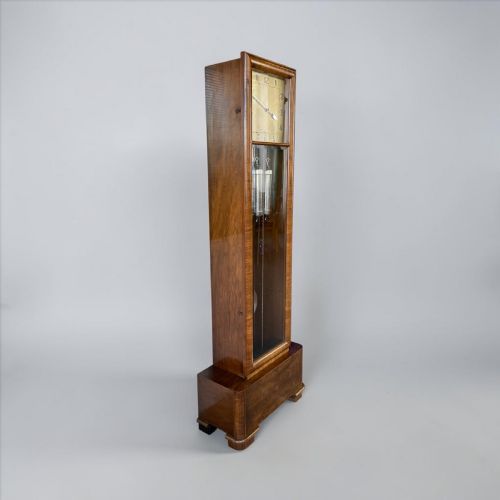
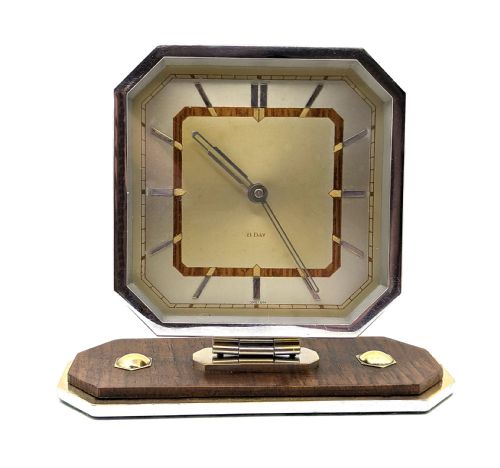
The selection ranges from tall grandfather and longcase clocks to smaller mantel, desk, and wall clocks. Many of these examples hail from English, French, and German workshops, reflecting diverse regional interpretations of the same modernist aesthetic.
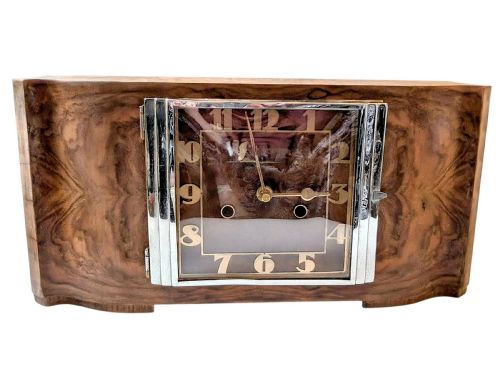
Mantel clocks form the largest group on this page, often showcasing stepped skyscraper silhouettes or clean geometric shapes. Buyers frequently encounter eight day movements and Westminster chimes housed within these dual material cases.
How they were made
Cabinet makers utilised walnut veneers and solid wood foundations to construct the bodies of these clocks, sometimes selecting burr walnut for enhanced grain patterns. Wood veneer was applied skillfully to curved and stepped surfaces to achieve smooth geometric contours.
Chrome plating and polished brass accents were mounted directly onto the wooden chassis, providing a bright industrial contrast to the warm timber. Glass bezels and metallic dials completed the construction, protecting the paper or metal chapters and hands within.
German workshops contributed clever mechanical movements to these stylish cases, proving that precision engineering and modernist glamour make excellent companions.
What varies in quality
The distinction between standard production pieces and finer examples rests upon the harmony of the timber selection and the precision of the metalwork. Superior pieces display carefully matched walnut grain across complex stepped cases without awkward joins.
Movement quality also dictates value, with recognised makers employing robust eight day mechanisms or specialised chimes that distinguish them from simpler domestic clocks. Original condition across both the chrome plating and the wooden veneer elevates the standing of any individual piece.
Elliott·Perivale·Bravingtons Ltd of London·Junghans·Pfeilkreuz Junghans
The Chrome Walnut Clock Glossary
- Art Deco
- A design style spanning the nineteen twenties and nineteen thirties characterised by sleek lines, geometric shapes, and modern industrial materials. It replaced the more ornate floral motifs of earlier decorative arts.
- Mantel clock
- A portable clock designed to sit on a shelf or the mantelpiece above a fireplace. These domestic timepieces often feature balanced architectural facades.
- Longcase clock
- A tall, floor standing timepiece also known as a grandfather clock, driven by descending weights contained within a slender wooden trunk. These vertical clocks make a strong visual statement in a hallway or principal room.
- Veneer
- A thin layer of superior wood applied over a base timber foundation to produce decorative patterned surfaces. Burr walnut veneer is particularly prized for its swirling grain formations.
- Westminster chime
- A melodic four note chime pattern traditionally associated with clock towers and replicated in domestic mechanical movements. It sounds on the quarter hours before striking the full hour.
Chrome Walnut Clock: Frequently Asked Questions
How do I wind an eight day clock?
An eight day clock requires winding approximately once a week using a matching key inserted into the dial holes. Care must be taken not to overwind the mainspring.
Rotating the key smoothly until resistance is felt ensures the movement remains fully powered without placing undue strain on the internal components.
Where should I place a mantel clock?
A mantel clock suits any stable, flat surface such as a sideboard, desk, or shelf where its decorative case can be appreciated. Keeping the clock away from damp areas and direct heat sources protects the wood veneer and metal plating.
Ensuring the surface is level also helps the mechanical movement keep accurate time without the pendulum or escapement binding.
How do I identify an Art Deco clock?
Art Deco clocks feature distinct architectural silhouettes, stepped geometric forms, and a combination of polished chrome and warm walnut wood. Dials often display stylized numeric fonts and streamlined metal hands.
These design cues reflect the modernist aesthetic of the interwar period, distinguishing them clearly from Victorian or Edwardian antiques.
What is the difference between a mantel and a desk clock?
Mantel clocks are generally larger, heavier architectural pieces designed to stand permanently on furniture or fireplace ledges. Many house complex chiming mechanisms within substantial wooden cases.
Desk clocks are smaller, more portable timepieces built for personal workspaces, often focusing on simple timekeeping rather than striking functions.