


Chippendale Style Side Cabinet
A chippendale style side cabinet brings rich mahogany and classic revival detail to a room, offering both surface display and concealed storage.
Chippendale Style Side Cabinet
A chippendale style side cabinet represents a tradition of cabinet making rooted in eighteenth century forms and later nineteenth and twentieth century revivals. When searching for a chippendale style side cabinet, buyers encounter pieces spanning the Georgian period, the nineteenth century, and twentieth century revivals up to the nineteen twenties.
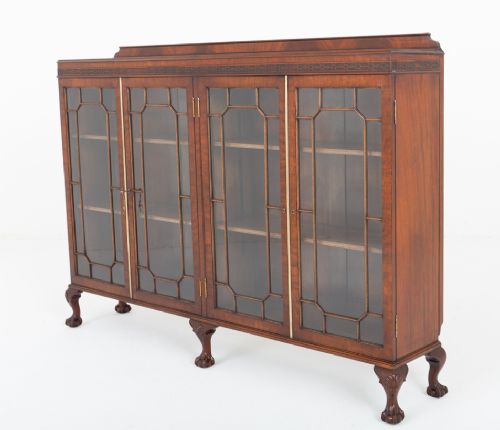
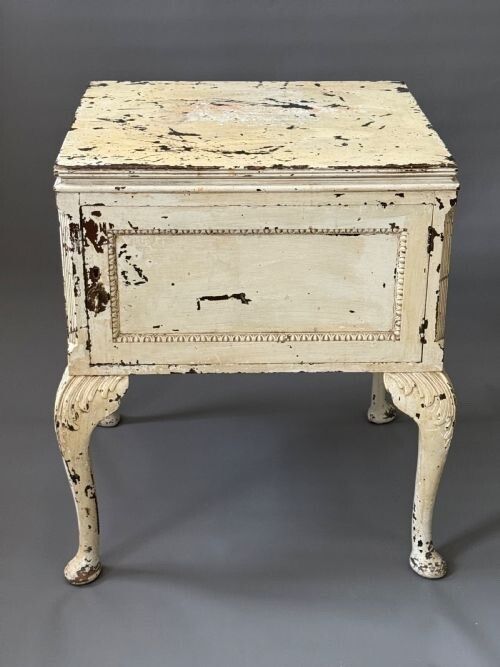
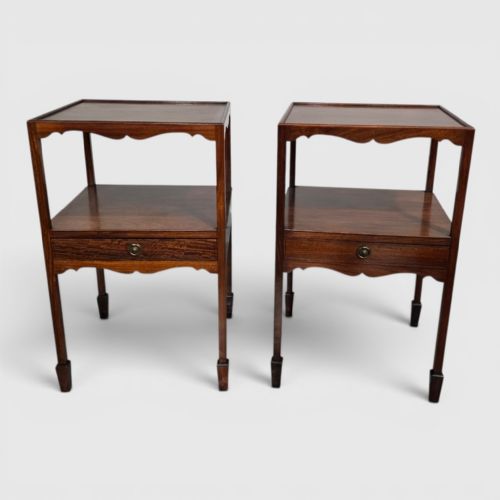
The selections on this page lean heavily towards mahogany construction, often paired with glass doors, brass fittings, or painted details. Forms vary from practical side cabinets and bedside units to longer display bookcases, bow fronted variations, and demi lune console tables.
Edwardian interpretations and pieces from nineteen ten and nineteen twenty frequently blend chippendale revival motifs with display functions. These items serve as functional furniture that retains the carved lines and aesthetic weight of earlier Georgian design.
How they were made
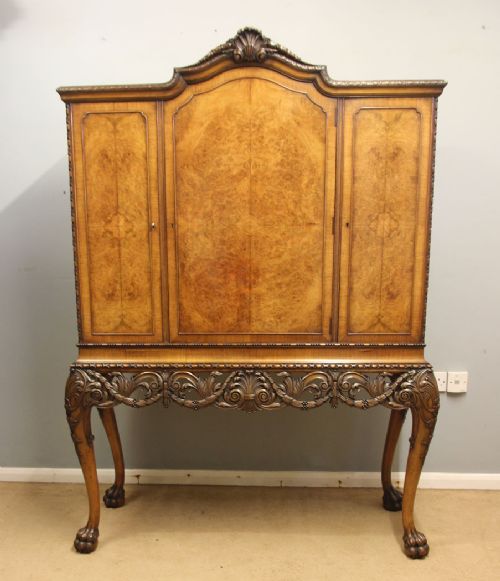
Makers relied primarily on solid mahogany and burr walnut veneer to build the carcase and structure of each chippendale style side cabinet. Timber selection dictated the grain pattern, with figured veneers adding visual depth to cupboard doors and drawer fronts.
Secondary materials such as glass, brass, velvet, and fabric appear across display sections, interiors, and hardware. Brass handles and escutcheons accent the timber surfaces, while glass panels protect contents within long bookcases and display cabinets.
Listings span multiple decades from the Georgian era through the Edwardian period and into nineteen twenty.
What varies in quality
The distinction between average and superior examples rests on timber selection and the crispness of carved detail. Finer pieces display carefully matched burr walnut veneer or dense mahogany with sharp, well defined mouldings that reflect disciplined workshop execution.
Construction methods also separate the output of standard commercial production from finer revival work. Robust drawer linings, well fitted doors, and substantial brass hardware indicate a higher standard of original manufacture.
Walker and Hall Sheffield
The Chippendale Style Side Cabinet Glossary
- Chippendale Style
- A design approach drawing on the patterns published by Thomas Chippendale and later revival movements. It typically incorporates carved mahogany details, shaped cornices, and bracket feet.
- Demi Lune
- A half moon shape applied to furniture such as console tables and side cabinets. This curve allows pieces to sit flush against a wall while projecting into the room.
- Bijouterie Table
- A glazed display table designed to showcase small valuables and curiosities under glass. These tables often feature hinged lids and velvet lined interiors.
- Burr Walnut Veneer
- Thin slices of walnut timber taken from growth excrescences on the tree. This wood produces intricate, swirling grain patterns highly valued for cabinet fronts.
Chippendale Style Side Cabinet: Frequently Asked Questions
What is a chippendale style side cabinet used for?
These cabinets provide surface space and enclosed storage for living rooms, hallways, and dining areas. Many variants also incorporate display shelving behind glass doors for china or books.
Smaller formats function effectively as bedside units or lamp tables while maintaining a formal aesthetic.
How do I identify a revival piece from an earlier date?
Examining the secondary timbers, interior construction methods, and hardware screws helps determine the age of a piece. Twentieth century revivals often use standardised internal elements alongside older stylistic motifs.
Georgian originals exhibit hand tool marks and construction practices distinct from Edwardian or nineteen twenties workshops.
Are these cabinets made entirely of solid mahogany?
While many pieces feature solid mahogany frames and panels, others incorporate veneers over secondary woods like pine or oak. Burr walnut veneer is similarly applied to a stable underlying carcase timber.
Inspecting the interior and drawer sides reveals the combination of solid primary woods and supportive structural timbers.
How should I care for a mahogany side cabinet?
Keep the timber away from direct sunlight and sudden temperature shifts to prevent the wood from drying out or splitting. Dust regularly with a dry cloth and apply appropriate wax sparingly.
Protect glass panels during cleaning and check brass hardware periodically to ensure mountings remain secure.