


Chippendale Style Easy Chair
A chippendale style easy chair brings enduring grace to a room, offering generous proportions and upholstered comfort rooted in eighteenth-century design.
Chippendale Style Easy Chair
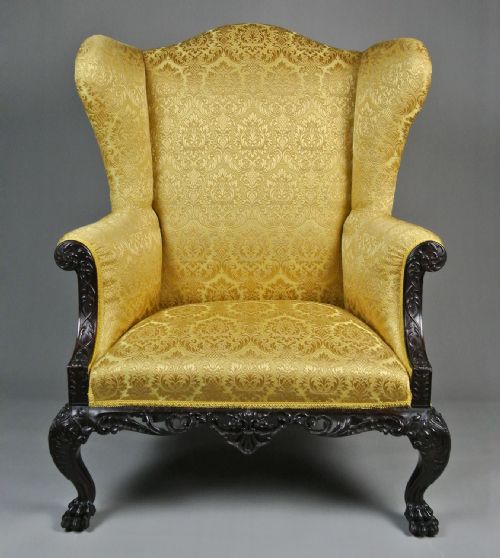
A chippendale style easy chair combines traditional seating forms with classic eighteenth-century cabinet-maker influences, appearing across various eras from the Georgian period through to later revivals. Buyers seeking this classic aesthetic will encounter mahogany frames paired with substantive upholstered forms, including wingback designs created for fireside warmth and library use.
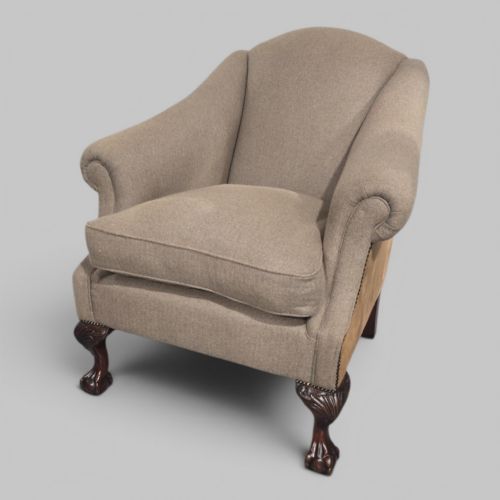
The selections span genuine Georgian origins alongside nineteenth-century interpretations, George II styles, and later revival pieces from the early twentieth century. These armchairs typically manifest as large wing chairs or library armchairs, combining structural mahogany frames with varied fabric coverings ranging from simple calico to rich damask.
Materials and construction
Construction relies heavily on solid mahogany for the exposed frame elements, including carved legs, arms, and structural supports. Cabinet-makers shaped this dense timber to achieve the characteristic scroll arms, claw-and-ball or straight legs, and robust wingback frameworks seen in the tradition.
Upholstery forms the core visual and tactile element, utilising traditional stuffing materials enclosed in textiles such as silk damask, velvet, wool, and simpler cotton fabrics like calico. Brass fixings and decorative studs frequently secure the textile edges along the wooden rails.
Many a wingback chair spent centuries silently trapping fireplace smoke and gossip in equal measure.
Distinguishing quality and execution
Quality reveals itself in the crispness of the mahogany carving and the proportional harmony of the wings, back, and arms. Earlier Georgian examples display hand-carved detailing executed with deep relief, whereas later revival pieces vary in the sharpness and depth of their decorative motifs.
The integrity of the internal joinery and the fidelity to period upholstery staging dictate the overall caliber of each piece. Superior examples maintain balanced proportions and robust frame construction that support the expansive upholstered silhouettes without sagging or distortion.
The Chippendale Style Easy Chair Glossary
- Calico stage
- An unbleached cotton upholstery covering applied to an armchair before the final decorative textile is fitted. This interim layer allows evaluation of the padding contours.
- Wingback
- A high-backed armchair featuring projecting side panels designed to shield the sitter from draughts and retain fireplace heat. These panels merge smoothly into the armrests.
- George II style
- An aesthetic echoing the robust, heavy proportions and ornate carving characteristics of the British monarchy's mid-eighteenth-century reign. It precedes the lighter neoclassical shifts.
- Mahogany
- A durable tropical hardwood prized for its rich reddish-brown colour and stability in fine furniture making. It accepts intricate carving exceptionally well.
Chippendale Style Easy Chair: Frequently Asked Questions
How do I date a wing chair?
Dating relies on examining the timber characteristics, construction joints, and the style of the carved mahogany legs and stretchers.
Earlier pieces show hand-tool marks and period joinery methods, while nineteenth-century revivals and early twentieth-century pieces reflect the manufacturing techniques and stylistic preferences of their respective eras.
Were these chairs used by the fireside?
Wingback chairs were originally designed to protect sitters from cold draughts in large rooms by trapping heat around the upper body.
The enclosed sides and high backs made them ideal for placement near hearths and in libraries where comfort and warmth were paramount.
What fabrics are used for upholstery?
Upholstery materials range from plain calico and cotton fabrics to rich silk damask, velvet, and wool.
Many surviving chairs have been reupholstered multiple times over their lifespan to match contemporary interior tastes while preserving the underlying antique frame.