
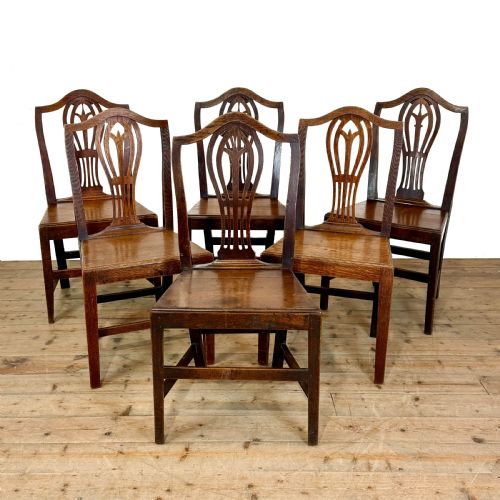
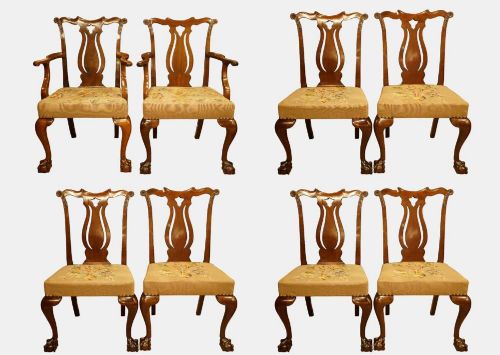


Chippendale Revival Dining Seats
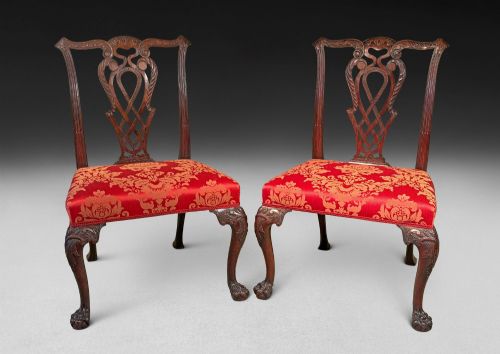
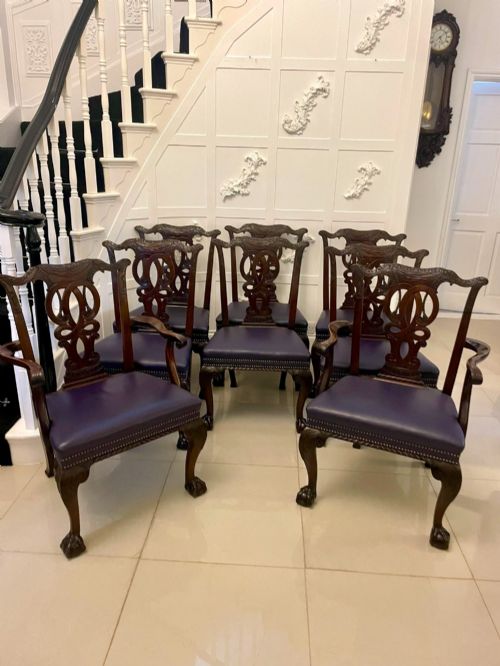
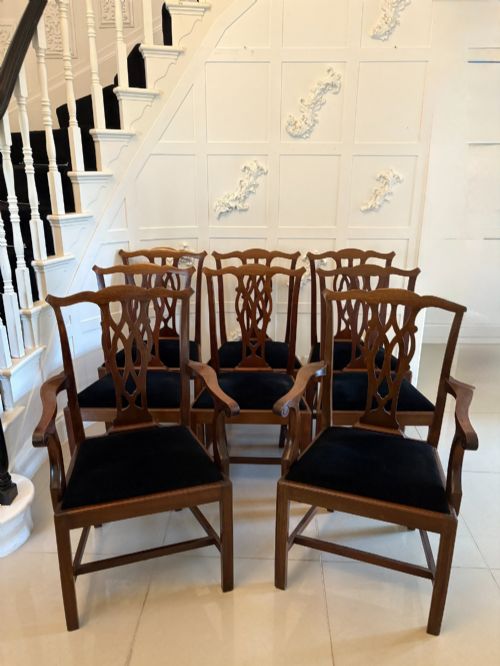
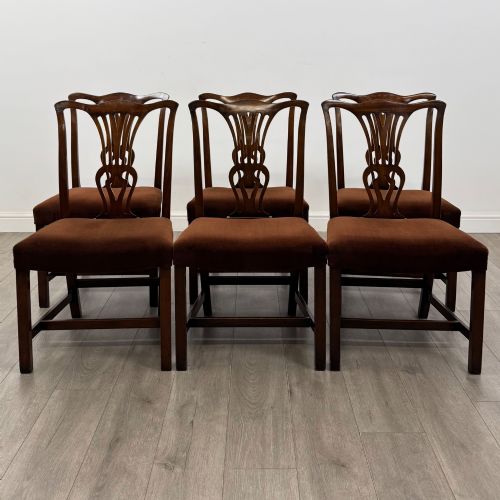
These chippendale revival dining seats bring sturdy mahogany frames and classical carved details to the dining table, offering period character for daily meals.
Chippendale Revival Dining Seats
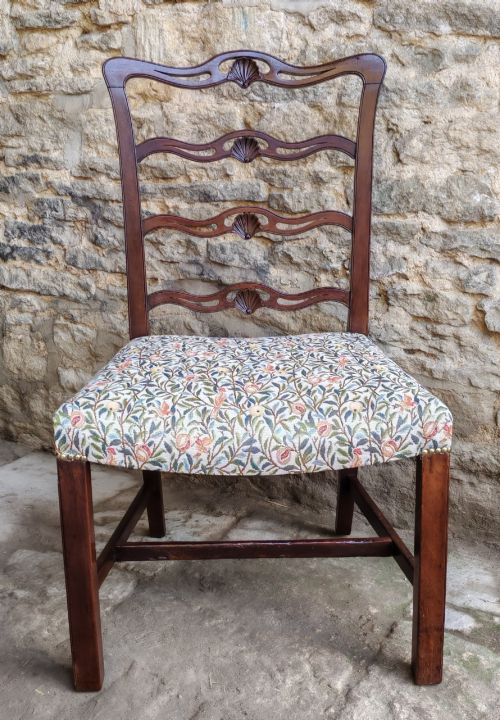
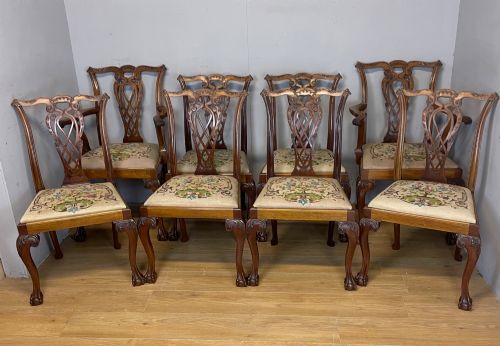
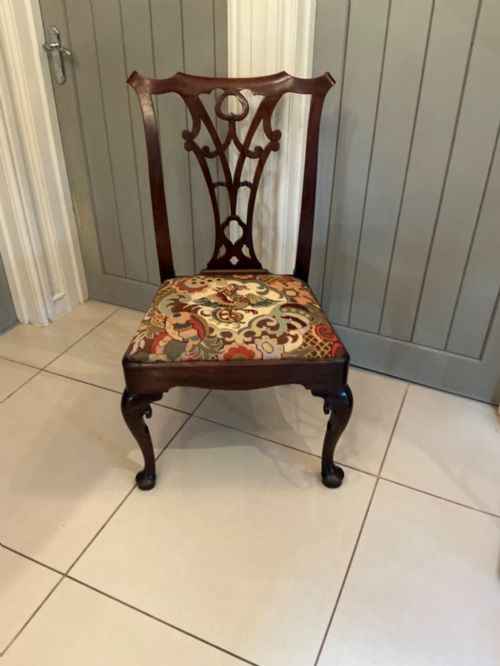
When searching for chippendale revival dining seats, buyers encounter sturdy timber chairs designed to echo eighteenth-century forms during the nineteenth and early twentieth centuries. The listings show a heavy concentration of mahogany dining chairs alongside oak variants, spanning single chairs, carvers, and complete matched sets. Most pieces date from the Victorian and Edwardian eras, capturing the revival enthusiasm for ornate splats and carved rails.
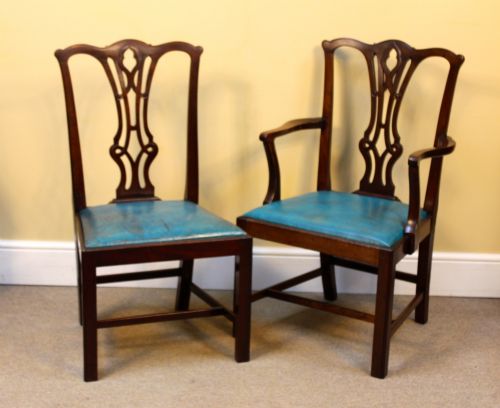
The dominant forms on this page include large sets suitable for dining tables, supplemented by smaller groups and pairs of armchairs. These seats often feature ladderbacks, ribbon backs, or Gothic and neo-classical motifs adapted by makers working between eighteen eighty and nineteen thirty. Buyers frequently find configuration options ranging from standard single dining chairs to comprehensive sets combining carvers and side chairs.
Materials and construction
The framing timber is predominantly solid mahogany, supplemented by occasional walnut and oak, shaped through traditional joinery and hand-carving techniques. Cabinetmakers constructed these frames to withstand regular use, employing pegged joints and robust stretchers between the legs.
Seats are upholstered in a variety of traditional materials, including leather, velvet, tapestry, and fabric, often secured over supportive stuffing. Brass details appear on select pieces, while ebonised finishes alter the natural timber appearance on specific design variants.
Some chairs arrive with secret messages left by Victorian apprentices hidden under the drop-in upholstery webbing.
Factors of quality
Quality rests on the depth and crispness of the timber carving along the top rails, splats, and claw-and-ball or Marlborough feet. Finer sets display precise hand-carved ribbon or ladder details rather than shallow, machine-routed patterns.
The integrity of the timber frame and the scale of the set heavily influence the tier of the piece. Larger matched sets of twelve or fourteen chairs command greater interest than isolated pairs, particularly when the original upholstery or leather remains intact.
Warings·Robert Strahan Dublin·H. Samuel London
The Chippendale Revival Dining Seats Glossary
- Carver
- An armchair designed to sit at the head of a dining table. These pieces feature supportive armrests matching the side chairs in a set.
- Ladderback
- A chair back featuring horizontal transverse rails resembling the rungs of a ladder. This design was popularised in the eighteenth century and revived extensively in later periods.
- Ribbon back
- A chair splat intricately carved to resemble folded and interlaced ribbon. It represents one of the more complex decorative motifs found in this style.
- Splai
- The vertical central strip of wood within a chair back. It provides structural support and serves as the primary canvas for decorative carving.
- Stretcher
- A horizontal support connecting the legs of a chair. Stretchers add rigidity and strength to the underframe.
Chippendale Revival Dining Seats: Frequently Asked Questions
What is a chippendale revival dining seat?
These pieces are nineteenth and twentieth-century chairs built in the aesthetic style of eighteenth-century designer Thomas Chippendale. They utilise traditional timber forms like carved mahogany and upholstered drop-in seats.
Buyers select them to introduce historical craftsmanship into modern dining rooms while maintaining functional seating for daily use.
How do I care for mahogany dining chairs?
Maintain the timber by dusting regularly with a soft cloth and applying appropriate beeswax periodically to nourish the polished surface. Keep the chairs away from direct heat sources and strong sunlight to prevent timber splitting.
Protect the upholstered pads, whether leather or fabric, by avoiding moisture exposure and professional cleaning when necessary.
Are these chairs suitable for daily dining?
Yes, these sturdy wooden frames were constructed for regular use around the dining table. Their solid joinery and robust timber construction handle everyday sitting.
Many sets include both armchairs and side chairs, providing a complete seating arrangement for household meals and hosting guests.
How can I date a revival chair?
Dating relies on examining the timber patination, tool marks, and construction methods visible beneath the seat frame. Revival pieces from the Victorian and Edwardian eras often display machine-assisted precision alongside hand-carving.
Maker stamps, brass labels, and specific stylistic revivals like George II or Edwardian Chippendale further narrow the period of manufacture.