





Chippendale Piano Stool
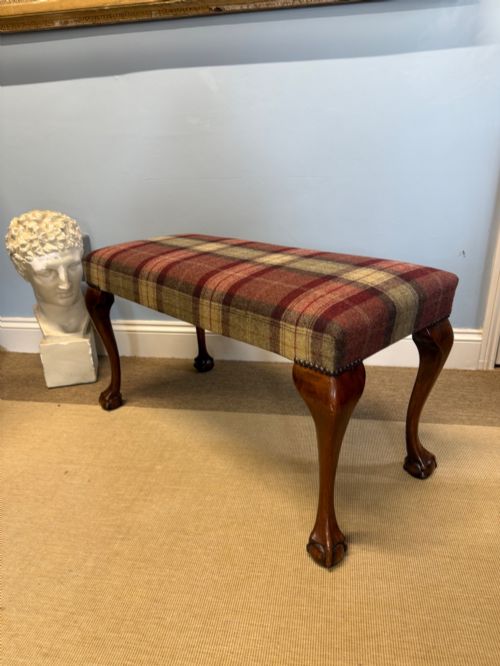
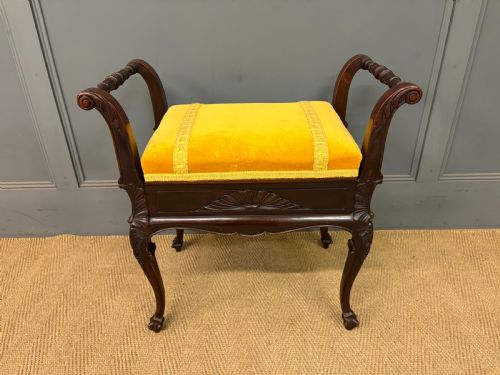
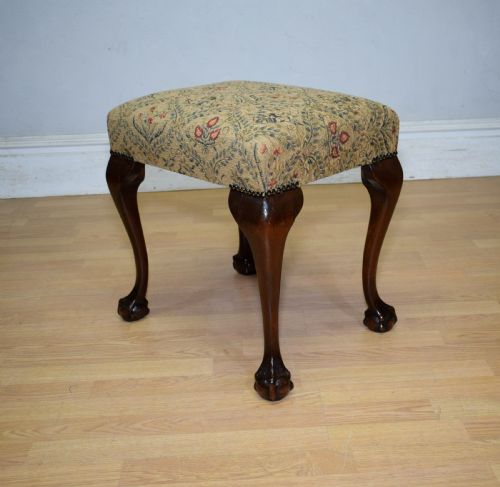
These mahogany and walnut pieces known as a chippendale piano stool bring solid construction and carved cabriole legs to the instrument bench.
Chippendale Piano Stool
A chippendale piano stool is a seat designed for keyboard players, drawing on eighteenth-century design traditions. The pieces appearing here span from the eighteenth century through the Victorian, Edwardian, and later revival periods.
Most examples found on this page date from the late nineteenth and early twentieth centuries, reflecting the Victorian and Edwardian enthusiasm for revival styles. These later iterations adopt the vocabulary of earlier cabinet making while serving domestic music rooms.
The primary forms include square single seats and longer duet benches. They function as both practical seating and decorative furniture within period interiors.
How they were made
The primary timber used is mahogany, supplemented by walnut, shaping the sturdy frames that support the upholstered tops. Cabinet makers shaped these woods to form the characteristic curves and structural supports.
Upholstery materials range from simple fabric and textile to wool, velvet, cream damask, and needlework tapestry. Brass details occasionally appear as fittings or cast elements, while carved ball and claw feet anchor the legs.
Chippendale Piano Stool Retail Price Guide 2026
Typical asking prices for chippendale piano stool among the pieces listed under this phrase on Sellingantiques today, from the lower quarter to the upper quarter. They describe what is for sale here now, not the wider market.
Listings span the eighteenth, nineteenth, and twentieth centuries, featuring mahogany and walnut alongside diverse textiles like wool, velvet, and tapestry.
What varies in quality
Quality rests in the crispness of the timber carving, particularly on the cabriole legs and ball and claw feet. Finer examples display deep, deliberate chisel work rather than soft or mechanical shaping.
The integrity of the frame construction and the choice of covering material distinguish the upper tier of pieces. Selection of textiles such as damask or detailed needlework tapestry indicates a higher grade of original commission.
The Chippendale Piano Stool Glossary
- Cabriole leg
- A furniture leg that curves out and then in, resembling the leg of an animal. This form appears frequently on chairs and stools influenced by eighteenth-century design.
- Damask
- A reversible figured fabric woven on a jacquard loom, often used for formal upholstery. Cream damask frequently covers the seats of late nineteenth-century revival pieces.
- Duet stool
- An elongated seating bench designed for two people to sit together at a piano. These longer forms accommodate piano music sharing.
- Needlework
- Hand-stitched textile work utilised for decorative seat covers. Needlework tapestry adds texture and colour to the top of the stool.
Chippendale Piano Stool: Frequently Asked Questions
What is a chippendale piano stool?
A chippendale piano stool is a seated piece of furniture built for keyboard players, incorporating revival design elements from the eighteenth century. These seats provide a stable platform for musicians while echoing classical cabinet making.
The form ranges from compact single seats to longer duet benches. They integrate carved wooden frames with upholstered upper surfaces.
How do I date a piano stool?
Dating relies on examining the timber, construction methods, and stylistic cues present in the frame. Nineteenth and twentieth-century revival pieces often replicate eighteenth-century motifs while retaining the joinery techniques of their actual period of manufacture.
Materials such as mahogany and walnut appear across multiple eras. Associated upholstery styles and secondary woods help narrow down the decade of production.
How were these stools used?
These stools served primarily in domestic music rooms, providing functional seating for individuals practising or performing at the piano. Their sturdy construction supported the player during long practice sessions.
Longer versions accommodated two players sharing a duet score. Beyond their musical function, they acted as decorative occasional furniture in period parlours.
How do I live with one?
Living with a piano stool involves placing it in a room where its timber frame and upholstered top complement existing furniture. They function well as piano seats or as decorative footstools and occasional benches.
Regular care of the wooden frame and gentle cleaning of the fabric or tapestry preserve the piece. Position them away from direct heat sources to protect the timber and upholstery.