


Chippendale Period Commode
A chippendale period commode is a substantial wooden chest or bedside cabinet built for storage, prized for its dense mahogany construction and classical proportions.
Chippendale Period Commode
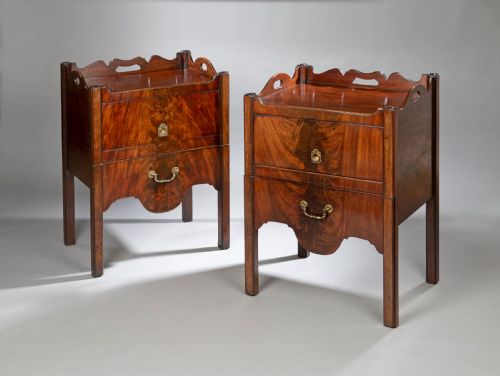
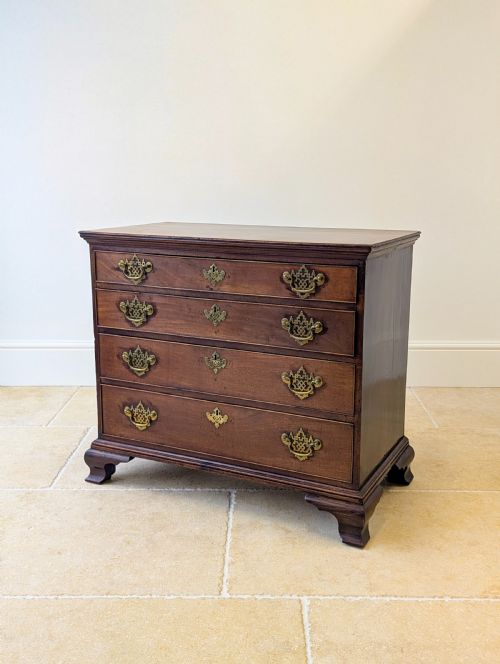
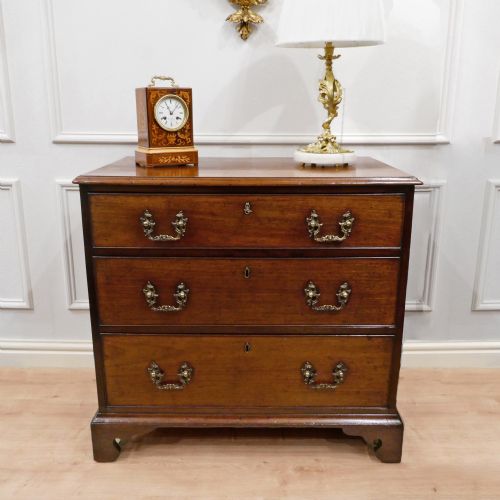
A chippendale period commode most frequently takes the form of a mahogany chest of drawers, alongside bedside cabinets, dressing chests, and tray top models. These pieces date predominantly from the Georgian era, spanning the eighteenth century with occasional examples attributed to later revival periods.
Buyers encounter forms ranging from simple rectangular chests to serpentine fronted designs and bedside cupboards fitted with brass hardware. The structural framework relies upon timber construction, primarily mahogany supplemented by oak internal elements and boxwood inlay.
Materials and construction
Makers utilised solid mahogany for primary exterior surfaces, often paired with oak for drawer linings and internal framing. Timber selection dictated the weight and structural stability of each chest of drawers.
Brass handles and escutcheons secured the drawer fronts, incorporating rococo design influences. Boxwood inlay provided surface decoration on selected cabinetry.
Several bedside commodes feature raised tray tops designed specifically to keep porcelain chamber pots from sliding off during the night.
Distinctions in quality
The refinement of the cabinetmaking separates standard chests from superior examples, visible in the handling of serpentine drawer fronts and the integration of tray tops. Timber figuring on the mahogany surfaces contributes to the visual depth of the piece.
The integration of decorative elements such as boxwood inlay and cast brass handles alters the character of the furniture. Structural integrity relies upon the retention of original timber and secondary woods like oak.
The Chippendale Period Commode Glossary
- Serpentine front
- A curved furniture front featuring a convex centre flanked by concave curves. This contour requires advanced woodworking skill to execute properly on mahogany.
- Tray top
- A raised rim edging the top surface of a bedside table or commode. This feature prevents items from rolling off the furniture.
- Escutcheon
- A protective plate surrounding a keyhole, usually fashioned from brass. It guards the surrounding wood from wear caused by the key.
- Dressing chest
- A low chest of drawers equipped for personal grooming and storage. These pieces date to the Georgian period.
Chippendale Period Commode: Frequently Asked Questions
What is a chippendale commode?
A chippendale commode is an eighteenth century storage piece, most commonly found as a mahogany chest of drawers or bedside cabinet. These items reflect Georgian design standards.
They serve as functional storage furniture in domestic interiors, offering drawers and enclosed compartments.
How do I date a commode?
Dating relies upon timber analysis, construction methods, and stylistic indicators such as serpentine fronts and rococo brass handles. Eighteenth century pieces utilise primary mahogany and secondary oak.
Changes in hardware and decorative techniques across the Georgian and George III periods help establish the manufacturing era.
Where were they used?
These cabinets functioned primarily in bedrooms and private chambers for storing clothing and personal effects. Bedside versions held night lighting and small possessions.
Their robust timber construction suited daily domestic service in substantial Georgian households.
Are they all mahogany?
Mahogany serves as the primary exterior timber across the surviving examples from this period. Secondary woods such as oak appear in drawer construction.
Boxwood inlay provides contrast on select decorative surfaces, complementing the dominant mahogany grain.