
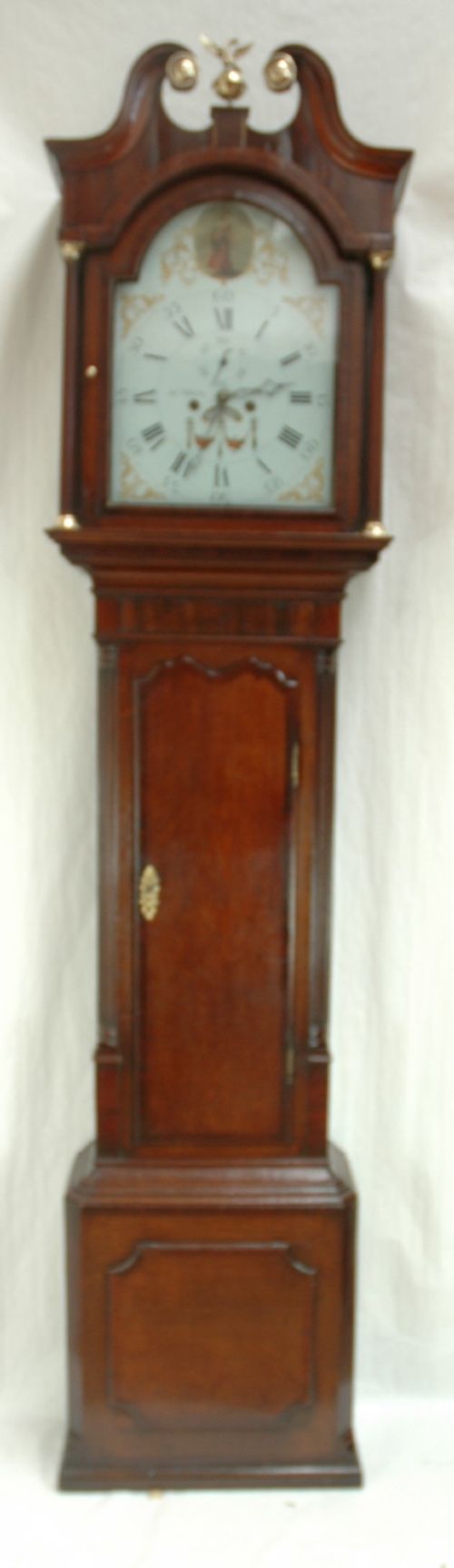
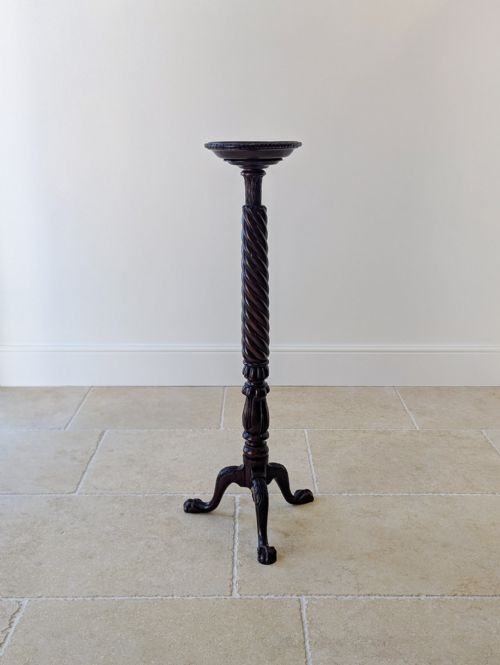


Chippendale Mahogany Stand
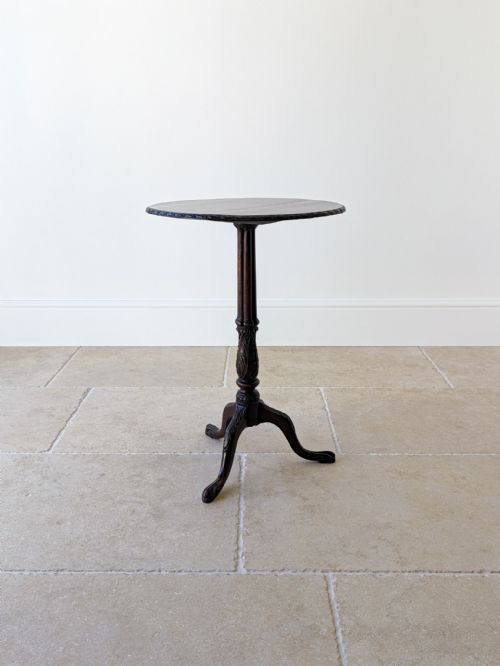
A chippendale mahogany stand brings sculptural carved detail and rich dark timber to a corner, functioning as a sturdy support for small vessels or lamps.
Chippendale Mahogany Stand
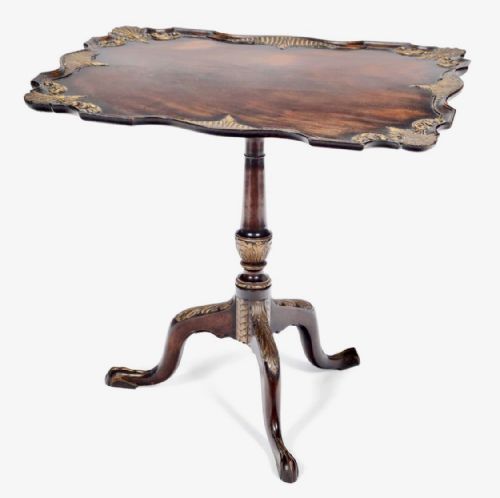
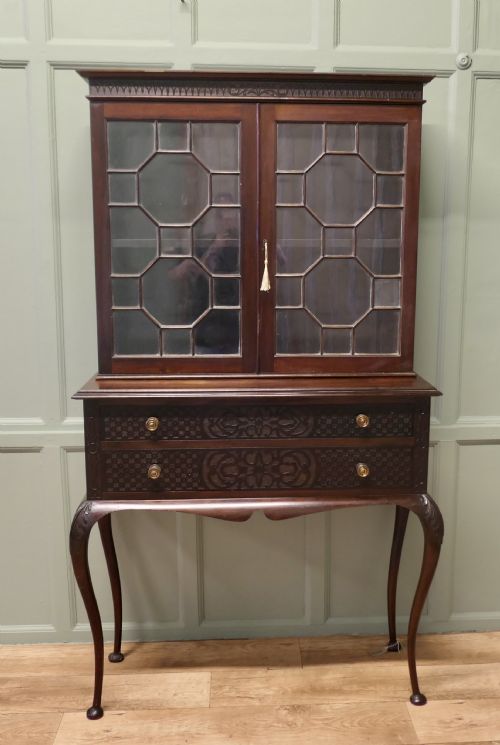
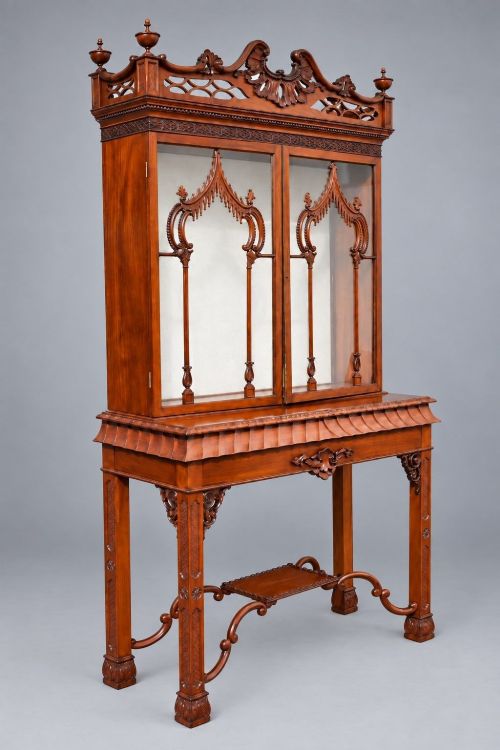
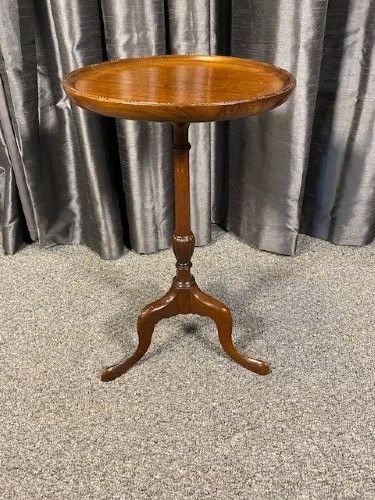
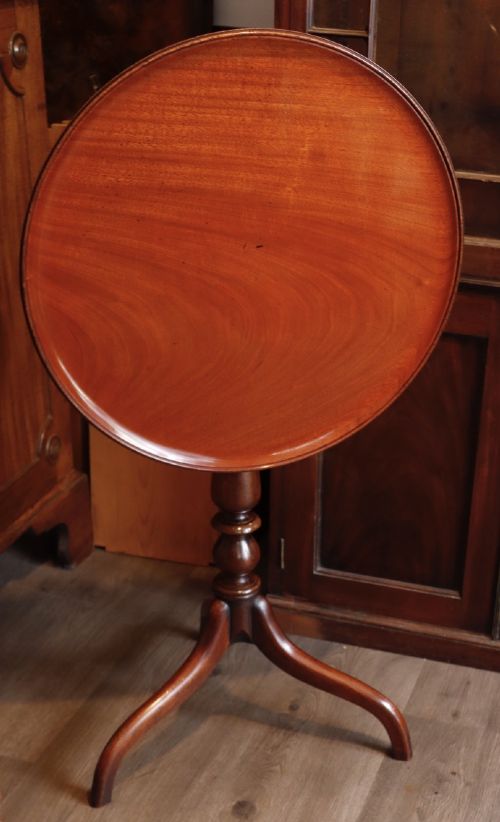
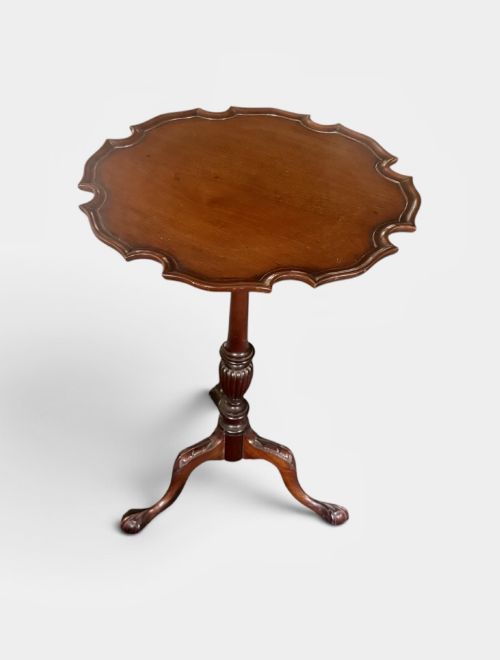
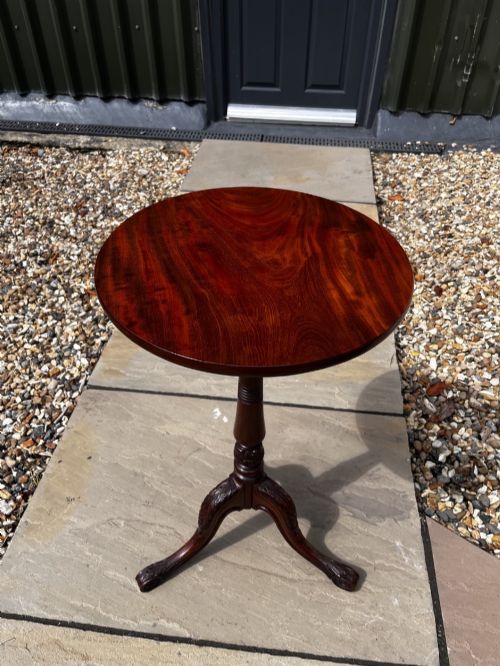
A chippendale mahogany stand encompasses a variety of elevated supports, ranging from small tripod wine tables and kettle stands to torchères and urn stands designed for specific domestic tasks. The selections span original pieces from the eighteenth century, including the George II and George III periods, alongside later Victorian and Edwardian revivals.
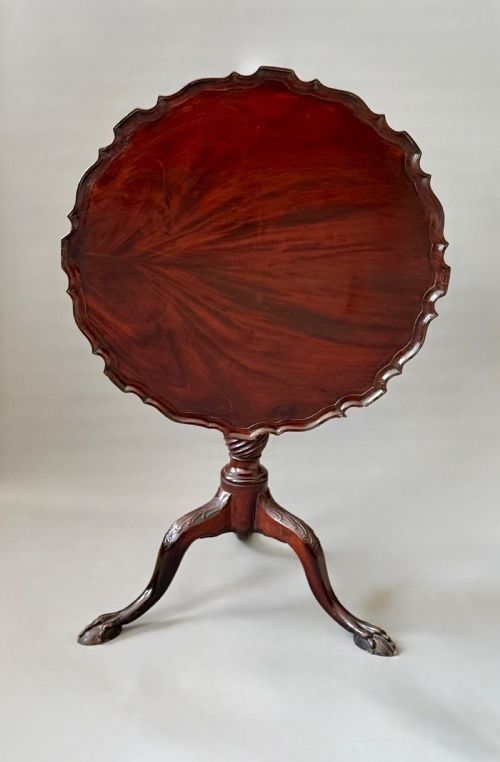
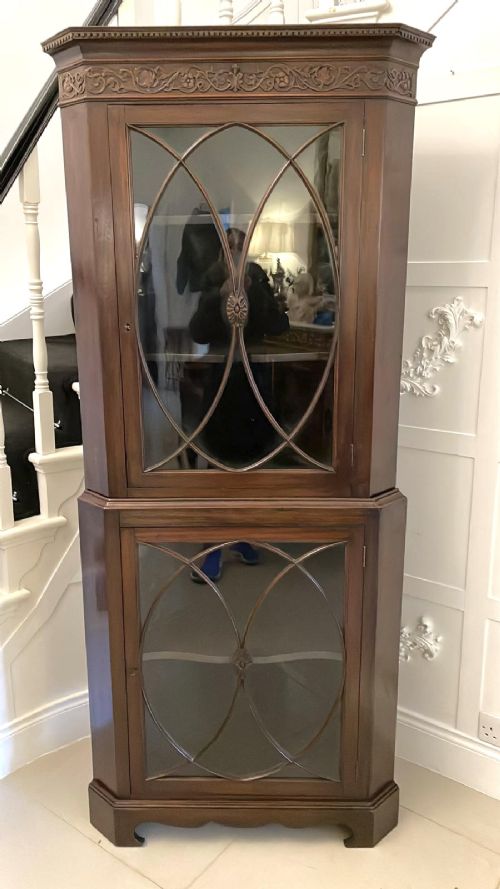
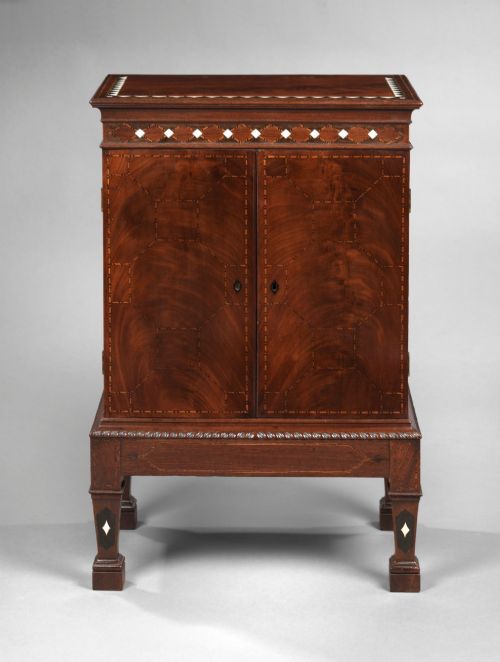
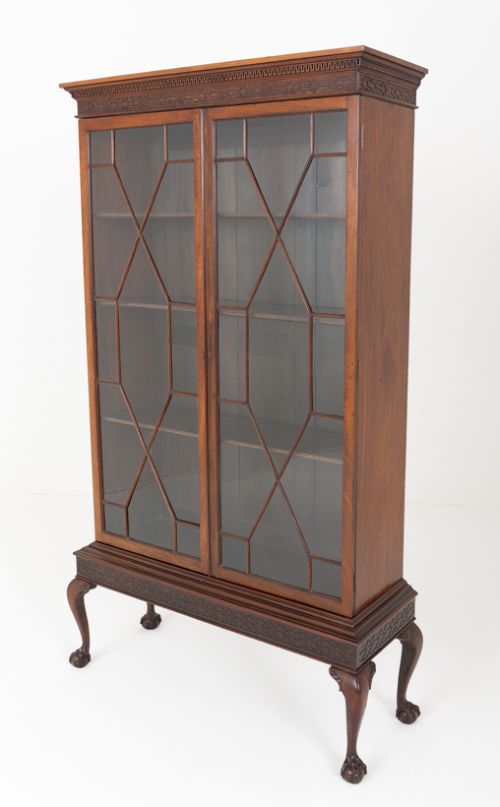
Buyers frequently encounter tripod configurations featuring tilt-top mechanisms, birdcage supports, and shaped pie crust edges, alongside tall plant stands and cabinets raised on legs. These objects reflect both the fluid lines of mid-eighteenth-century design and the more eclectic interpretations produced during the nineteenth and early twentieth centuries.
Materials and Technique
Cabinetmakers relied heavily on dense, durable mahogany, sometimes incorporating parcel gilt, satinwood, or bone inlay to accent carved surfaces. Structural stability in tripod and pedestal forms depended on tightly jointed pillar shafts and sturdy cabriole legs terminating in claw and ball or pad feet.
Ornamentation on these stands was carved directly into the timber rather than applied, utilising techniques such as pie crust edge shaping, fretwork galleries, and subtle fluting. Glazed elements on cabinet variants employed astragal framing to divide the glass panes neatly.
The listings span original eighteenth-century Georgian production through to Edwardian and 1930s revivals, utilising mahogany alongside brass, glass, and oak.
Assessing the Craft
The distinction between standard domestic production and exceptional workshop output lies in the crispness of the hand-carved details, such as acanthus leaves on knees and the precise execution of claw and ball feet. Superior examples display timber selection with a deep, rich natural grain and minimal reliance on secondary woods.
Proportional harmony and structural integrity define the higher tiers of surviving stands, ensuring that folding mechanisms, tilt-top catches, and slender pillars remain rigid and true to their original design without clumsy repair work.
James Winter and Sons
The Chippendale Mahogany Stand Glossary
- Tripod table
- A small freestanding table supported by a central pillar resting on three legs. These versatile pieces were easily moved around eighteenth-century parlours.
- Pie crust rim
- A raised, decoratively carved edge shaped in undulating curves resembling a pastry crust. It prevented tea service items from sliding off the top.
- Kettle stand
- A low occasional table designed specifically to hold a heavy tea urn or kettle. They often feature pull-out slides or small shelves for cups.
- Torchère
- A tall, slender stand intended to hold a candle or light source. They frequently feature elaborate carved columns and sturdy bases.
- Birdcage
- A wooden revolving mechanism beneath a table top allowing it to rotate and tilt. This constructive element permits flat storage when not in use.
Chippendale Mahogany Stand: Frequently Asked Questions
What is a birdcage mechanism on a stand?
A birdcage is a clever rotating block arrangement fitted beneath the table top, allowing the surface to tilt flat and turn in a circle.
This movable wooden framing connects the central pillar to the top plate without requiring metal hinges.
How were these stands used originally?
These pieces served practical roles in domestic interiors as movable surfaces for tea kettles, silver trays, porcelain, or lighting.
Tall torchères and plant stands elevated illumination and greenery above floor level to brighten dark corners.
How do I distinguish eighteenth-century pieces from later revivals?
Original pieces display authentic timber shrinkage, hand-cut joinery marks, and a deep patination acquired through centuries of use.
Revival pieces from the Victorian and Edwardian eras often show uniform machine-cut elements and different secondary woods beneath.
Why do some tripod stands have detachable tops?
Detachable tops on pivot blocks allowed servants to clear tea services quickly or store the wooden framework compactly when the room was needed for dancing.
This modular construction aided transport and seasonal storage in large country houses.