
Chippendale Mahogany Dining Chairs
When furnishing a formal interior with chippendale mahogany dining chairs, you secure seating defined by pierced splats, robust timber, and enduring revival craftsmanship.
Chippendale Mahogany Dining Chairs
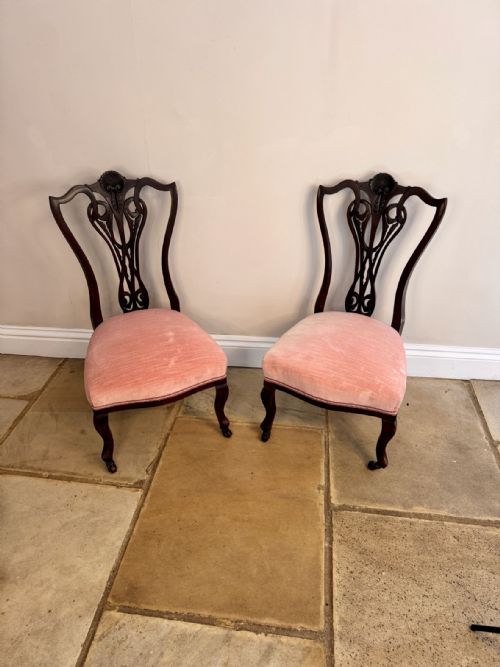
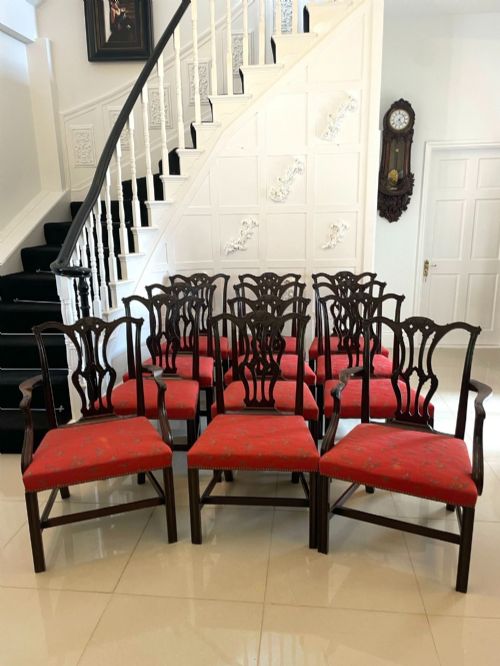
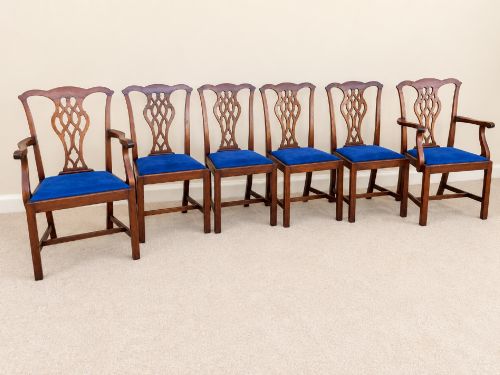
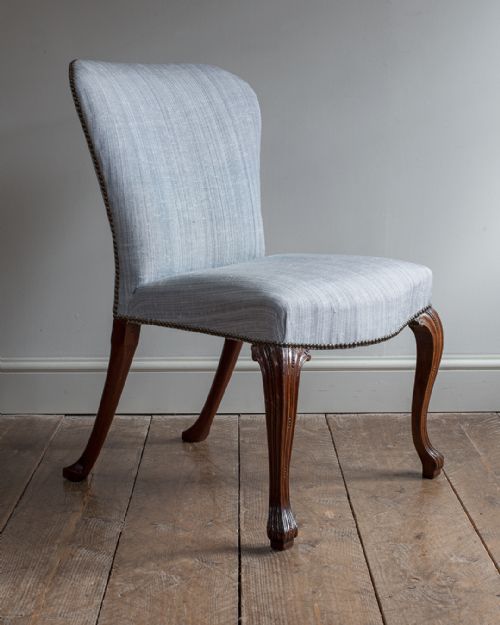
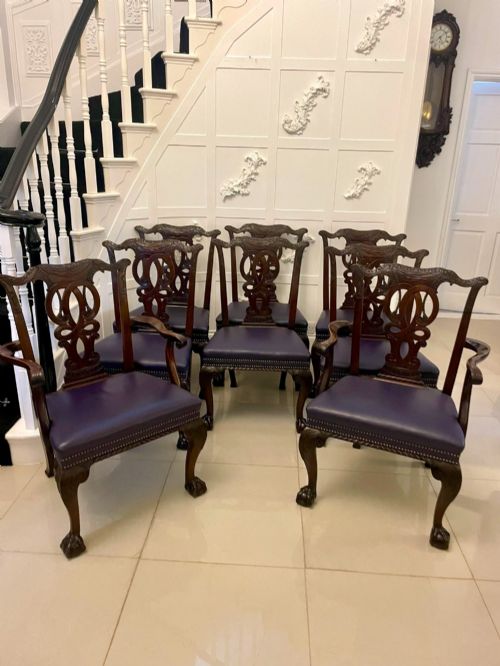
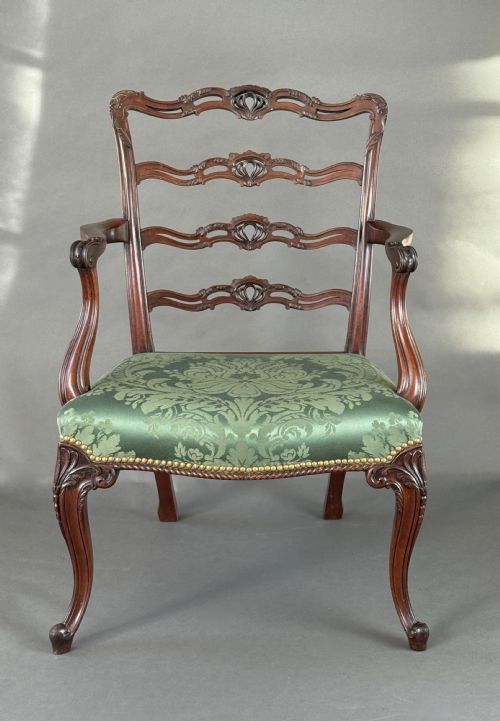
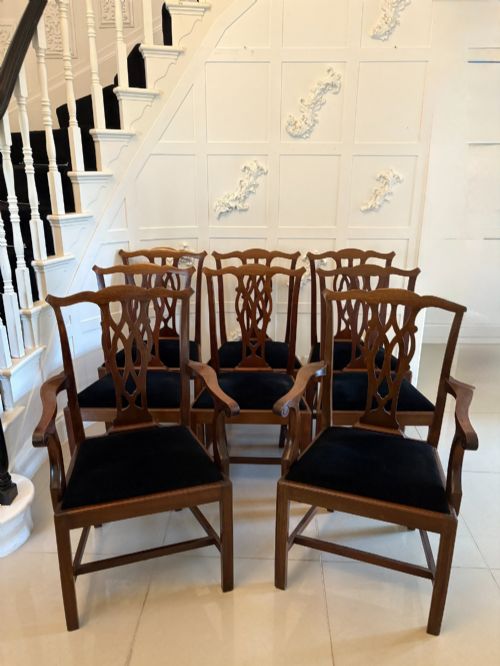
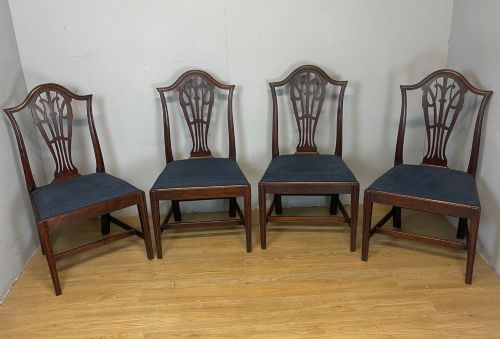
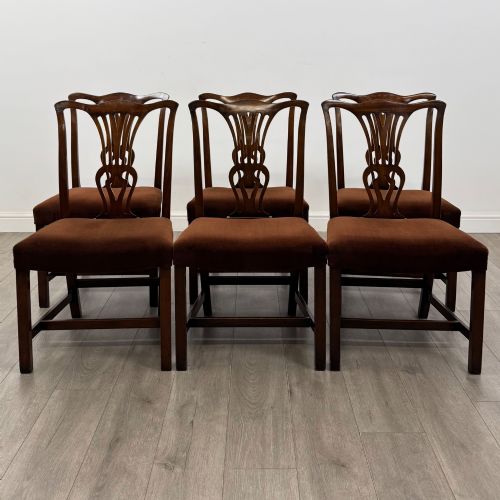
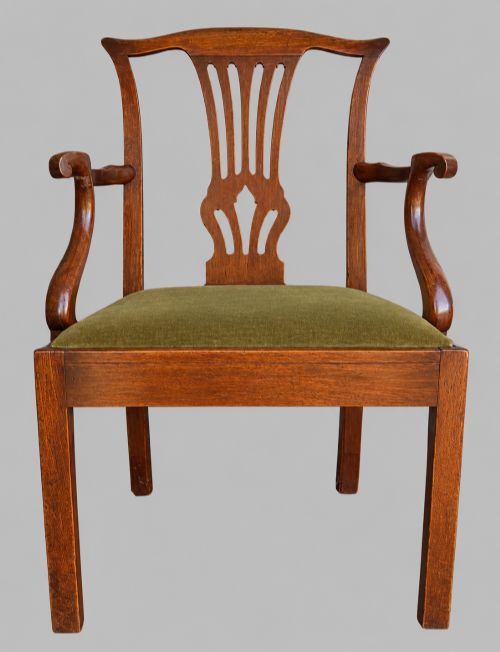
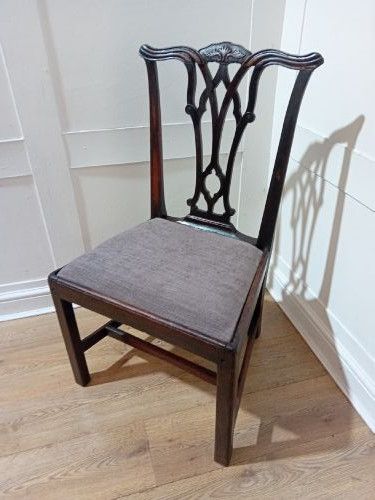
Chippendale mahogany dining chairs encompass seating furniture ranging from authentic 18th-century Georgian production to later Victorian, Edwardian, and 20th-century revival interpretations. The forms include single side chairs, open armchairs, desk chairs, and large coordinated sets intended for formal dining spaces.
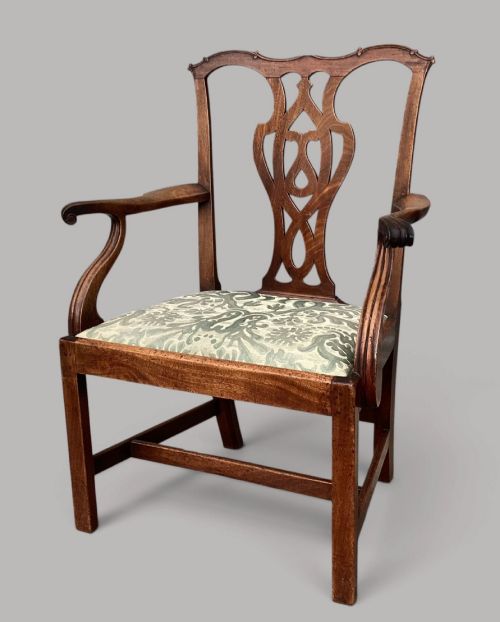
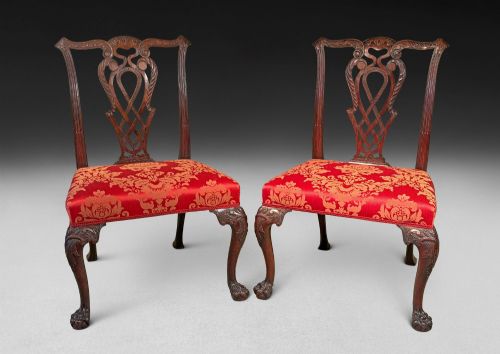
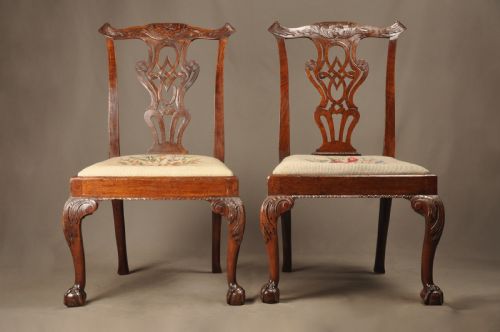
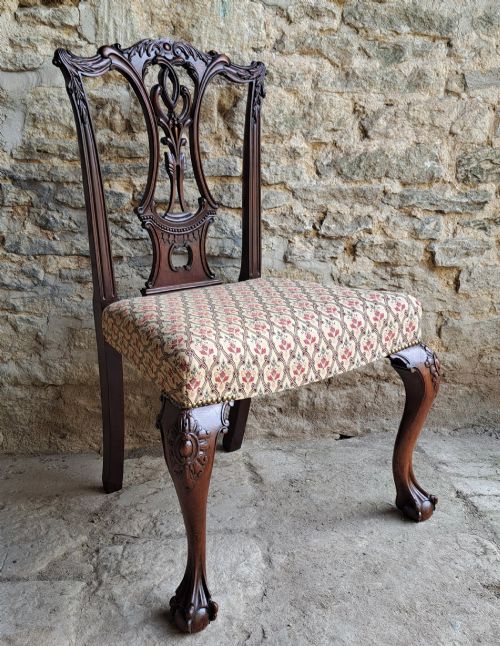
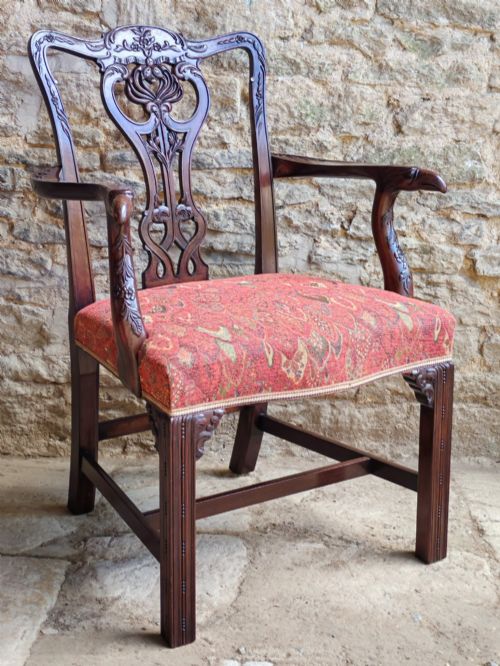
The material most frequently encountered on this page is solid mahogany, paired with drop-in or upholstered seats covered in leather, fabric, velvet, or tapestry. Many examples show the characteristic pierced splat back and carved details associated with the Chippendale design vocabulary.
Craft and Materials
Makers utilised dense, durable mahogany timbers that accepted intricate hand-carving along the top rails, splats, and rails. Joinery relied on traditional mortise and tenon construction to ensure the structural integrity of the frame under daily dining use.
Seat pads were constructed using webbing and traditional stuffing materials before being finished with textiles, leather, or brass tacks. Carved elements such as ball and claw feet or ribbon backs required skilled cabinet-makers working by hand.
Listings span multiple eras from original 18th-century Georgian productions through to Edwardian and 1920s revival interpretations.
Judging Quality
Quality rests upon the crispness of the hand-carved detail and the thickness of the mahogany timber selected for the stiles and splats. Pieces exhibiting deep, well-defined carving on the back splat and ball and claw feet represent the upper tier of the range.
Structural stability, originality of the frame, and the presence of matching sets rather than assembled groups determine the standing of individual chairs. Higher grade examples maintain tight joints and substantial timber scantlings without excessive prior restoration.
Howard and Sons·Warings·Alfred Allen of Birmingham·Phillips and Jones
The Chippendale Mahogany Dining Chairs Glossary
- Carver
- An armchair designed with armrests, traditionally placed at the head of a dining table. These frequently accompanied a larger set of single side chairs.
- Splat
- The vertical central strip of wood within the back of a chair. In these pieces, the splat is often pierced and intricately carved in ribbon or interlaced patterns.
- Ball and claw
- A foot motif depicting a bird talon clutching a ball. This feature appears frequently on the legs of Georgian and revival dining chairs.
- Ribbon back
- A chair back design where the wooden splat resembles interlaced ribbons or bows. This sophisticated carving style demands high skill from the cabinet-maker.
- Side chair
- An upright chair built without armrests. These formed the majority of large dining sets designed to fit neatly around a table.
Chippendale Mahogany Dining Chairs: Frequently Asked Questions
How do I spot an 18th-century original?
Authentic 18th-century examples display patination, hand-cut joinery, and timber characteristics consistent with Georgian workshop practices.
Closer inspection of the underside, blockings, and wear patterns helps distinguish period pieces from later Victorian and Edwardian revivals.
Are larger sets harder to find?
Sets comprising ten or twelve chairs occur less frequently than standard sets of six or eight.
Many larger groupings consist of matched single chairs and carvers brought together during later periods to suit larger dining rooms.
How should I care for leather seats?
Leather upholstery requires regular dusting and occasional treatment with appropriate conditioners to prevent drying and cracking.
Keeping the chairs away from direct sunlight and heat sources preserves both the hide and the polished mahogany frame.
What is the difference between revival and period?
Period chairs date directly from the Georgian era of the 18th century when the designs originated.
Revival pieces date from the 19th and early 20th centuries, replicating the earlier styles using contemporary workshop methods.