



Chippendale Highboy Drawers
Chippendale highboy drawers are stacked timber storage pieces of stature, prized for their imposing vertical lines and capacious drawer arrangements.
Chippendale Highboy Drawers
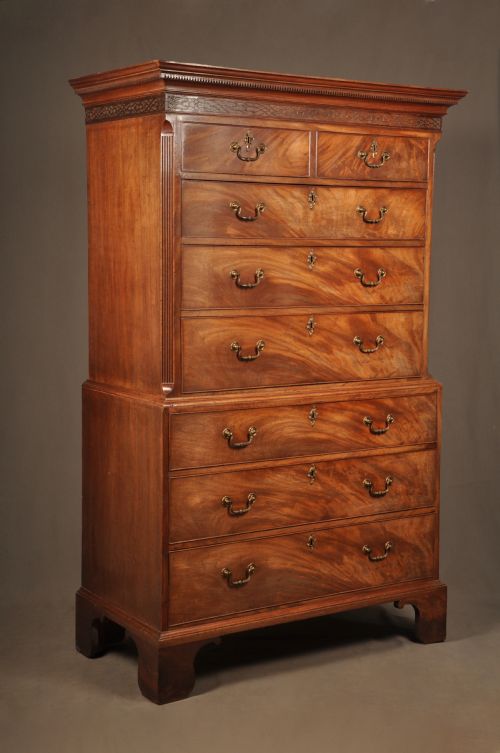
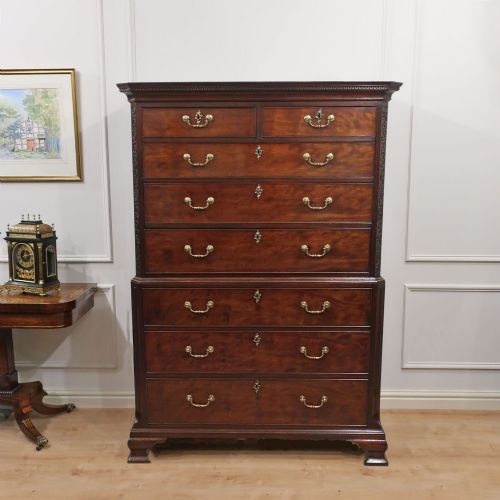
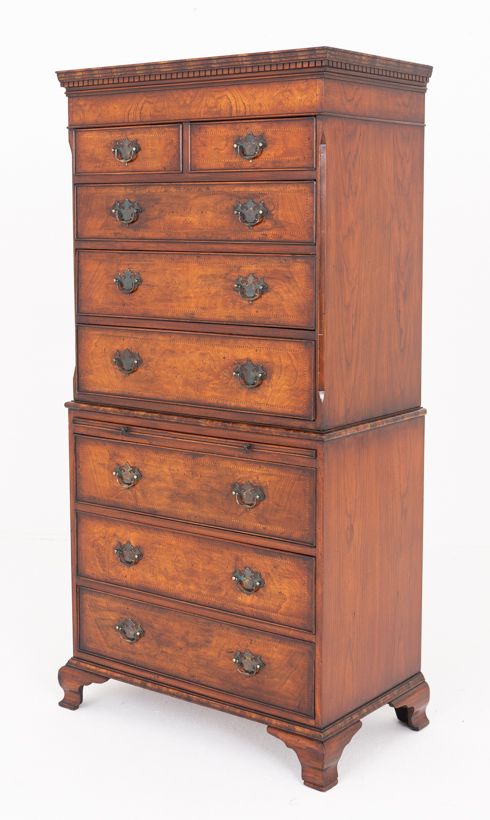
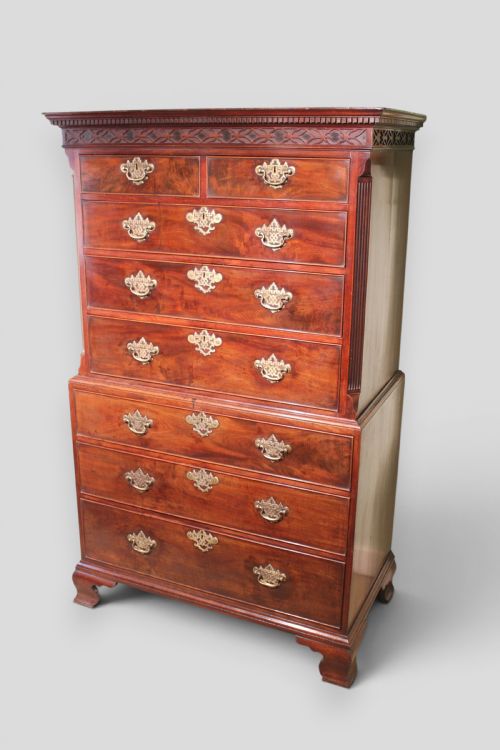
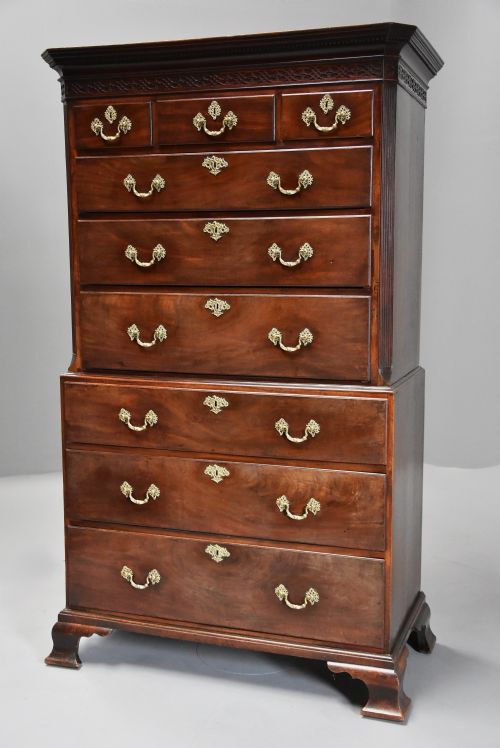
When you search for chippendale highboy drawers, you encounter stacked vertical storage furniture often recorded as chest on chest, tallboy, or chest on stand forms. These pieces divide into two distinct sections, placing a smaller set of drawers directly upon a larger base unit.
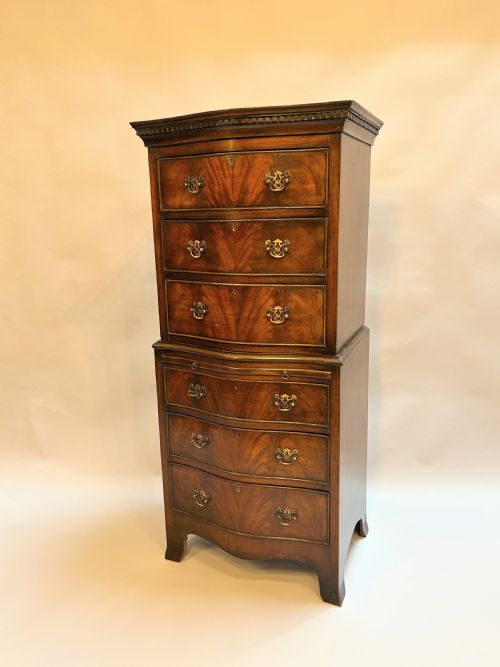
The versions you meet most frequently on this page span the 18th century, Georgian period, and Edwardian eras, alongside later revival interpretations from 1900 to 1920. Materials range from solid mahogany and oak to figured elm, flame mahogany veneer, and pine.
Regional variations appear in the record, including Irish examples and American Philadelphia style pieces featuring line inlay. Forms extend from standard chests of drawers and tallboys to specialised cabinets and secretaire variants.
Judging quality and character
The distinction between upper and lower tiers of quality rests upon the choice of timber and the depth of surface preservation. Pieces retaining original patina and figured veneers demonstrate greater visual depth than later revival equivalents.
Proportion and scale dictate the success of the silhouette, with neat-sized examples commanding particular interest. The crispness of carved details and the integrity of the original brass furniture further elevate a piece above standard utility items.
The Chippendale Highboy Drawers Glossary
- Tallboy
- A tall chest of drawers made in two sections, where a smaller upper chest sits upon a larger lower chest. This form maximises vertical storage while occupying a modest floor footprint.
- Chest on chest
- An alternative term for a tallboy, denoting two distinct carcases stacked vertically. The upper section is slightly narrower than the lower base.
- Chest on stand
- A cabinet or set of drawers elevated upon a separate open leg base rather than resting on a solid lower chest. This configuration lightens the overall visual weight.
- Flame mahogany veneer
- A sliced timber sheet displaying a distinctive flamy or mottled grain pattern applied over a secondary wood foundation. It creates highly decorative movement across drawer fronts.
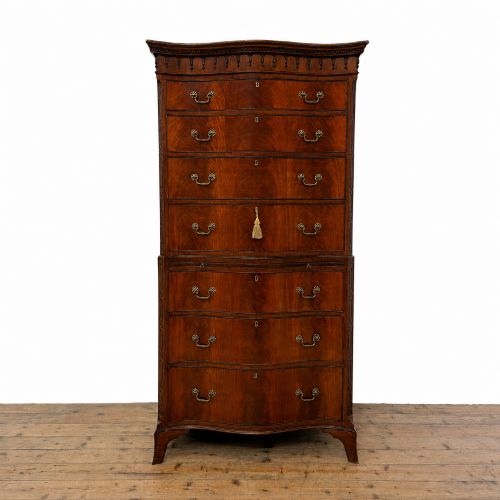
- Serpentine
- A curved front outline that undulates convexly at the centre and concavely at the sides. This contour requires skilled carpentry to execute across multiple drawer tiers.
Chippendale Highboy Drawers: Frequently Asked Questions
What is a highboy?
A highboy is a tall chest of drawers built in two stacked sections, providing substantial vertical storage capacity. The design elevates the storage space off the floor.
In historical contexts, these pieces served as principal bedroom furniture for linens and garments. They combined practicality with formal presence.
How do I date a tallboy?
Dating relies on examining timber species, construction methods, and hardware styles. 18th century examples show specific cabinetmaking traits distinct from 1920s revival pieces.
Secondary woods like pine and oak, hand-cut dovetails, and original brasses help establish the period of manufacture. Revival pieces often display standardised machine work.
Where were tallboys used?
These tall storage chests were traditionally housed in domestic bedchambers and dressing rooms. Their vertical format suited rooms with limited floor space.
Today, they function effectively in hallways, dining rooms, and bedrooms as statement storage items. Their height provides substantial capacity without dominating room layouts.
What is the difference between a tallboy and a chest on chest?
The terms are largely interchangeable within the antique trade to describe a two-tier stacking chest. Both configurations place a narrower upper section onto a wider base chest.
Regional preferences often dictate which term appears in a description. Both formats prioritize vertical storage over wide drawer layouts.