
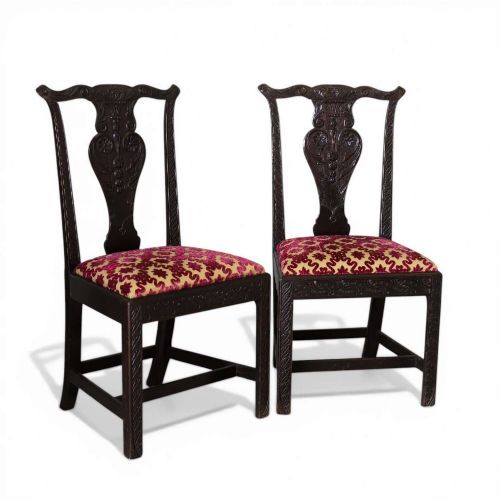
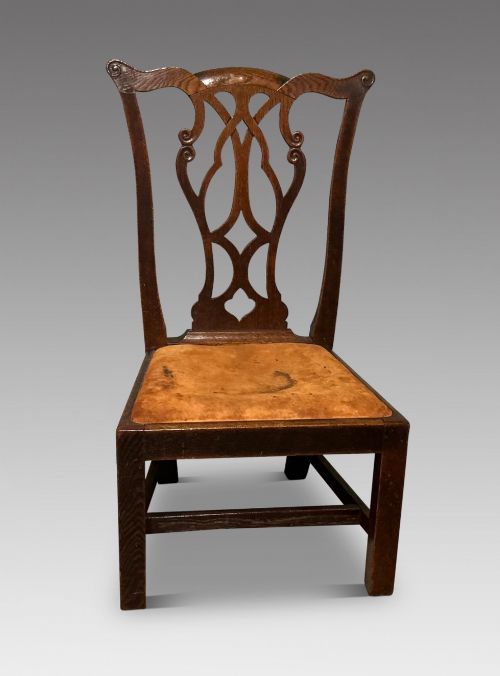
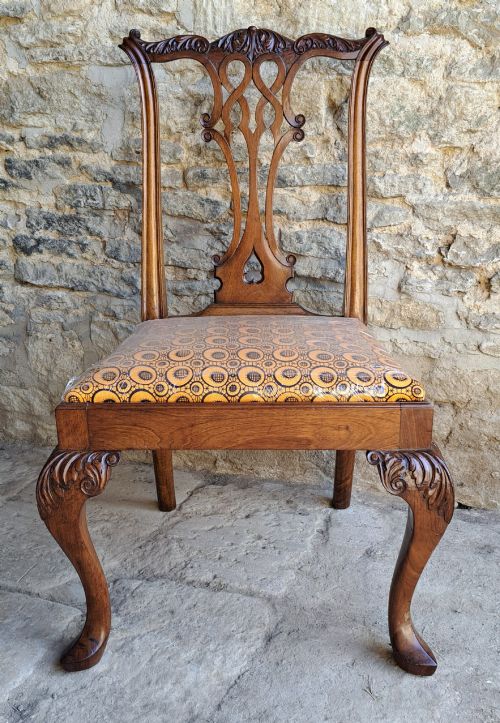
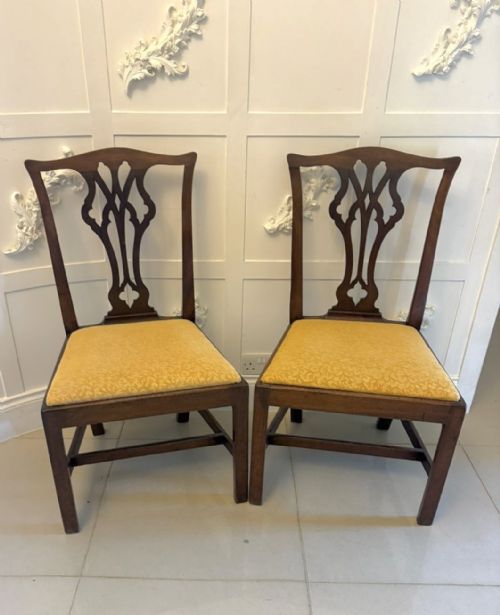


Chippendale Hall Chair
A chippendale hall chair brings sturdy timber and classical proportion into an entranceway, offering a functional seat that holds centuries of history.
Chippendale Hall Chair
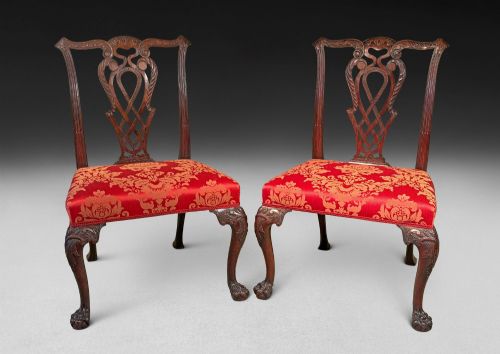
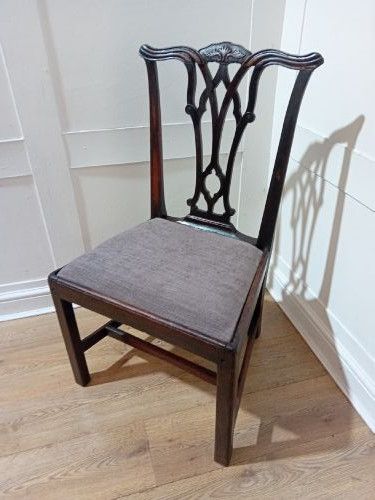
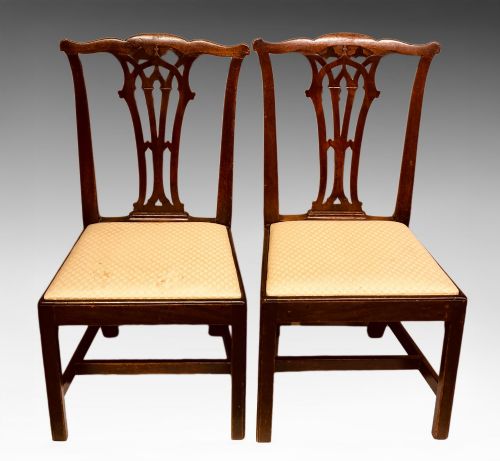
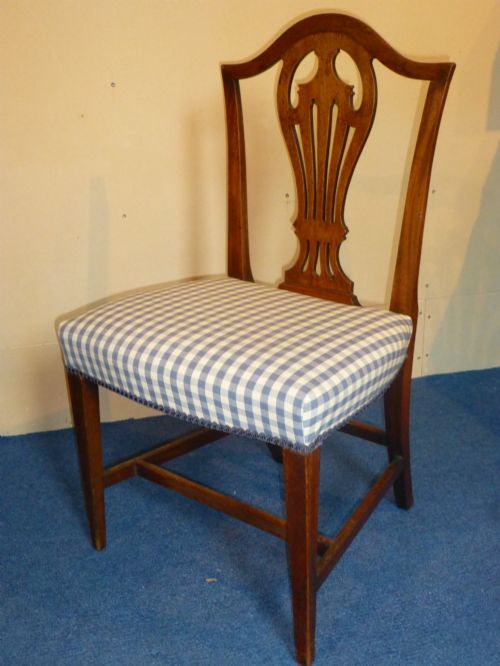
A chippendale hall chair is a robust timber seat intended for an entrance or passage, often distinguished by carved backsplats and solid wooden construction. You will encounter examples spanning the eighteenth century through to later revival periods, built in various woods and regional interpretations.
The selections here range from formal eighteenth-century George III pieces to later nineteenth-century revivals and Edwardian variations. Many pieces share standard chair forms such as side chairs and hall chairs, reflecting the enduring influence of cabinetmaker designs on domestic seating.
How They Were Made
Cabinetmakers constructed these pieces primarily from solid hardwoods including mahogany, oak, walnut, fruitwood and alder-wood. Timber selection dictated the weight and carved detail of the frame, from dense eighteenth-century mahogany to regional provincial woods.
Joinery techniques relied on mortise and tenon joints to secure frames, alongside hand-carved backsplats and rails. Where seating incorporates upholstery, materials like leather, fabric, velvet and tapestry are secured over webbing or stuffing.
What Varies in Quality
Depth and crispness of hand-carving separate standard workshop production from finer studio output, particularly along the top rail and pierced splat. Subtle variations in timber figuring and the symmetry of the structural frame also distinguish regional pieces from metropolitan work.
The integrity of the original joints and timber conservation dictate the overall condition of the chair over generations of use. Replacement elements or altered legs alter the historical weight of a piece compared to untouched examples.
The Chippendale Hall Chair Glossary
- Splat
- The vertical central strip of wood within the back of a chair. It frequently displays pierced or carved ornamentation characteristic of specific design periods.
- Cabriole leg
- A furniture leg that curves out and then in, resembling the leg of an animal. This form appears on various eighteenth-century and revival seating.
- Apprentice piece
- A miniature or trial item created by a trainee craftsman to demonstrate skill. These items exhibit standard workshop techniques on a reduced scale.
- Ladderback
- A chair back featuring multiple horizontal wooden slats resembling the rungs of a ladder. This construction appears across several regional and period styles.
Chippendale Hall Chair: Frequently Asked Questions
Where did people place hall chairs?
These chairs stood in entrance halls, corridors or waiting spaces where visitors removed outerwear. Their sturdy construction suited high-traffic areas rather than prolonged relaxation.
They offered a firm, upright seat for callers waiting to be received by the household.
How do I identify an eighteenth-century piece?
Look closely at the timber grain, tool marks on the underside and the method of joinery used in the frame. Eighteenth-century examples often utilise dense mahogany or regional hardwoods with hand-cut tenons.
Comparison with documented pieces from the Georgian era helps confirm the period of manufacture.
Are these chairs comfortable for daily use?
Most historic hall chairs provide an upright, supportive posture rather than deep cushioning. Many feature solid wooden seats intended for brief sitting rather than lounging.
Adding a removable pad can soften the seat without altering the historic timber frame.
What is a revival piece?
Revival items are later interpretations, often made during the nineteenth or early twentieth century, that copy earlier cabinetmaking styles. They reflect the period's taste for historic design aesthetics.
Construction details and secondary woods generally reveal the true date of a revival piece.