




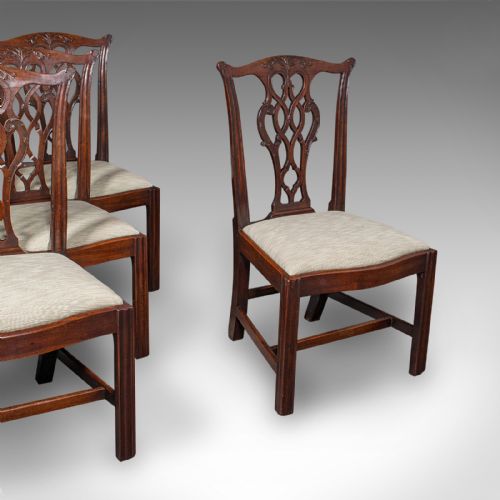

Chippendale Fretwork Chairs
Chippendale fretwork chairs are carved wooden seating pieces defined by intricate pierced splats, offering both historical distinction and lasting elegance.
Chippendale Fretwork Chairs
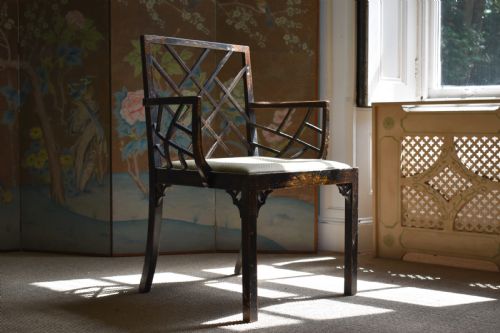
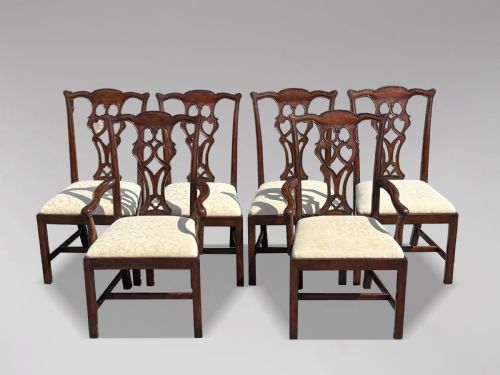
When you search for chippendale fretwork chairs, you encounter seating forms spanning the eighteenth century through to twentieth-century revivals. The selection includes dining chairs, side chairs, and open armchairs, alongside library chairs and distinct regional variants like the Cockpen chair.
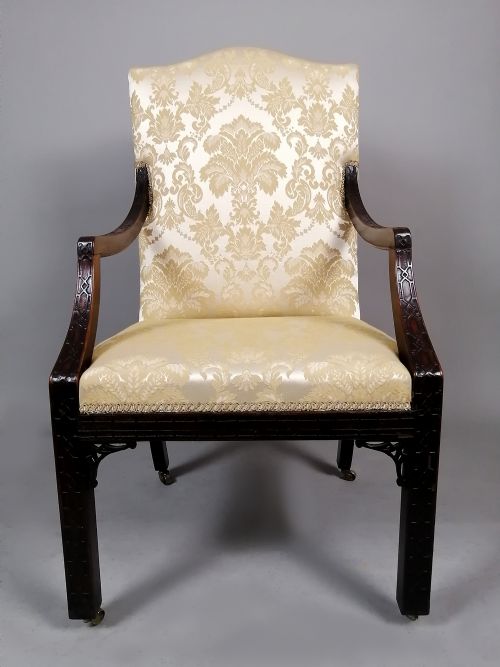
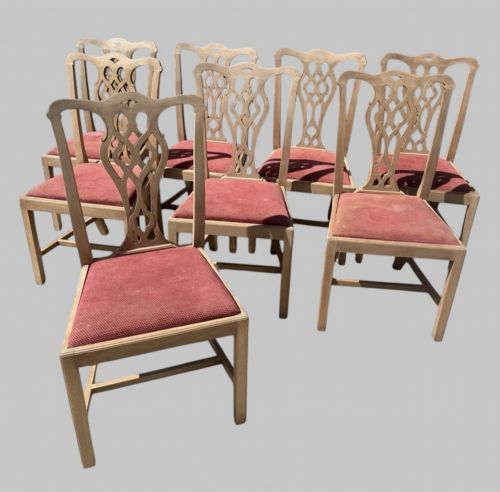
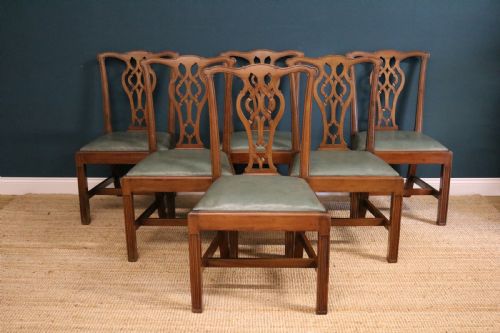
Most examples you meet on this page date from the nineteenth and early twentieth centuries, drawing heavily on Georgian designs and Chinese Chippendale motifs. These pieces utilise traditional timber frames and often feature upholstered seats covered in fabric, leather, or velvet.
Materials and Construction
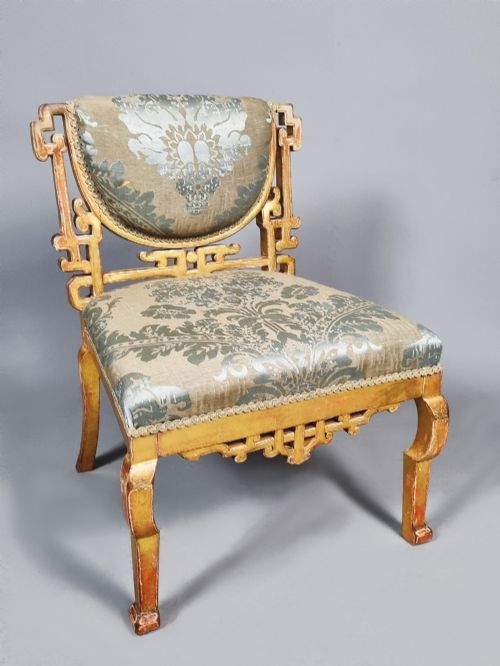
The primary material across these pieces is mahogany, sometimes bleached or finished as giltwood, providing the structural strength needed for detailed piercing. Woodworkers fashioned the intricate lattice and fretwork patterns by hand, applying precise joinery to connect the splats to the chair rails.
Upholstered elements rely on traditional stuffing techniques secured with materials such as brass nails, while specific decorative frames incorporate carved pagoda details or geometric Chinese-inspired interlacing.
Listings feature mahogany as the predominant timber, alongside decorative variations in giltwood, leather, velvet, and damask upholstery.
Assessing Quality and Execution
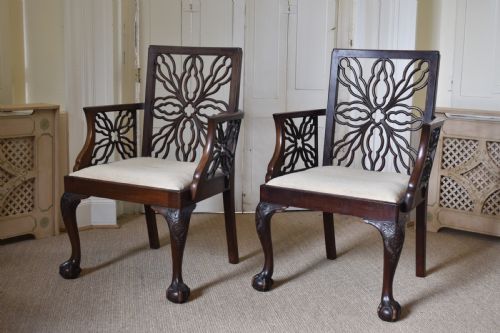
The standard of a piece rests on the crispness and depth of the hand carving within the fretwork splat. Finer examples display meticulous attention to proportion, where the pierced geometric or botanical patterns maintain structural integrity without appearing brittle.
The choice of timber grain and the integrity of the original joinery further separate standard production items from exceptional cabinetwork. Period authenticity and the precision of revival styling dictate the overall standing of each chair.
Waugh & Son·Thomas Chippendale·Robert Manwaring
The Chippendale Fretwork Chairs Glossary
- Fretwork
- Ornamental perforated or interlaced design resembling lattice. This technique defines the openwork backsplats characteristic of Chinese Chippendale seating.
- Splat
- The vertical central strip of wood down the back of a chair. In these pieces, the splat is frequently pierced into elaborate geometric patterns.
- Cockpen
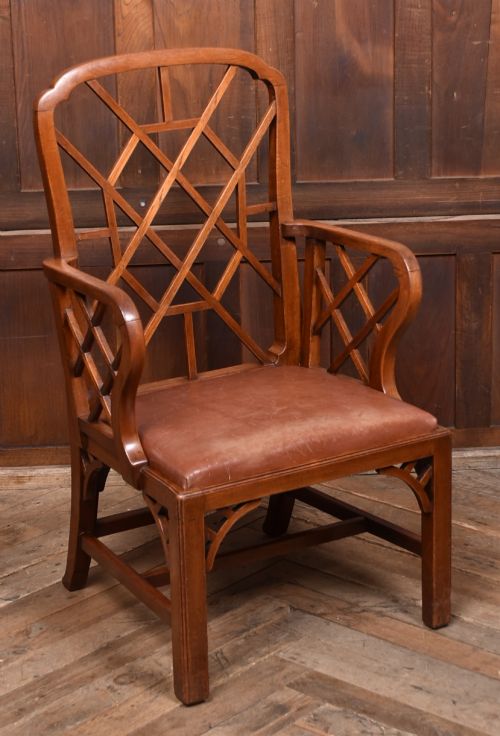
- A lattice-backed chair design with straight legs and structural stretchers. This regional style takes its name from a Scottish estate.
- Giltwood
- Wood that has been coated with gold leaf or a gold-coloured finish. It appears on select decorative revival and nineteenth-century frames.
- Elbow chair
- An alternative term for an armchair with wooden supports for the arms. These pieces often serve as seating at the head of a dining table.
Chippendale Fretwork Chairs: Frequently Asked Questions
Are twentieth-century revival chairs authentic?
Twentieth-century revival chairs are authentic examples of the periods in which they were manufactured, such as the Edwardian era or the 1910s. They represent the continuing appreciation for eighteenth-century design rather than original Georgian production.
Cabinetmakers of these later decades utilised period timbers like mahogany to replicate the intricate carving and proportion of earlier masterwork.
What is a Cockpen chair?
A Cockpen chair is a specific form of open armchair or side chair featuring a grid-like lattice back. The design draws inspiration from Chinese fretwork traditions adapted by British makers.
These chairs typically include straight wooden legs joined by sturdy stretchers, making them visually lighter than solid-backed upholstered seating whilst remaining structurally durable.
How should I care for mahogany dining chairs?
Mahogany dining chairs require consistent indoor humidity levels to prevent timber movement and cracking in the joints. Regular dusting with a soft, dry cloth preserves the polished surface without building up wax residues.
Protecting the upholstered seats from direct sunlight prevents fading in fabrics such as damask, velvet, or leather.
Can I mix armchairs with side chairs?
Mixing open armchairs with side chairs follows long-established dining room traditions. Armchairs historically occupied the ends of a dining table while side chairs lined the sides.
Matching stylistic details, such as similar fretwork patterns or mahogany frames, ensures a cohesive appearance when grouping sets together.