

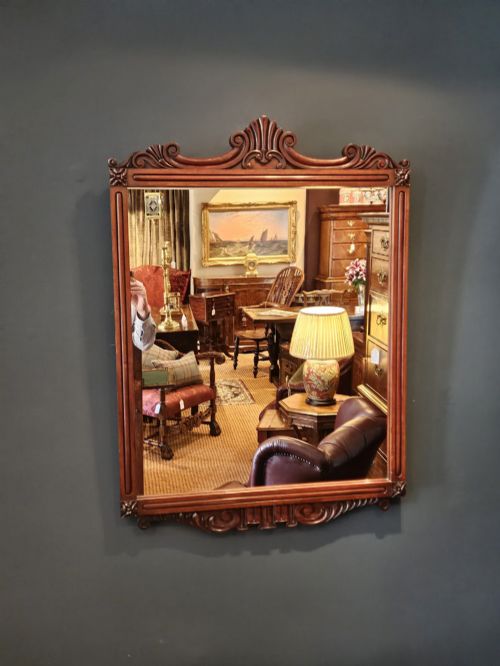


Chippendale Crest Mirror
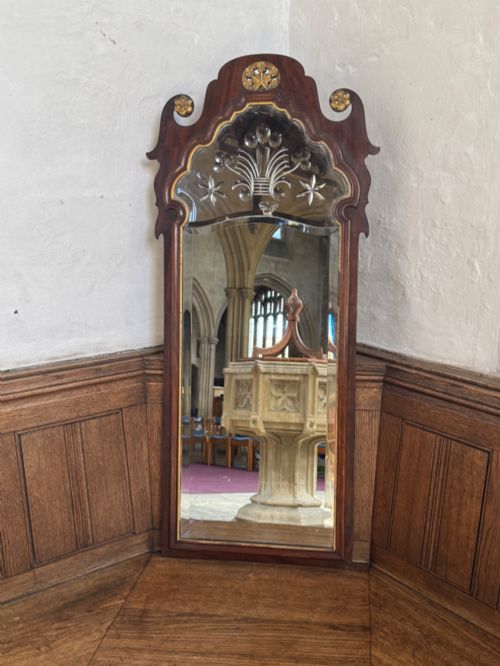
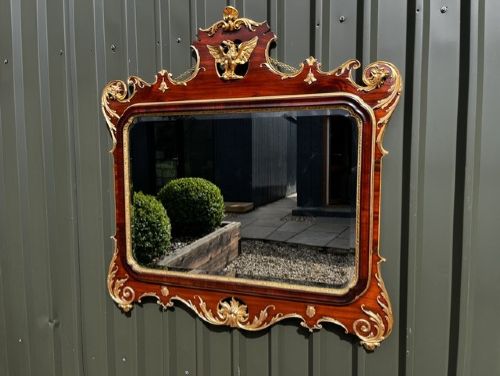
A chippendale crest mirror brings a sharp silhouette and carved detail to a room, offering the proportion collectors seek in period wall furniture.
Chippendale Crest Mirror
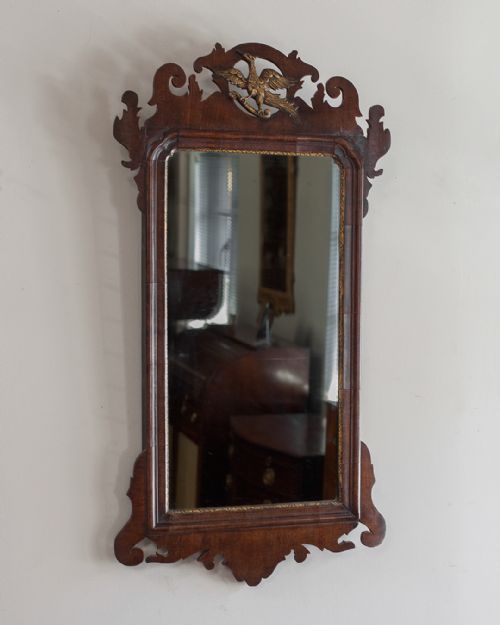
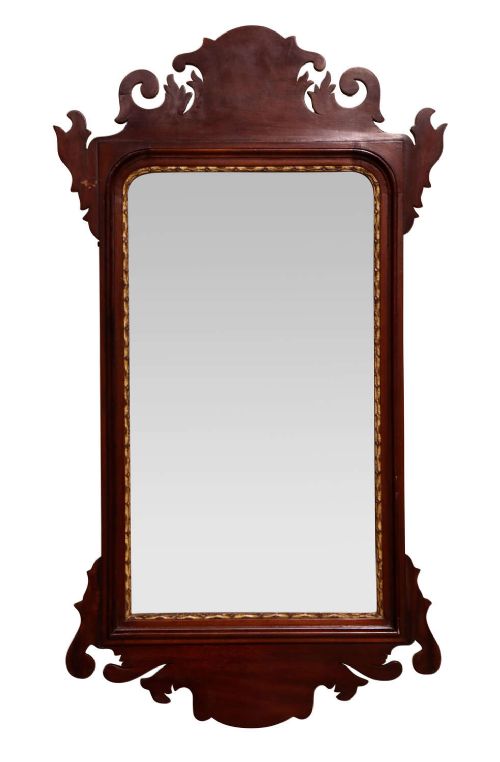
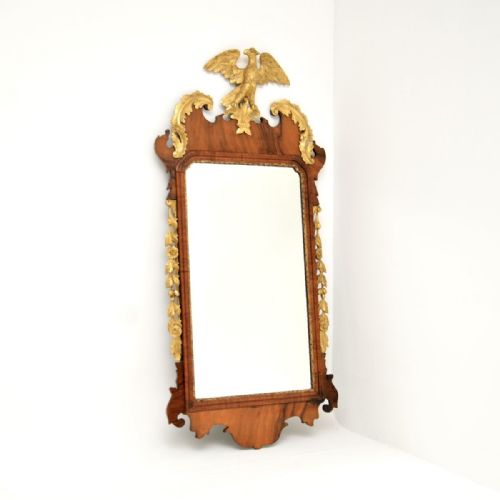
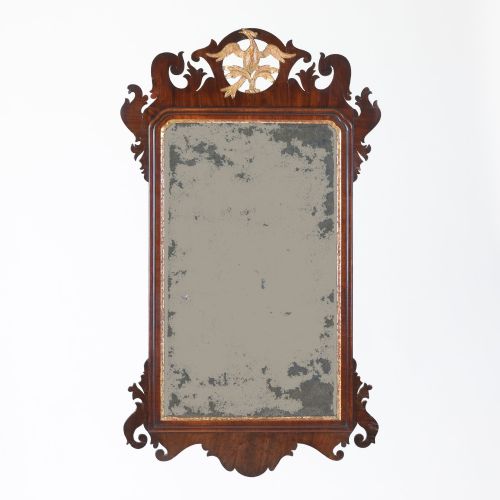
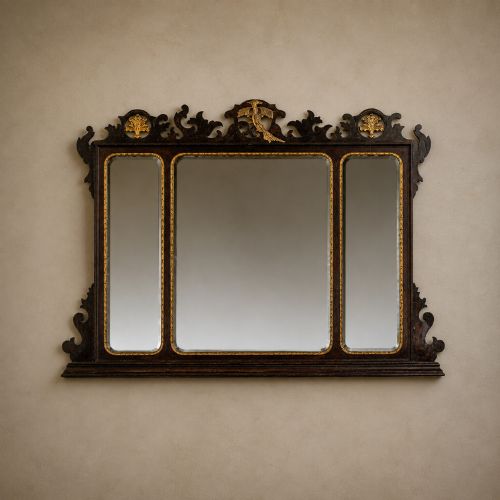
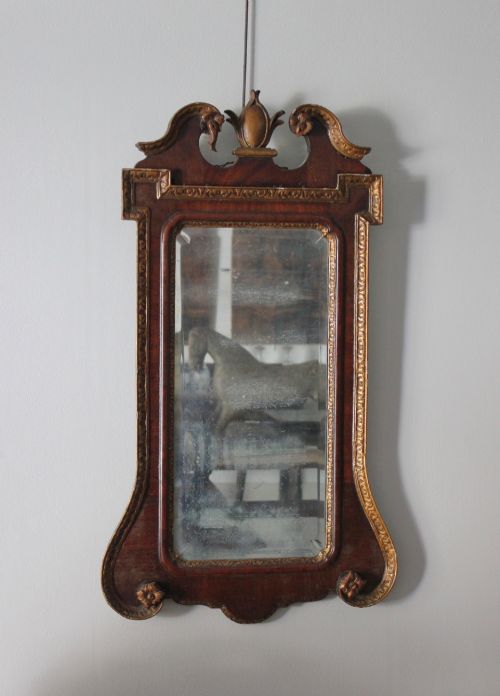
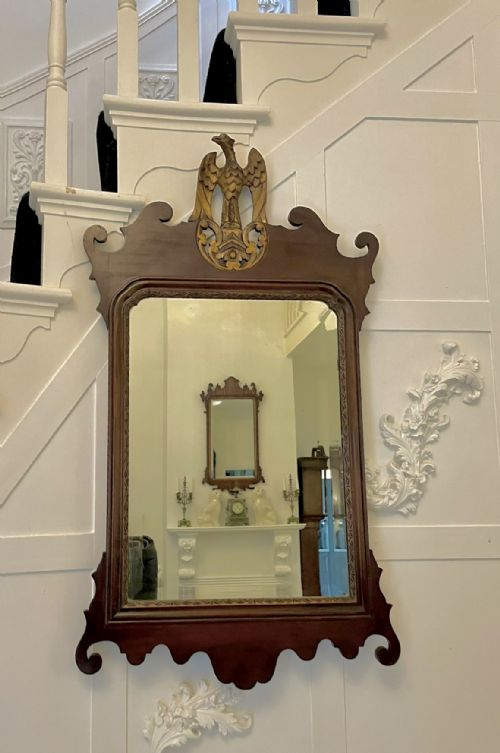
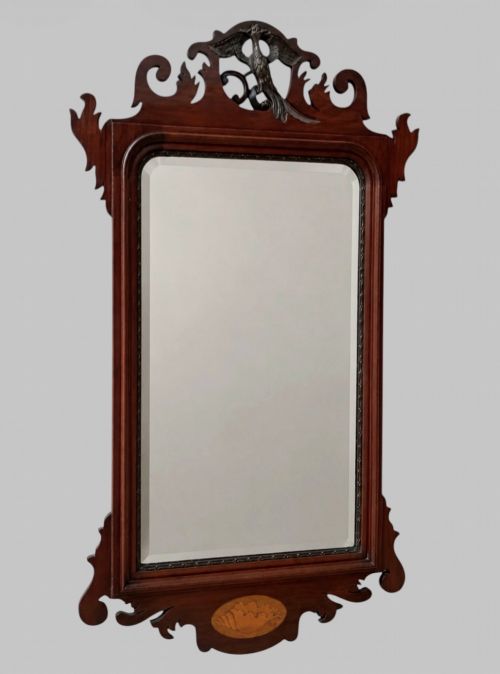
When you search for a chippendale crest mirror, you are looking at wall and overmantel pieces defined by pierced fretwork frames, scrolling ears, and carved crests often featuring the iconic ho-ho bird. The pieces you meet on this page range from eighteenth-century examples to later revivals from the nineteenth and early twentieth centuries.
The primary forms take shape as upright rectangular wall mirrors and wider overmantels, frequently utilising mahogany or walnut veneers alongside parcel gilt highlights. These designs echo the Georgian aesthetic of the mid-eighteenth century, whether produced during that foundational era or reinterpreted in Victorian and Edwardian workshops.
How they were made
Cabinetmakers constructed these frames using dense hardwoods like mahogany and walnut, often applying thin veneers over secondary timbers and shaping the outlines with fret saws. The intricate scrollwork and crests required precise hand-carving before carvers applied gesso to prepare specific areas for gold leaf or gilt decoration.
Mirrors of the eighteenth century typically utilised Vauxhall plates with bevels, held within rebates behind the wooden frame, while later revivals often incorporated bevel-edged plate glass.
Current listings feature walnut, mahogany, and giltwood frames spanning the eighteenth century to the Edwardian period.
What varies in quality
The distinction between ordinary and exceptional work lies in the crispness of the fret-cut silhouette and the depth of the hand-carved crest. Finer examples display balanced proportions, delicate scrolling ears that remain intact, and original gilding that has aged with a soft lustre rather than flattening into a dull finish.
The quality of the timber grain on the walnut or mahogany face also dictates the visual weight of the piece, alongside the retention of original glass plates and backboards.
The Chippendale Crest Mirror Glossary
- Fretwork
- Openwork patterns cut into thin boards using a fretsaw. This technique forms the decorative borders characteristic of these mirrors.
- Parcel Gilt
- Partially gilded surfaces where gold leaf or paint highlights specific carved details against a wood background. This method contrasts the warm timber grain with bright metallic accents.
- Vauxhall Plate
- Early mirror glass featuring characteristic bevelling along the edges. Such plates are associated with eighteenth-century production.
- Gesso
- A plaster-like mixture applied to wood surfaces to provide a smooth base for gilding. Carvers modelled fine details directly into this layer before applying gold leaf.
- Overmantel Mirror
- A large horizontal mirror designed to hang above a fireplace mantel. These pieces frequently repeat the fret-cut crests and gilt motifs of smaller wall mirrors.
Chippendale Crest Mirror: Frequently Asked Questions
How do I tell an 18th century mirror from a revival?
Eighteenth-century examples display the specific tool marks, drier timbers, and subtle wear patterns associated with period handwork. The secondary woods and foxing on the glass plate often provide further clues to the original date.
Revival pieces from the Victorian and Edwardian eras tend to use machine-sawn precision for the fretwork and heavier backboards, even when copying George II or George III styles closely.
What is a ho-ho bird crest?
The ho-ho bird is a stylized Chinese phoenix motif frequently carved into the crest of eighteenth-century and revival mirrors. It sits atop the scrolling pediment with outstretched wings and a long tail.
This decorative element was adopted by cabinetmakers during the height of the chinoiserie taste in English furniture design.
Where should I hang a fretwork wall mirror?
These mirrors suit spaces where their carved silhouettes can be seen against a plain wall, such as above a console table or a fireplace. Their vertical proportions help draw the eye upward in principal reception rooms.
Avoid damp walls or areas in direct sunlight to protect the fragile gilt decoration and wood veneers.
Are original mirror plates common?
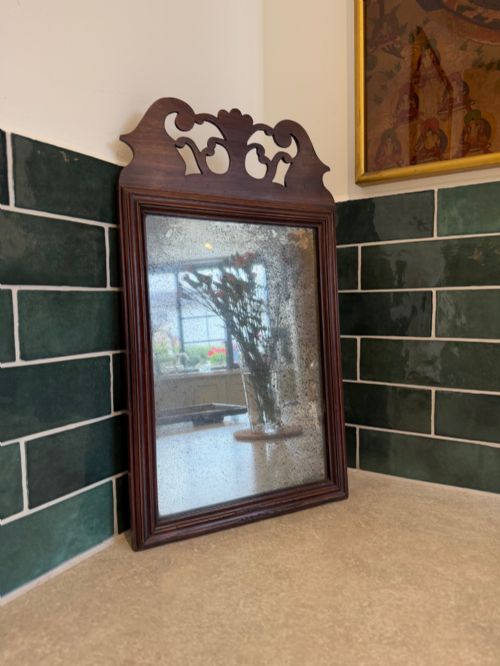
Original glass plates do survive in period pieces, often showing minor oxidation or distortion known as foxing. This uneven reflection is valued by collectors as proof of age.
Many mirrors from the eighteenth century onwards received replacement plates during their history when the original silvering degraded.