

Chippendale Carved Armchair
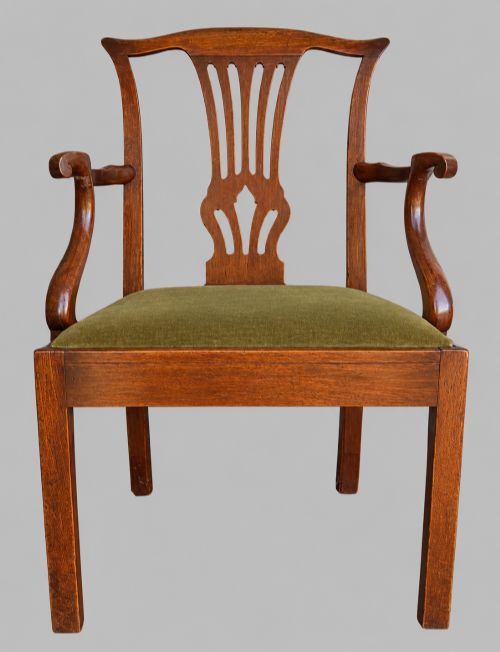
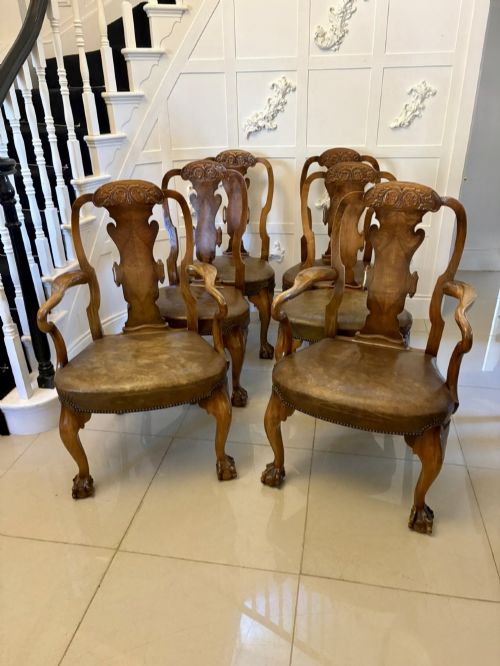
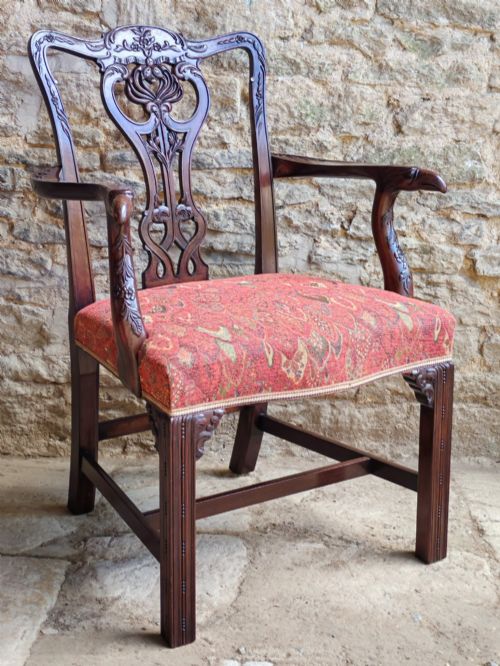
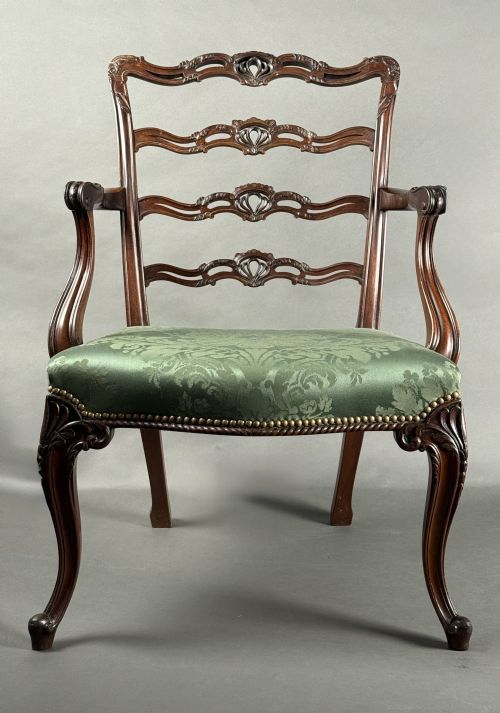
A chippendale carved armchair brings substance and robust timber to a room, offering solid mahogany frames and traditional carving that command attention.
Chippendale Carved Armchair
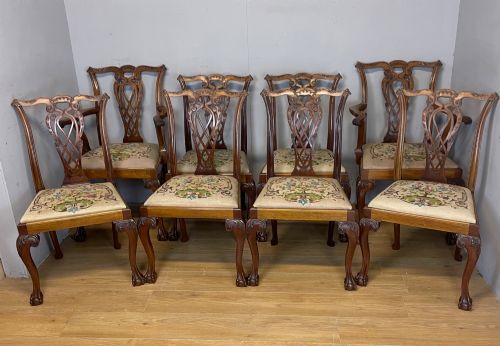
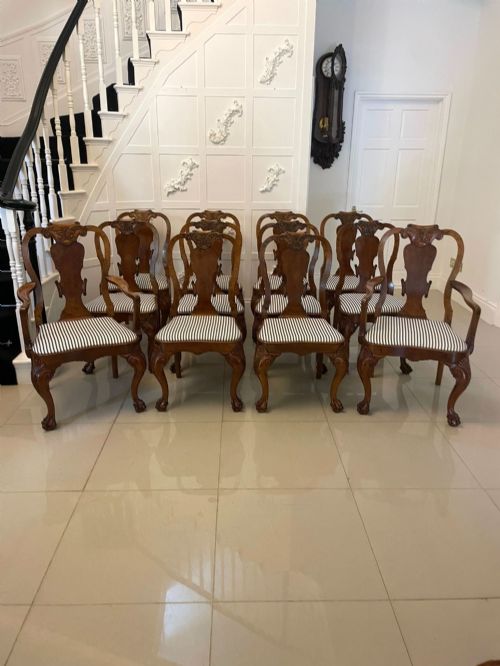
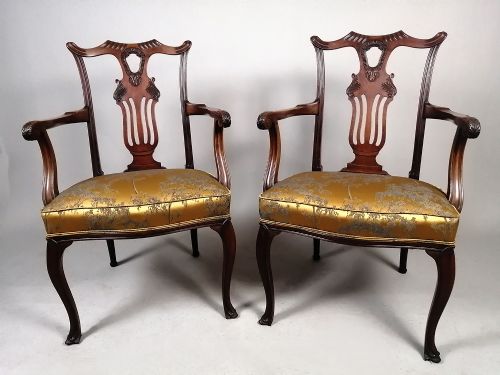
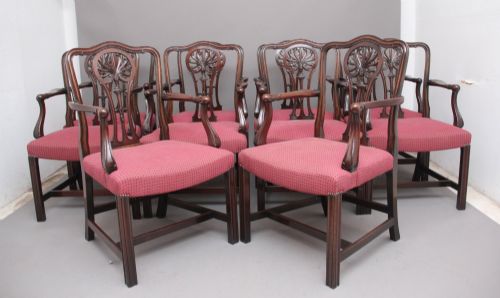
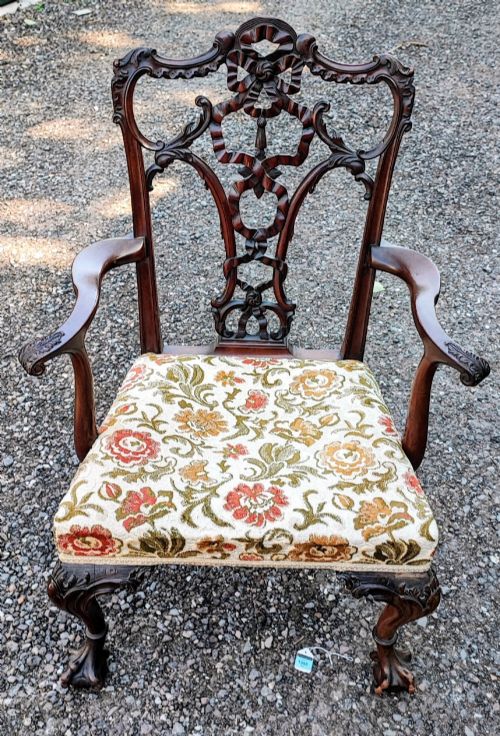
A chippendale carved armchair represents a sturdy form of seating built primarily from mahogany, appearing in various incarnations from the eighteenth century onwards. Buyers searching for a chippendale carved armchair encounter examples spanning from authentic Georgian period pieces to later revival iterations produced through the nineteenth and twentieth centuries.
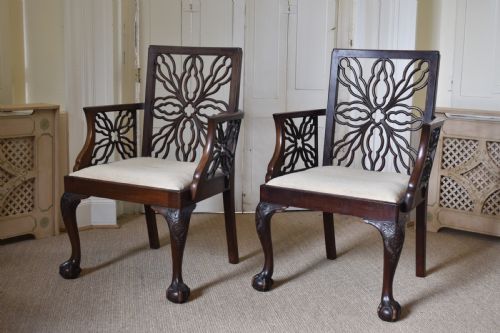
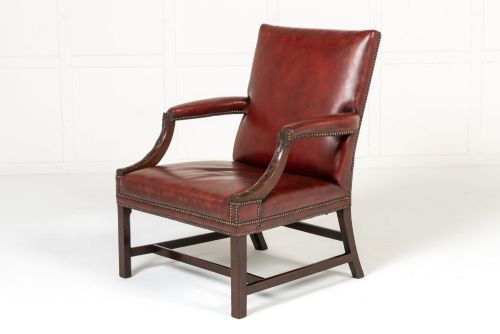
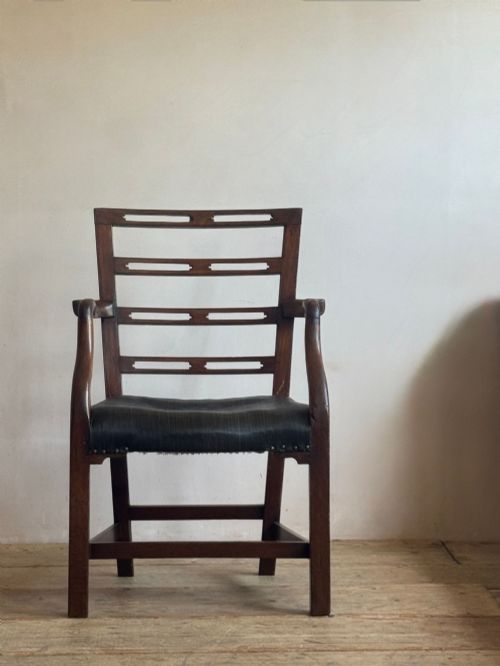
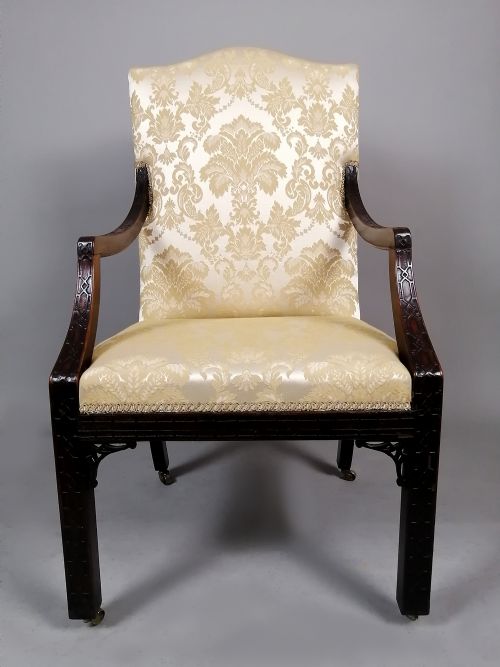
The selection ranges widely in function and form, encompassing single library chairs, desk chairs, and large suites of dining chairs. Many pieces adopt specific regional or stylistic variants, including Chinese Chippendale designs, Cockpen chairs, and library Gainsborough chairs upholstered in leather.
Most items met on this page belong to revival periods such as the Victorian and Edwardian eras, constructed to emulate the earlier Georgian aesthetic. These later pieces preserve the characteristic carved backs, elbow supports, and cabriole legs of the original eighteenth-century blueprints.
Materials and Construction
Makers built these armchairs primarily using solid mahogany, selected for its dense grain and capacity to hold intricate hand-carved details. Frames often incorporate structural elements of walnut or other hardwoods where hidden strength is required.
Upholstery forms a vital component of the construction, utilising materials such as leather, hide, damask, fabric, and velvet secured over webbing and stuffing. Brass tacks frequently edge the leather upholstery on library and desk chairs, adding a finished metallic border to the padded surfaces.
Some chairs retain secret notes tucked inside the seat webbing.
Assessing Quality
The depth and crispness of the timber carving separate standard workshop output from exceptional examples. Sharp, well-defined details on the splats and legs indicate skilled handwork rather than hasty production.
The integrity of the timber frame and the quality of the chosen mahogany grain dictate the baseline worth of any piece. Original period construction with honest joinery holds greater distinction than later assembled or heavily restored alternatives.
Thomas Chippendale·Warings·Alfred Allen
The Chippendale Carved Armchair Glossary
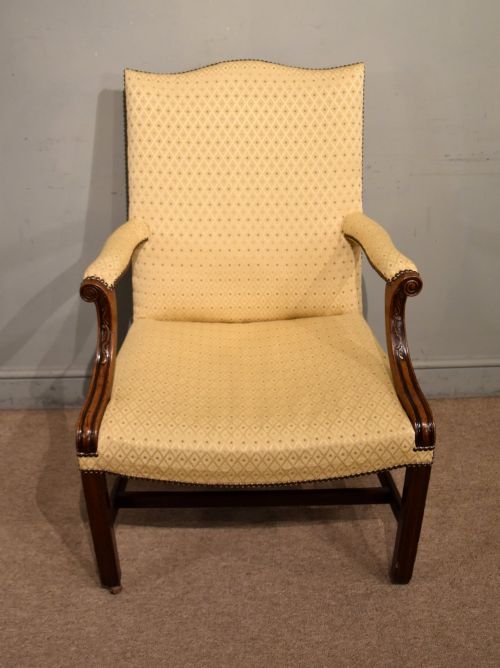
- Gainsborough armchair
- A wide, upholstered armchair with open padded arms, originating in the mid-eighteenth century and typically utilised as a desk or library seat.
- Cockpen chair
- A lattice-backed chair design influenced by Chinese fretwork, popular during the eighteenth century and associated with specific Scottish country houses.
- Elbow chair
- An armchair designed primarily for use at a desk or dining table, featuring supportive armrests.
- Chippendale revival
- A nineteenth or twentieth-century decorative movement that recreated the furniture styles of Thomas Chippendale.
- Cabriole leg
- A furniture leg that curves outward at the knee and tapers inward toward the foot, often terminating in a claw or pad.
Chippendale Carved Armchair: Frequently Asked Questions
How do I date a Chippendale armchair?
Dating relies upon timber characteristics, construction methods, and stylistic cues present in the frame. Eighteenth-century pieces exhibit period joinery and mature mahogany patination.
Later revival items from the nineteenth and twentieth centuries often display machine-assisted elements or timber finishes characteristic of Victorian and Edwardian workshops.
Were these chairs used at desks?
Many examples function directly as desk or library chairs, particularly the wider Gainsborough forms and elbow chairs. Their open armrests and upholstered seats provided comfortable working positions.
Dining chairs with arms also served at the heads of large tables during formal meals.
What is Chinese Chippendale?
Chinese Chippendale refers to a distinct sub-style featuring geometric fretwork, pierced splats, and square lattice patterns inspired by Chinese design motifs.
These pieces integrate oriental decorative elements into standard mahogany chair frames.