




Chinoiserie Temple Jar
A chinoiserie temple jar brings centuries of decorative ceramic artistry into a room, offering striking hand-painted scenes and rich cobalt pigments.
Chinoiserie Temple Jar
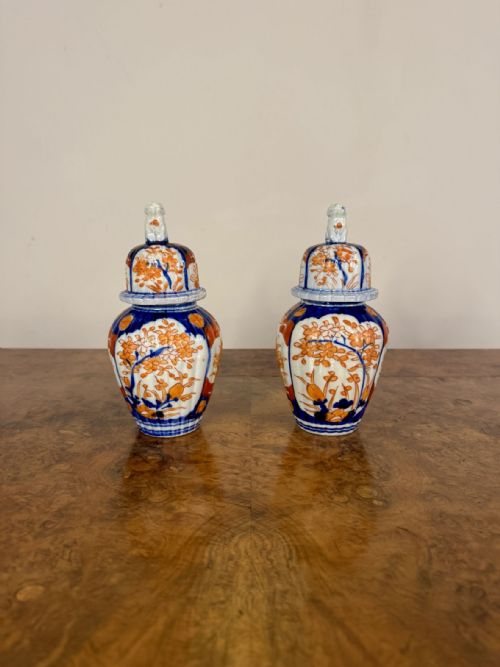
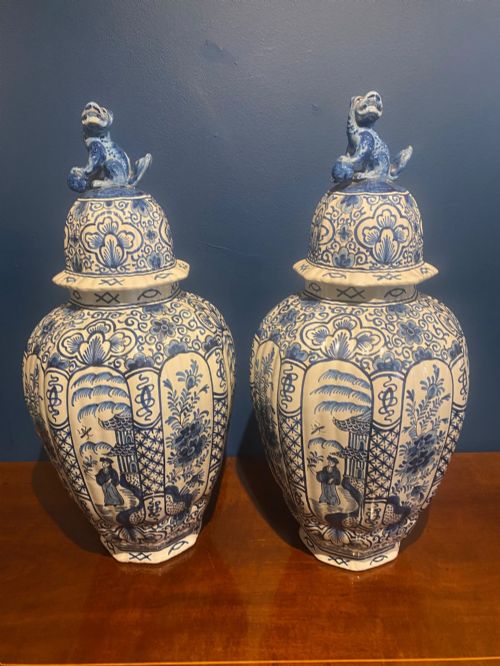
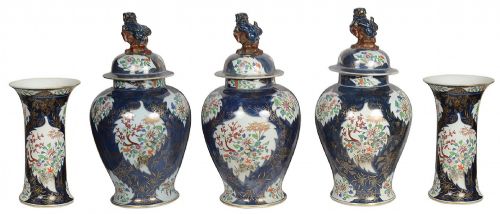
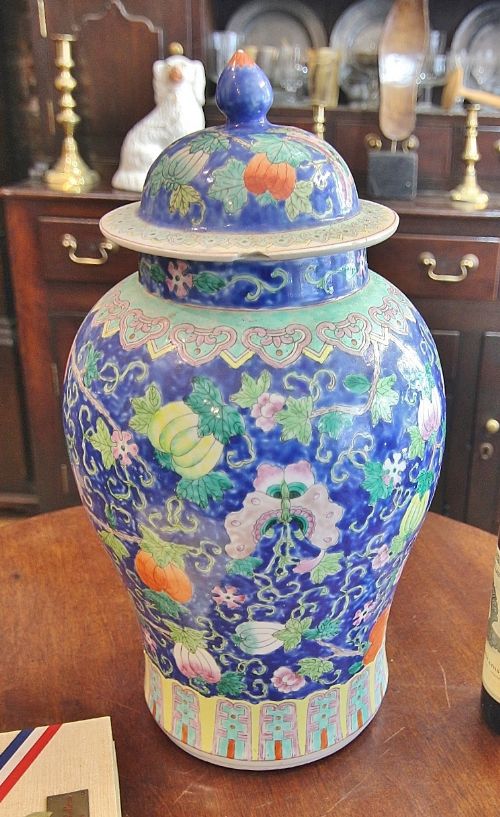
A chinoiserie temple jar is a covered ceramic vessel rooted in traditional forms, often appearing here as ginger jars, vases, and table lamps from various periods. These pieces bring distinct orientalist design motifs into domestic spaces, frequently displaying blue and white palettes or polychrome decoration. The selection includes items shaped by nineteenth-century Victorian interpretations alongside twentieth-century Chinese works.
Buyers encountering this search phrase will find porcelain and ironstone bodies created for ornamental use or later adapted into lighting. Forms range from large lidded vessels bearing Kangxi style designs to pairs mounted in ormolu or paired with occasional tables. Their visual presence relies on traditional potting traditions combined with European aesthetic revivals.
The objects span multiple decades of manufacture, connecting nineteenth-century production with mid-twentieth-century examples. Whether configured as lidded jars or wired as lamps, they serve as focal points in period and eclectic interiors alike.
How they were made
The construction of these vessels relies on fired ceramic bodies, principally porcelain and ironstone, shaped to create characteristic bulbous silhouettes. Artisans applied glazes such as powder blue, mazarine blue, and standard clear coats before firing the clay at high temperatures. Hand-painted details complete the surface, utilising mineral pigments for intricate figurative and botanical scenes.
Mounting hardware introduces additional materials, with brass and ormolu framing porcelain bodies for stability and decorative contrast. Wooden elements appear where jars accompany padouk tables or serve as lamp bases. These combined materials reflect both Asian ceramic techniques and European mounting traditions.
Chinoiserie Temple Jar Retail Price Guide 2026
Typical asking prices for chinoiserie temple jar among the pieces listed under this phrase on Sellingantiques today, from the lower quarter to the upper quarter. They describe what is for sale here now, not the wider market.
Several heavy vessels found new purpose illuminating dark corners rather than holding temple offerings.
What varies in quality
The distinction between tiers of these vessels rests upon the crispness of the hand-painted decoration and the depth of the underlying glaze. Pieces displaying precise brushwork and rich cobalt or famille rose pigments stand apart from simpler commercial outputs. The sophistication of applied metal mounts, particularly detailed ormolu, further elevates certain pieces above standard ceramic bodies.
Proportion and structural integrity define the higher end of the range, especially where lidded jars retain their matching covers or original forms. The harmony between the ceramic vessel and any subsequent adaptation, such as lamp fittings or brass mounts, dictates the overall execution.
The Chinoiserie Temple Jar Glossary
- Chinoiserie
- European decorative style reflecting Chinese artistic influences, prevalent in furniture and ceramics. It reinterprets Asian motifs through Western aesthetic lenses.
- Famille Rose
- A major palette of Chinese ceramic glazes introduced in the Qing dynasty, characterised by opaque pink enamel. The term groups porcelain decorated with this distinct pink colouring.
- Ormolu
- Gilded bronze mounts applied to furniture and ceramics, popular in nineteenth-century decorative arts. It provides ornate metallic framing for porcelain vessels.
- Ironstone
- A heavy, durable type of earthenware patented in the nineteenth century as a substitute for porcelain. It offers robust utility while supporting detailed underglaze decoration.
- Imari
- Japanese export porcelain style featuring cobalt blue, iron red, and gold. This decorative scheme influenced subsequent European and Asian ceramic production.
Chinoiserie Temple Jar: Frequently Asked Questions
What is a temple jar?
A temple jar is a large, traditionally lidded ceramic vessel originally used for storing spices or incense, later adopted as a purely decorative object.
Over time, these jars became staples of interior decoration, valued for their balanced proportions and detailed surface painting.
How do I style a temple jar?
These jars sit naturally on mantelpieces, sideboards, and occasional tables as standalone statements or arranged in symmetrical pairs.
Many examples are also converted into table lamps, integrating traditional ceramic forms into functional household lighting.
Are these jars antique?
The selection includes pieces originating from the nineteenth century through to the mid-twentieth century, encompassing various production eras.
Determining the age involves examining the glaze characteristics, ceramic body, and any associated mounting hardware.