


Chinoiserie Pottery Vases
Chinoiserie pottery vases are decorative vessels featuring European interpretations of East Asian motifs, offering collectors vibrant hand-painted landscapes and figures from past centuries.
Chinoiserie Pottery Vases
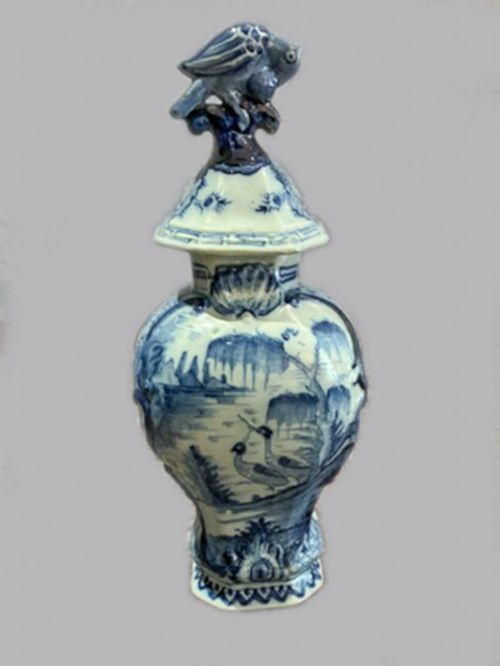
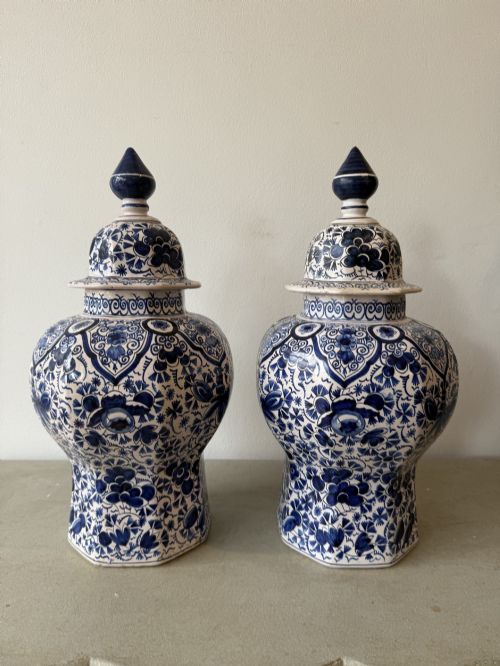
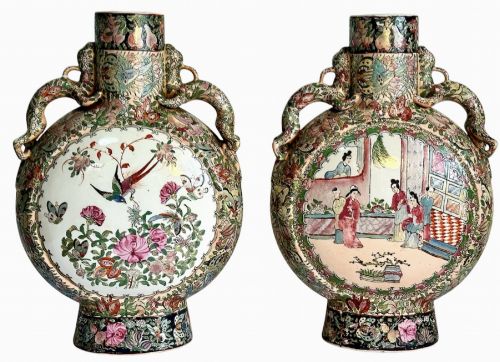
When you search for chinoiserie pottery vases, you encounter vessels spanning from the seventeenth century through the twentieth century, created across England, Holland, and China. The selection primarily includes blue and white delftware, ironstone, and porcelain forms decorated with orientalising figures, birds, and flowers.
Most items you meet on this page are Continental and English tin-glazed earthenware or ironstone, taking the shape of baluster vases, lidded jars, and converted table lamps. These pieces demonstrate how European potteries reinterpreted Kangxi and Qing Dynasty aesthetics for domestic interiors.
How they were made
Potters shaped these vases from tin-glazed earthenware, ironstone, and porcelain, applying cobalt blue enamel or polychrome pigments directly to the surface before firing. Many examples incorporate hand-painted details depicting traditional Chinese landscapes, floral sprays, and imaginary figures.
Production techniques varied from seventeenth-century Dutch delftware faience to nineteenth-century ironstone casting by factories such as Mason's. Artisans often utilised gold leaf accents or mounted the ceramic bodies in brass settings for stability and decorative emphasis.
Listings feature tin-glazed earthenware, ironstone, and porcelain pieces dating from the seventeenth to the twentieth century, incorporating brass mounts and gold leaf.
What varies in quality
Quality rests in the crispness of the hand-painted brushwork and the depth of the glaze, distinguishing hasty commercial output from masterworks. Pieces featuring finely articulated bird and flower motifs show superior draughtsmanship compared to repetitive factory painting.
The survival of original matching lids and covers significantly elevates a piece, as does the clarity of underglaze blue pigments and the integrity of the tin glaze across ribbed or beaker-shaped bodies.
Carlton Ware·Royal Doulton·Miles Mason·Lambeth Pottery
The Chinoiserie Pottery Vases Glossary
- Baluster
- A vase form characterised by a narrow neck, swelling body, and a widened base resembling a stair baluster. This shape provides a balanced canvas for wrap-around chinoiserie landscapes.
- Tin-Glazed Earthenware
- Pottery covered with a lead glaze made opaque by the addition of tin oxide. This surface allowed potters to paint fine blue and white details directly onto the unfired white background.
- Ironstone
- A heavy, durable type of earthenware patented in the nineteenth century. It offered strength similar to porcelain while accommodating bold enamelled decoration.
- Faience
- European tin-glazed earthenware, particularly associated with French, Dutch, and German production centres. It served as the primary medium for early European attempts at porcelain imitation.
- Gu
- An archaic Chinese ritual bronze vessel shape featuring a flared trumpet neck and tall foot. Later ceramic adaptations emulated this silhouette in blue and white porcelain.
Chinoiserie Pottery Vases: Frequently Asked Questions
What periods do these vases cover?
The listings span from the seventeenth century through the early twentieth century, capturing distinct eras of European ceramic production.
You will find seventeenth-century Dutch delftware alongside nineteenth-century ironstone and 1920s porcelain works.
Are these vases functional or decorative?
These pieces were created primarily as ornamental items for display on mantels, sideboards, and occasional tables. Many have also been adapted into table lamps in subsequent eras.
Their intricate hand-painted chinoiserie motifs are designed for visual appreciation rather than holding cut flowers.
What is ironstone?
Ironstone is a dense, sturdy ceramic material developed in the nineteenth century as a robust alternative to true porcelain. Factories utilised it to produce heavy hall vases and lidded vessels that resisted chipping.
Pieces from this era often feature rich cobalt blue grounds or polychrome enamel patterns.