

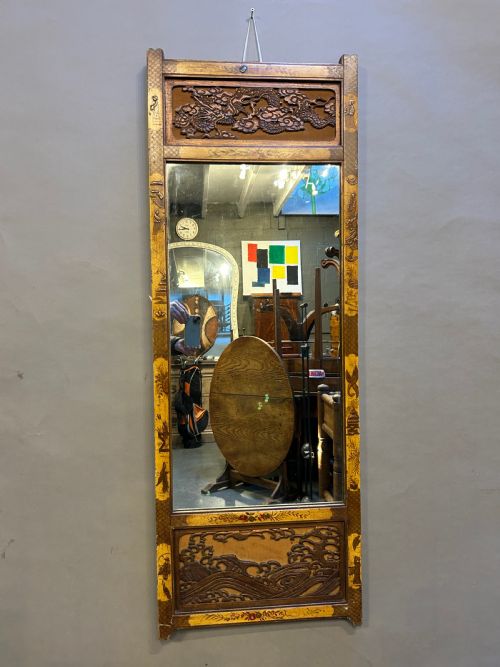


Chinoiserie Carved Gilt Mirror
A chinoiserie carved gilt mirror brings fantasy landscapes, pagodas and elaborate fretwork into a room with the golden gleam of carved wood.
Chinoiserie Carved Gilt Mirror
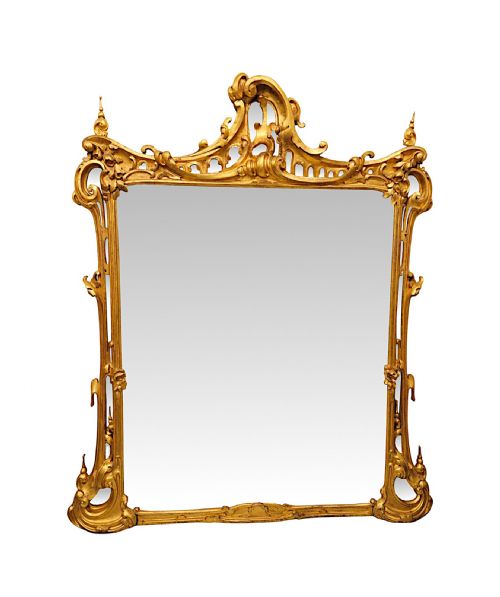
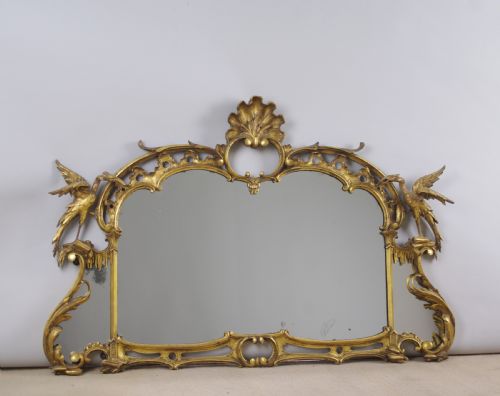
When you search for a chinoiserie carved gilt mirror, you enter a world of European imagination interpreting East Asian motifs through intricate frames. These pieces take the form of wall mirrors and grand overmantel mirrors designed to dominate a room with distinct historical character. The versions you are most likely to meet on this page hail primarily from the nineteenth century and the early twentieth century.
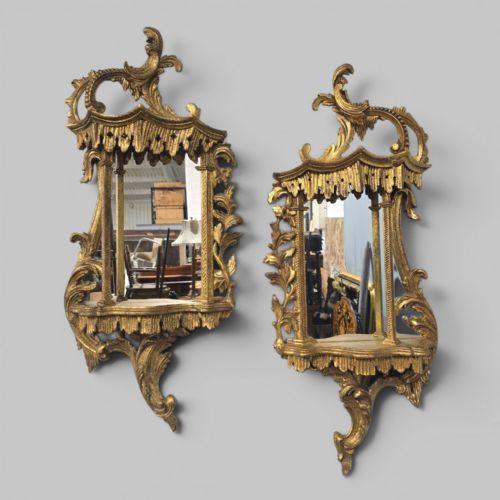
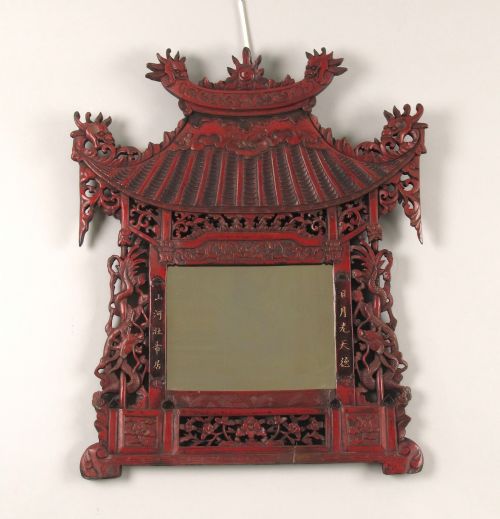
Makers drew heavily on the Chinese Chippendale and Rococo Revival styles to shape these elaborate wooden objects. You will encounter architectural pagoda tops, asymmetric scrolling, and pierced fretwork alongside gilded surfaces that catch the light. Some examples abandon gold leaf entirely in favour of red or black lacquer framing.
Scale varies from intimate wall-hanging pieces to substantial overmantels intended for placement above a fireplace. The decorative vocabulary often incorporates birds, such as Ho-ho birds, perched amidst stylized foliage and architectural elements. Each object reflects a period when European craftsmen fused classical cabinet-making with whimsical interpretations of Asian design.
Materials and construction techniques
Carvers shaped these frames from solid timber, often utilising wood or carved wood as the foundation for intricate ornamentation. Artisans applied gesso to the wooden base to build up crisp relief details before applying gold leaf or liquid gilt. Lacquered variants received multiple coats of varnish, sometimes incorporating black or red pigments to emulate traditional Asian lacquerware.
Glass plates were silvered by hand, resulting in subtle imperfections and depth within the reflection. Joinery combined traditional cabinet-making methods with applied wooden carvings pinned and glued to the main frame.
Listings in this category span the nineteenth century and early twentieth century, featuring materials such as giltwood, gesso, and coloured lacquer.
Distinguishing quality across the range
Depth and crispness of the carving separate standard examples from exceptional ones. Master carvers undercut foliage and fretwork to create true three-dimensional relief, whereas lesser pieces rely on shallow surface moulding.
The application of the gilt surface dictates visual warmth and longevity. Hand-applied gold leaf reflects light with a softer, richer lustre than flat modern metallic paint finishes.
The Chinoiserie Carved Gilt Mirror Glossary
- Giltwood
- Timber coated with gold leaf or a gold-coloured finish. This material defines the bright, reflective borders characteristic of many traditional mirrors.
- Chinese Chippendale
- A mid-eighteenth-century English furniture style incorporating Chinese motifs, pagoda silhouettes, and elaborate fretwork. This aesthetic heavily influences the frames found in this category.
- Gesso
- A plaster-like mixture applied to wood to create a smooth surface for gilding or fine carving. Artisans use it to build up crisp decorative details.
- Overmantel mirror
- A large mirror designed specifically to hang above a fireplace mantelpiece. These pieces often feature extended horizontal proportions to anchor the room.
- Pagoda
- A tiered tower with multiple eaves, originating in East Asia. This architectural form frequently appears as the crowning ornament on the top of these mirrors.
Chinoiserie Carved Gilt Mirror: Frequently Asked Questions
How do I hang a heavy overmantel mirror safely?
These substantial frames require secure fixing directly into masonry or solid wall studs using heavy-duty brackets. Professional installation is essential due to the combined weight of the timber and glass.
Ensure the hanging wire or integrated D-rings match the load capacity of the mirror before mounting.
What is the difference between lacquered and gilt finishes?
Gilt finishes utilise gold leaf or metallic paint to create a reflective, luminous golden surface that dominates the wall. Lacquered finishes employ pigmented varnishes, often in black or red, to emulate Asian decorative arts.
Both treatments offer distinct visual weights depending on the desired interior scheme.
How should I clean a antique giltwood frame?
Dust the intricate carvings gently with a soft, dry ostrich feather duster to remove surface particles. Avoid liquid cleaners, polishes, or damp cloths, as moisture damages delicate gesso and gold leaf.
Professional conservators should handle any deep cleaning or repairs to the gilded surface.
Are these mirrors from the eighteenth century?
The majority of pieces available date from the nineteenth century and the early twentieth century. They often revive earlier aesthetic movements like Rococo and Chinese Chippendale.
True eighteenth-century examples are exceedingly scarce and command museum-level attention.