




Chinoiserie Bedside Table Light
These chinoiserie bedside table light pieces bring hand-painted narrative decoration and rich oriental glaze work directly to domestic interiors.
Chinoiserie Bedside Table Light
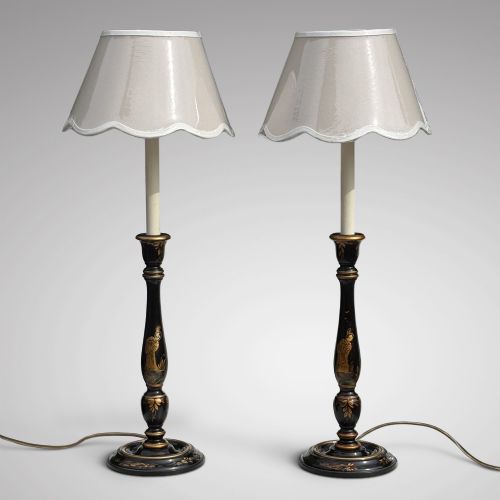
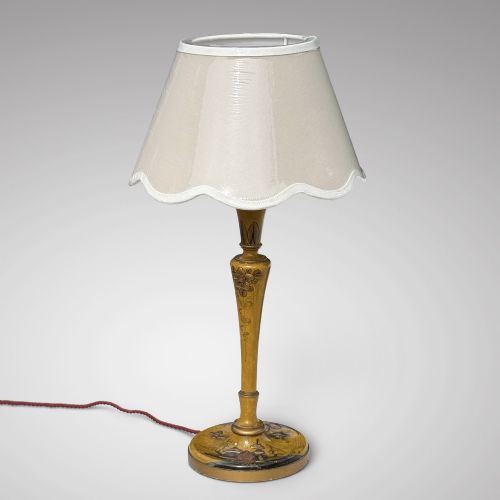
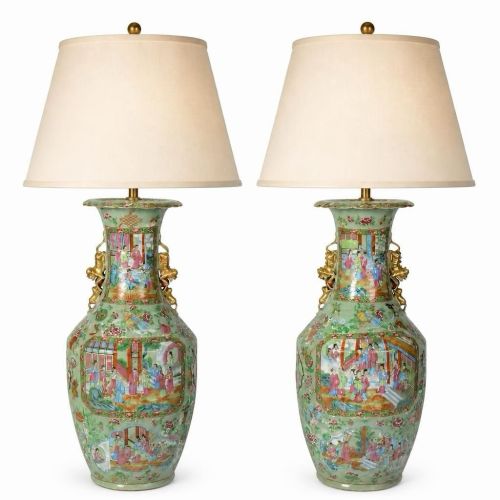
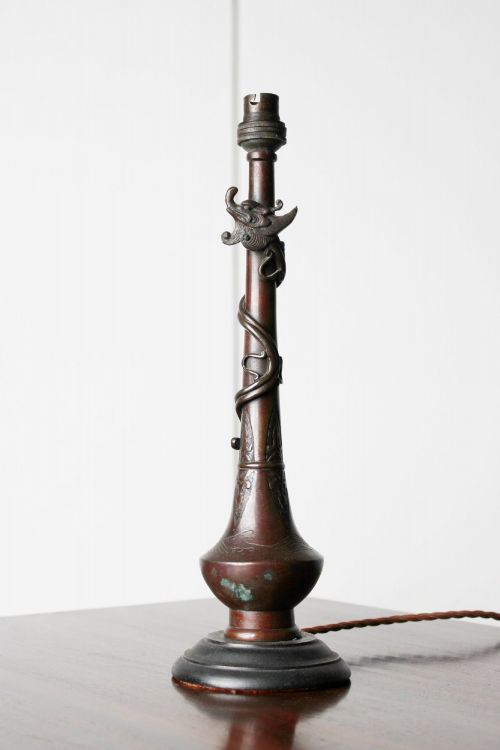
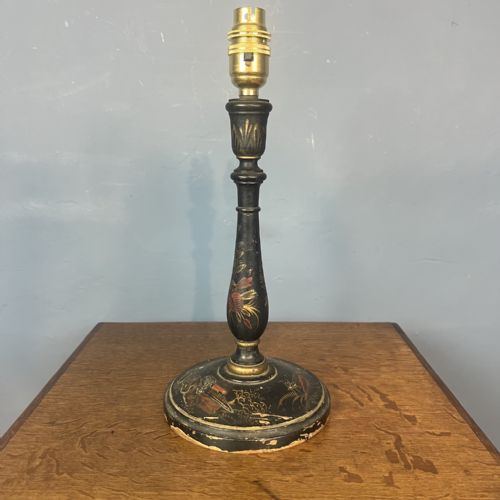
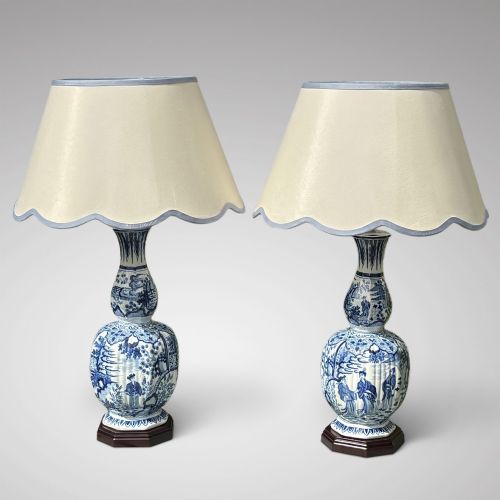
A chinoiserie bedside table light takes the form of a table lamp constructed from converted antique vessels, including ginger jars, tea canisters, baluster vases, and decorative urns. These bodies originate from various periods spanning the Victorian era, Edwardian years, and the early decades of the twentieth century, alongside specific pieces styled in the manner of the Chinese Qing Dynasty.
Buyers will most frequently encounter pairs and single lamps utilising porcelain, lacquered wood, bronze, and white metal. The decorative vocabulary encompasses French Chinoiserie, Dutch Delftware, and Anglo-Indian aesthetics, merged with traditional Chinese motifs rendered in Europe or exported from Asia.
Standards of Execution
Quality separates in these conversion pieces based on the integrity of the original vessel and the subtlety of its hand-painted decoration. Finer examples display crisp, detailed brushwork in the famille rose or blue and white palette without blurring or heavy-handed restoration.
The sophistication of the metal mountings, such as ormolu fittings or patinated bronze bases, dictates the overall refinement of the piece. Matching pairs demonstrate greater consistency in the ceramic body and shade pairing than assembled pairs.
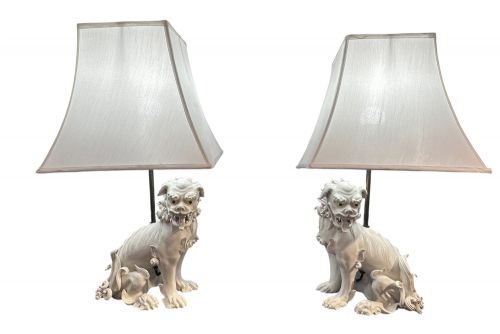
Several lamps utilise fierce Shi Lions, also known as Foo Dogs, originally placed at gates to ward off evil spirits.
The Chinoiserie Bedside Table Light Glossary
- Chinoiserie
- European decorative style reflecting Chinese artistic influences, prevalent in furniture, porcelain, and textiles. It employs whimsical motifs, pavilion scenes, and asymmetrical arrangements.
- Famille Verte
- A porcelain classification dominated by green enamel palettes, developed during the Qing Dynasty. This scheme includes iron red, yellow, and blue highlights over a white glaze.
- Famille Rose
- A ceramic palette introduced in the eighteenth century utilising an opaque pink or purple enamel derived from colloidal gold. It allowed for subtle tonal gradations in floral and figural depictions.
- Crackleware
- Pottery featuring a network of fine microscopic cracks in the glaze, intentionally produced during the firing process. It adds texture and an appearance of antiquity to the ceramic body.
- Ginger Jar
- A high-shouldered storage jar with a wide mouth, originally utilised in China for packing spices and salt. Converted versions form the body of many antique table lamps.
Chinoiserie Bedside Table Light: Frequently Asked Questions
What is a chinoiserie bedside table light?
A chinoiserie bedside table light is a functional lamp created by converting an antique vase, jar, or lacquered wooden vessel into a lighting fixture.
These pieces integrate historical Asian ceramics or European interpretations with electrical wiring and decorative shades.
How do I date these lamps?
Dating relies on examining the ceramic body, glaze characteristics, metal mountings, and wiring methods used in the conversion.
Victorian, Edwardian, and early twentieth-century periods each exhibit distinct manufacturing traits and mounting styles.
Are these lamps sold as pairs?
The selection includes both matched pairs and individual lamps, alongside assembled pairs gathered together later.
Pairs offer balanced symmetry for dual bedside tables, while single lamps suit compact spaces.
What materials are used?
The bodies consist primarily of porcelain, lacquered wood, bronze, brass, enamel, and white metal.
Shades are typically fabricated from silk or other woven fabrics mounted above the main decorative body.
How do I care for lacquer lamps?
Lacquered wood surfaces require gentle dusting with a dry, soft cloth to preserve the polished finish.
Avoid chemical cleaners and keep the lamps away from direct moisture and intense heat sources.