


Chinese Urn Display Table
A chinese urn display table holds porcelain and plants with solid presence, crafted in dense timber and inset stone to elevate interiors.
Chinese Urn Display Table
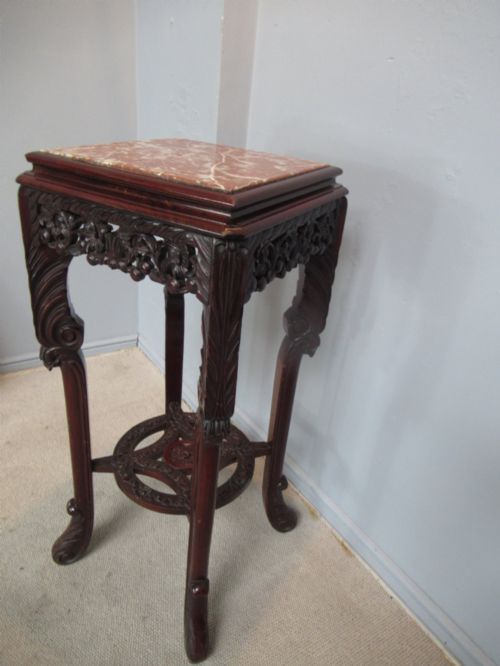
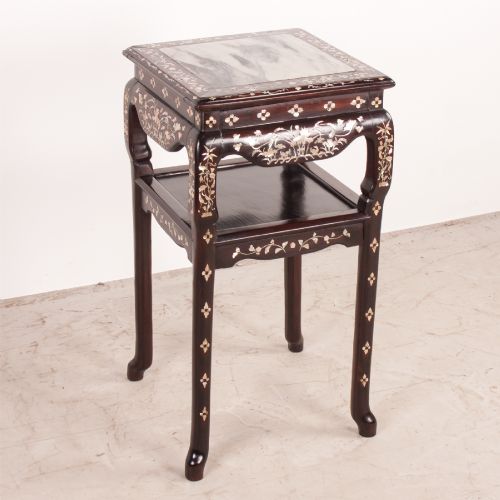
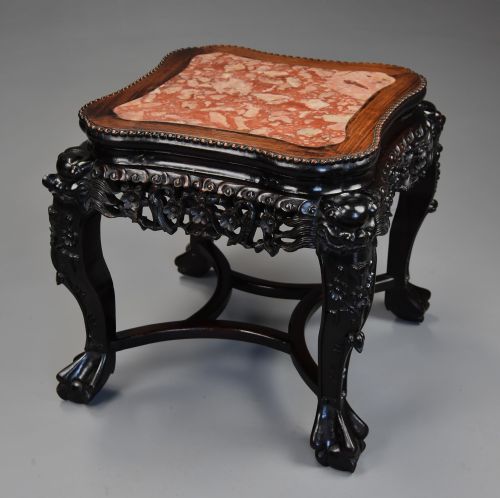
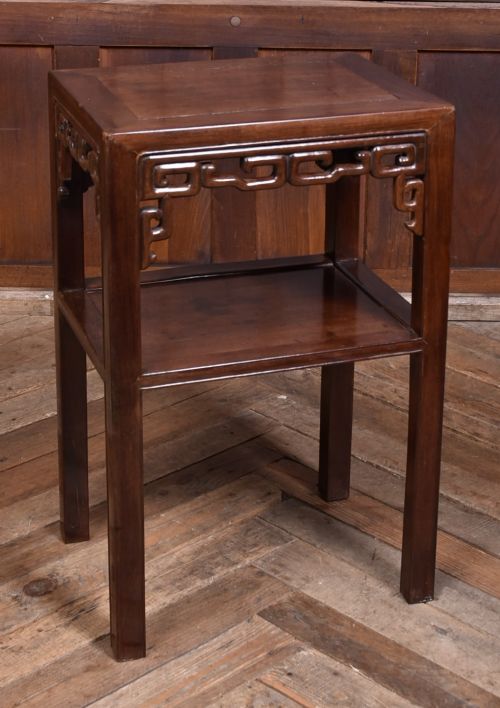
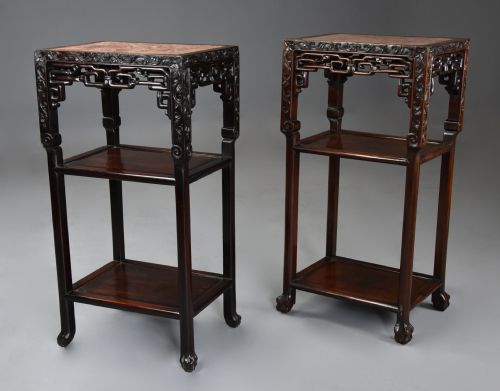
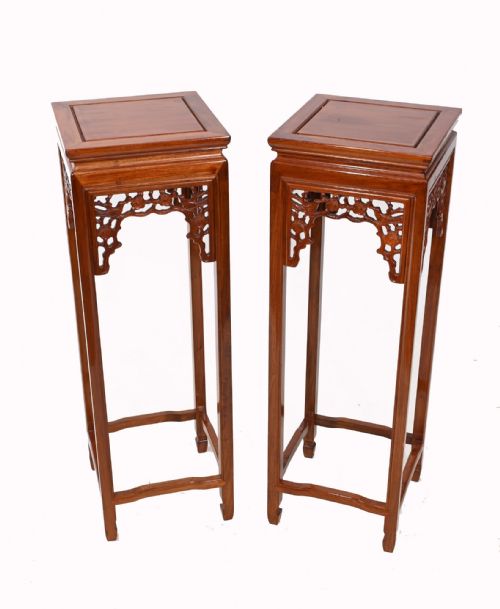
A chinese urn display table appears across this selection primarily as a plant stand, jardiniere stand, or occasional side table designed to elevate heavy vessels. These pieces emerge predominantly from the nineteenth century, spanning Victorian periods and the Qing dynasty.
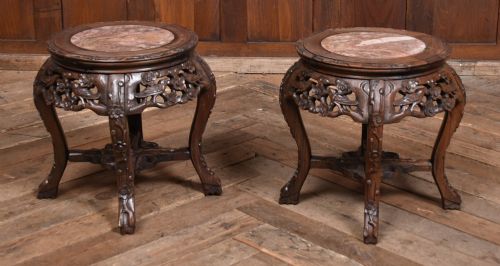
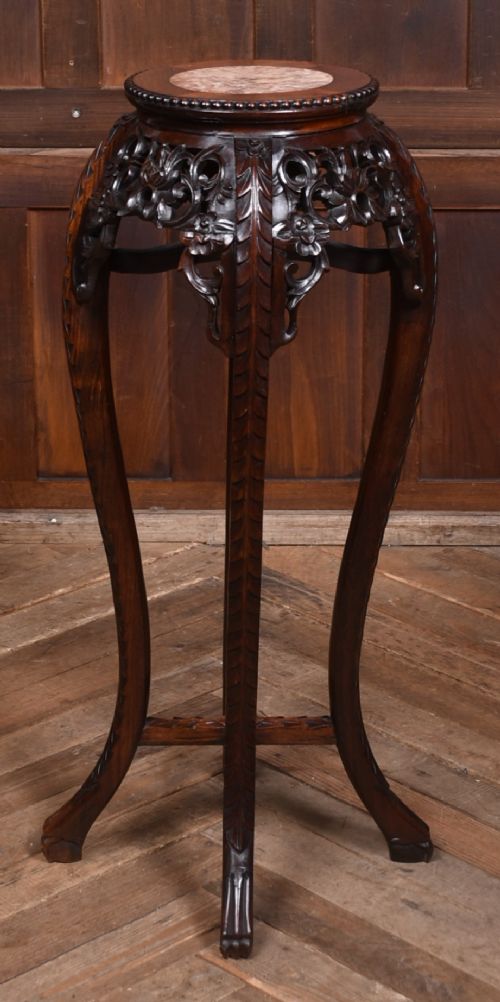
Makers constructed these stands in various heights, ranging from low pot stands to tall pedestals and two-tier tables. Rectangular and shaped forms dominate the inventory, frequently created to hold temple jars, vases, and planters.
Export pieces and traditional domestic furniture share common ground in this category, showing distinct Chinese craftsmanship adapted for international and local interiors alike. The forms serve both practical supporting roles and decorative display functions within the room.
Materials and Construction
Carpenters utilised dense exotic timbers such as hongmu, padouk, rosewood, and general hardwood to build these resilient frames. These woods support substantial weight and accept deep, intricate carving without splintering.
Many examples incorporate inset marble tops, frequently in rouge or white varieties, nestled flush into the wooden frame. Additional detailing includes mother of pearl inlay, ebonisation, and gold leaf accents on selected surfaces.
Listings feature woods like rosewood and hongmu paired with rouge marble.
Assessing Craftsmanship
Quality rests upon the depth and crispness of the wood carving, where superior examples display sharply defined motifs without soft edges. The weight and grain of the timber further distinguish finer pieces from standard production.
The fit of the inset marble top within the wooden rebate indicates the level of joinery skill applied during manufacture. Snug joints and stable tiered structures separate well-preserved items from those showing structural fatigue.
The Chinese Urn Display Table Glossary
- Hongmu
- A dense, dark tropical hardwood favored for traditional Chinese furniture. It translates literally as red wood and develops a rich patina over time.
- Padouk
- A heavy, durable timber with vibrant reddish hues utilised in fine Asian stands. This material resists warping and supports intricate carving.
- Jardiniere
- A large ornamental pot or container for plants and flowers. These vessels require sturdy stands to support their weight when filled.
- Qing Dynasty
- The final imperial dynasty of China, spanning from sixteen-forty-four to nineteen-twelve. Many decorative arts in this category originate from its later decades.
- Chinoiserie
- European artistic styles reflecting Chinese decorative motifs. These items adapt traditional Asian forms and patterns for Western tastes.
Chinese Urn Display Table: Frequently Asked Questions
What were these tables used for?
These tables served primarily to elevate heavy porcelain vessels, urns, and large potted plants within a room. Their sturdy frames and raised platforms protected fine floors while displaying decorative items at eye level.
In period interiors, they also functioned as occasional side tables for lamps and tea wares. Their compact footprints allowed them to fit into corners or between seating arrangements.
How do I identify a Qing dynasty stand?
Identification relies on observing traditional joinery techniques, dense timber selection, and characteristic Asian carving motifs. Many pieces from this period incorporate inset marble slabs and low-tier shelving.
Examine the underside and joints for hand-cut joinery rather than modern mechanical fasteners. The presence of dense hardwoods like hongmu or padouk further points toward authentic nineteenth-century manufacturing.
Are these stands suitable for modern lamps?
Their solid hardwood construction and stable platforms provide reliable support for table lamps and lighting fixtures. The modest surface area accommodates standard lamp bases easily.
Placing a lamp on a marble-inset top offers practical protection against minor spills and heat. These tables integrate smoothly beside contemporary seating while retaining antique character.
Why do some tops feature marble?
Marble insets provided a cool, durable surface that resisted moisture damage from damp flower pots and watering tasks. This stone also added structural weight to balance tall or top-heavy arrangements.
Craftspersons selected contrasting marble types, such as rouge or grey varieties, to complement the dark tones of the surrounding hardwood. This combination protected the timber while creating a distinct visual contrast.