


Chinese Soapstone Figures
Chinese soapstone figures are carved decorative sculptures valued for their tactile mineral surfaces and intricate traditional forms.
Chinese Soapstone Figures
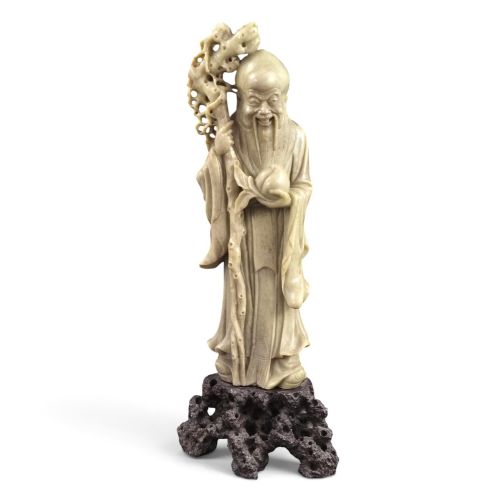
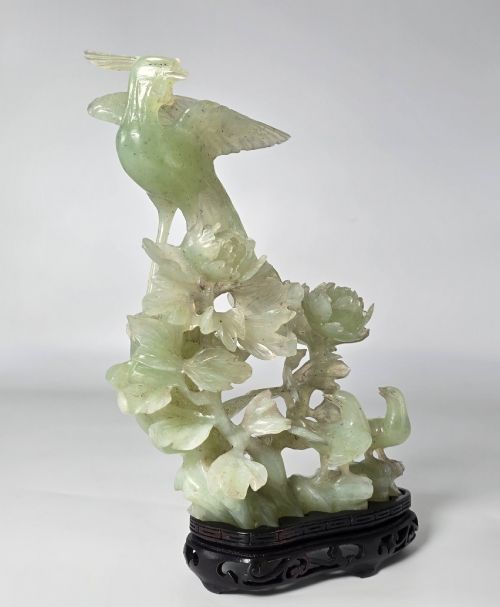
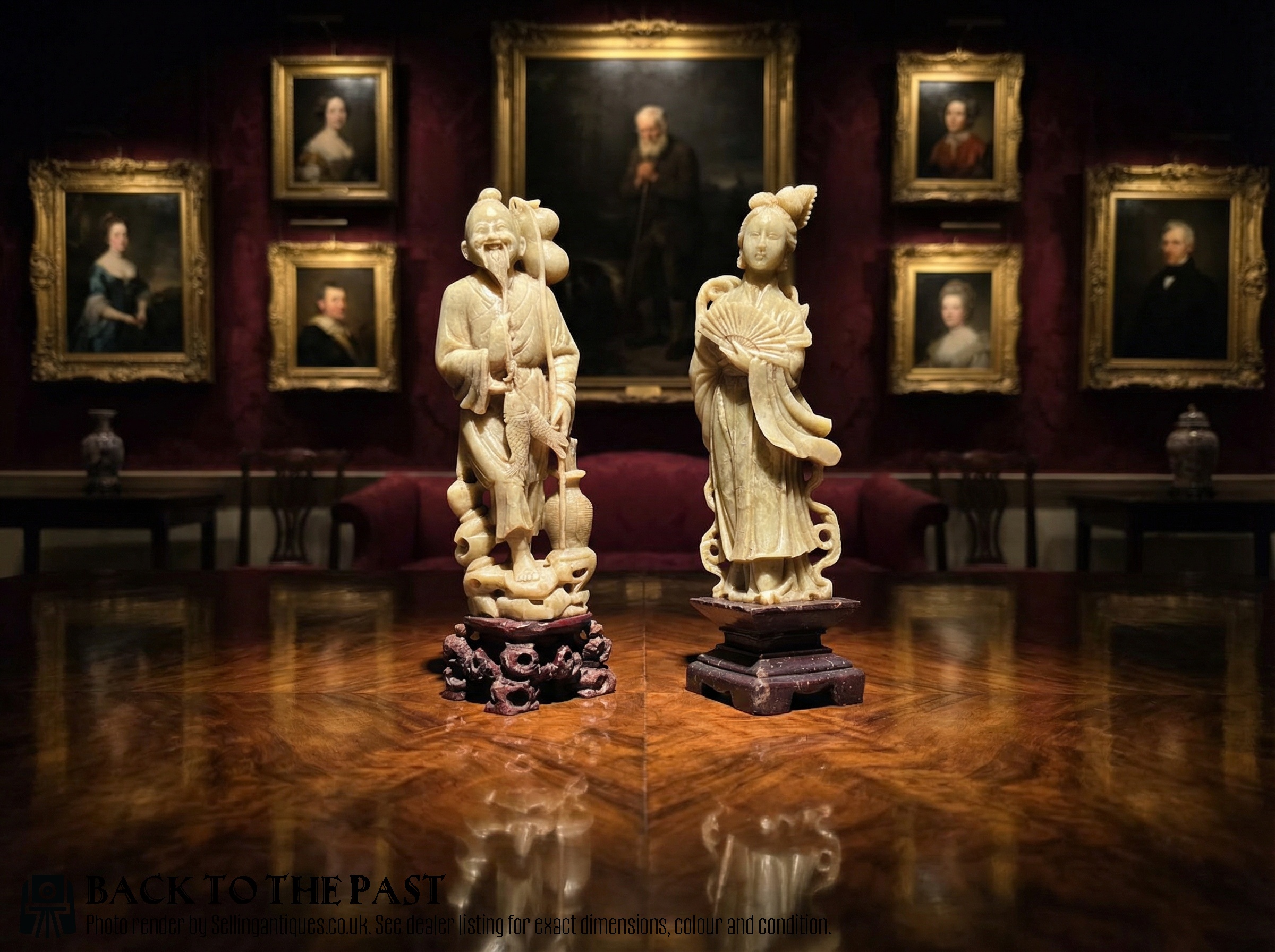
Chinese soapstone figures encompass carved sculptures, statues, and groups depicting figures such as sages, gods of longevity, and animals including dogs of Fo and birds. These pieces draw on traditional Chinese decorative arts, incorporating periods ranging from the Victorian era and late nineteenth century through to the early decades of the twentieth century. Collectors encounter various formats here, including standalone sculptures, matched pairs, desk seals, and bookends.
The subjects frequently reference folklore and traditional iconography, such as Shoulao figures, scholars, and temple guard dogs. Materials extend from standard soapstone and Shoushan stone to broader hardstone varieties, often mounted upon hardwood bases. The visual style reflects Qing dynasty traditions and Republic period craftsmanship.
How they were made
Carvers utilise the soft, soapy texture of soapstone and Shoushan stone to achieve deep relief and intricate detail. This geological property allows the artisan to carve complex folds in robes, facial expressions, and animal forms with precision.
Many sculptures are complemented by fitted hardwood stands, and specific functional pieces integrate gilt metal components, particularly within snuff bottles and desk seals.
A charming soapstone sow and piglets carving sits happily among the solemn sages and fierce temple guard dogs.
What varies in quality
The distinction between standard and superior pieces rests upon the depth of the carving and the natural tonal variation within the mineral. Softer pastel greens and multi-coloured stone variations offer greater visual depth than uniform grey or opaque samples.
Anatomical proportion and the crispness of the chisel work dictate the finesse of the sculpture, particularly in complex figural groups involving animals and attendants.
The Chinese Soapstone Figures Glossary
- Soapstone
- A talc-schist mineral prized for its soft consistency and soapy feel. It permits intricate hand carving.
- Shoushan Stone
- A specific variety of soapstone originating from the Shoushan village in Fujian province. It is renowned for its translucent quality and diverse natural palette.
- Foo Dog
- A traditional guardian lion or temple guard dog depicted in pairs. These mythical beasts protect domestic and sacred spaces.
- Shoulao
- The Taoist god of longevity, typically represented as an elderly man with a high forehead and a staff. He is a frequent subject in traditional Chinese carvings.
- Hardstone
- A general term for semi-precious stones harder than ordinary marble. These minerals are shaped into decorative objects and snuff bottles.
Chinese Soapstone Figures: Frequently Asked Questions
What is Shoushan stone?
Shoushan stone is a specific type of soapstone sourced from the mountains of Fujian province in China. It is particularly valued by carvers for its fine grain and varied natural colours.
This material allows for detailed execution in figures, seals, and scholarly objects.
How are soapstone figures cleaned?
Soapstone is a relatively soft and porous mineral that absorbs liquids and oils readily. Maintenance requires only a dry microfiber cloth to remove dust.
Water, soap, and chemical cleaning agents should be avoided to prevent surface damage.
Are these pieces signed?
Many nineteenth and early twentieth-century Chinese carvings remain unsigned by the individual artisan. Signatures or studio marks occasionally appear on bases or seals.
Stylistic conventions and material qualities serve as the primary indicators of age and origin.
What are desk seals used for?
Desk seals function as personal stamps carved from soapstone or hardstone, often topped with figural animals or deities. Historically, they were dipped in vermilion paste to sign documents and artwork.
In modern collections, they are appreciated as sculptural desk ornaments.
Why do some figures have wooden bases?
Carved hardwood bases are custom-made to fit the irregular bottom contours of soapstone sculptures. They provide physical stability for heavy stone pieces on flat surfaces.
These stands are integral components that enhance the overall presentation of the artwork.