

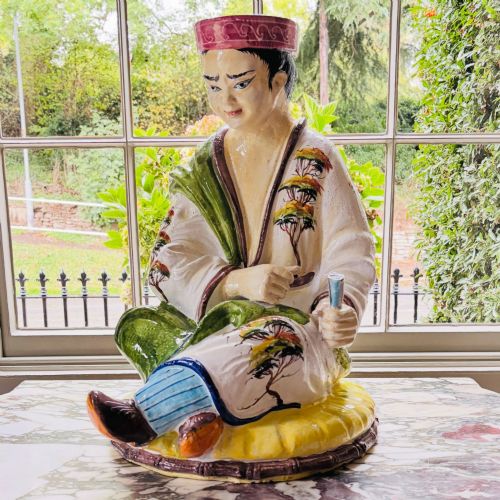
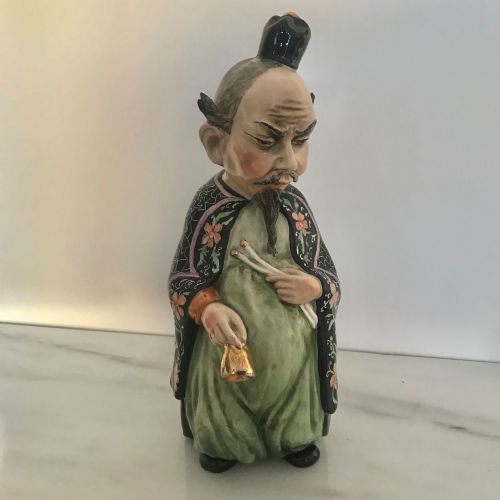


Chinese Scholar Figurine
A chinese scholar figurine brings the quiet contemplation of traditional learning right onto the desk.
Chinese Scholar Figurine
A chinese scholar figurine represents the traditional scholar class in carved or cast forms, often found as desk ornaments or small sculptures. These pieces capture quiet figures, animals, and figures with attendants from the Qing Dynasty through the early twentieth century.
The versions most commonly met on this page span the late nineteenth century and the early twentieth century, taking the form of desk seals, paperweights, and small cabinet sculptures. They emerge in materials ranging from root wood to bronze and soapstone rather than uniform factory production.
Finding the right piece means looking past the broad label to the specific character of the carving or casting. Each maker brought a distinct touch to the depiction of robed scholars, water buffalo, and horses.
How they were made
The wooden examples rely on root wood and hardwood, where carvers followed the natural knots and contours of the grain to shape figures and animals. This direct engagement with the material means each carving respects the original shape of the timber.
Metal pieces utilise bronze casting techniques, sometimes enhanced with hand enamel decoration or fine casting work to pick out the details of robes and scrolls. Stone figures, meanwhile, employ hard stone of the jade family and soapstone, shaped by abrasion and incision.
Chinese Scholar Figurine Retail Price Guide 2026
Typical asking prices for chinese scholar figurine among the pieces listed under this phrase on Sellingantiques today, from the lower quarter to the upper quarter. They describe what is for sale here now, not the wider market.
Current listings span the nineteenth century and the early twentieth century, incorporating materials from root wood and bronze to soapstone and hard stone.
What varies in quality
Quality rests in the liveliness of the carving and the precision of the cast rather than the mere weight of the material. A superior piece shows fluency in the folds of a robe and expression in the face, whereas lesser work feels stiff and perfunctory.
The choice of medium also dictates the depth of detail, with fine root wood and well cast bronze holding crisp lines that wear away in softer stones. The relationship between the figure and its subject, such as a scholar alongside a water buffalo or feeding geese, determines the artistic ambition of the piece.
The Chinese Scholar Figurine Glossary
- Root wood
- A material taken from the twisted subterranean parts of a tree, prized for gnarled and eccentric natural shapes. Carvers incorporate these wild forms directly into the subject matter of the sculpture.
- Soapstone
- A relatively soft, talc-based stone that takes a smooth finish and allows for intricate, deep undercutting. It was widely utilised for desk seals and small figurines.
- Qing Dynasty
- The final imperial dynasty of China, lasting from sixteen forty four to nineteen eleven. Objects from this era often reflect traditional literati tastes.
- Desk seal
- A carved stamp bearing a personal signature or mark, traditionally kept on a scholar's desk for stamping documents. Many feature sculpted figural tops.
- Hard stone
- A generic term encompassing dense minerals like jade and related stones that require abrasive grit to carve. These demand immense patience from the lapidary.
Chinese Scholar Figurine: Frequently Asked Questions
How were these figures used?
Many served practical roles on a scholar's desk as paperweights, desk seals, or scroll weights while inspiring quiet reflection.
Others functioned purely as cabinet sculptures to be admired for their material and carving skill.
How do I date a piece?
Dating relies on stylistic markers from the Qing Dynasty and early twentieth century, alongside the specific tools visible in the carving or casting.
Examining the wear patterns on the underside helps distinguish nineteenth-century examples from later work.
What materials are common?
Carvers utilised organic materials like root wood and hardwood alongside mineral substances such as soapstone, hard stone, and bronze.
Some ceramic examples also feature hand enamel decoration from around nineteen hundred.
How should I clean them?
Wooden and bronze pieces generally require only a soft, dry cloth to remove dust without disturbing the patina.
Softer materials like soapstone need careful handling to avoid chipping delicate projections.