
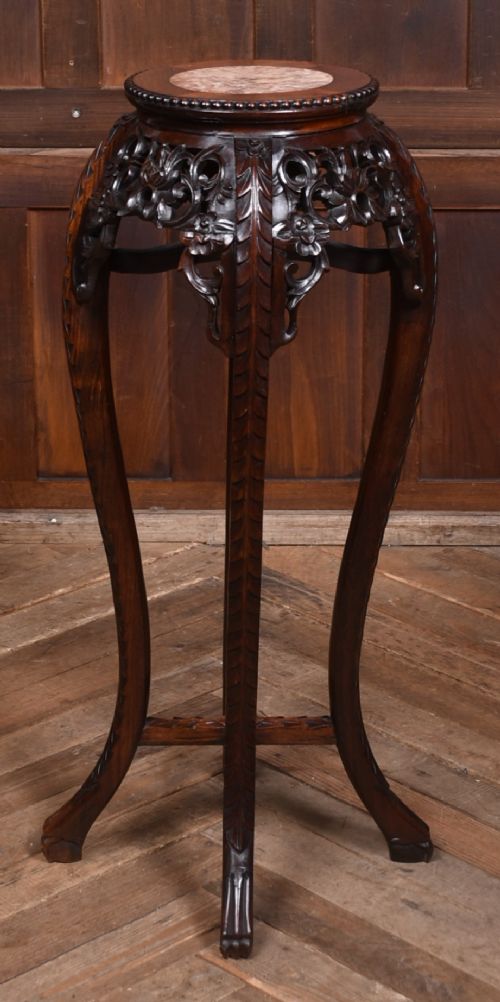


Chinese Rosewood Jardiniere Stand
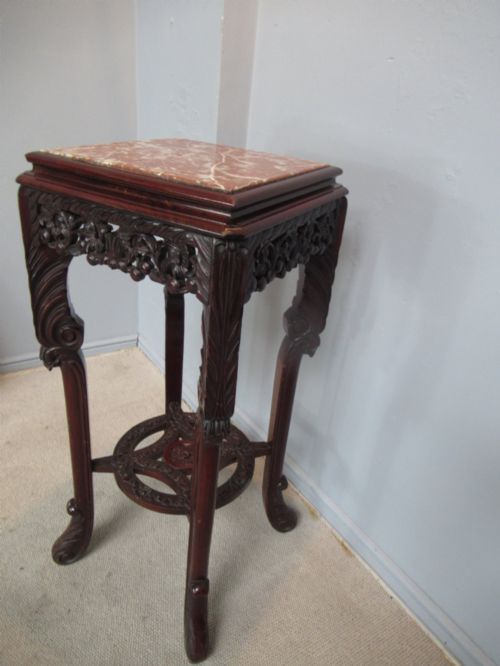
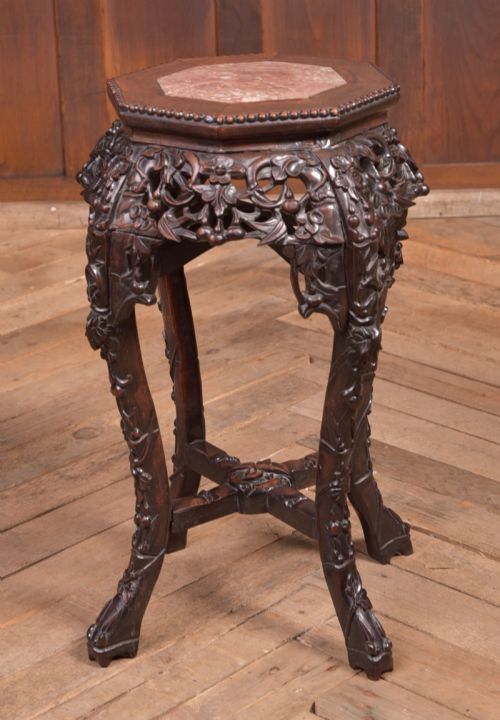
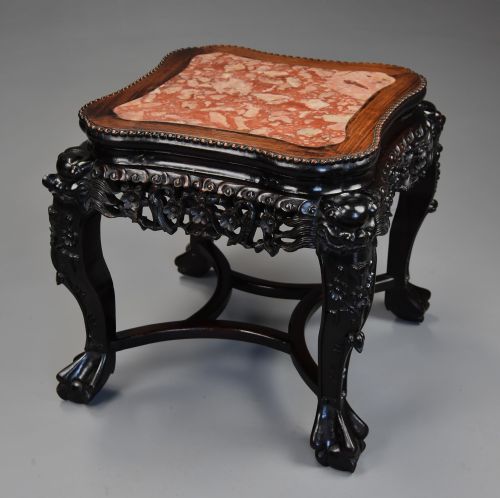
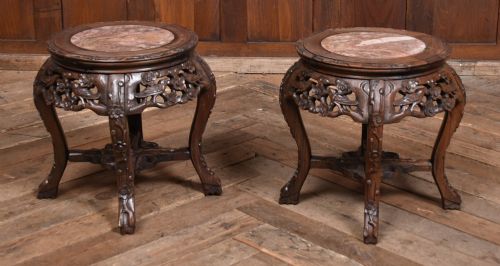
A Chinese rosewood jardiniere stand elevates a heavy ceramic bowl or vase, bringing sculptural timber and cool stone into a room.
Chinese Rosewood Jardiniere Stand
When you search for a Chinese rosewood jardiniere stand, you are looking at low tables and tall pedestals built to hold plants, urns, and vases.
The pieces on this page span the nineteenth century, the Victorian era, the Edwardian period, and the nineteen-thirties, reflecting Qing Dynasty and Chinese Export traditions.
Forms range from small pot stands and side tables to tall plant stands, frequently constructed with shaped or circular marble tops.
How they were made
These items rely on dense timbers such as rosewood, padouk, hongmu, and general hardwood, carved with traditional motifs.
Many examples incorporate inset marble panels into the timber tops, whilst select pieces feature mother-of-pearl inlay.
Joinery and carving are executed to support heavy ceramic planters and vases without warping the structure.
Many a sturdy nineteenth-century plant stand has quietly spent its life supporting a heavy ceramic bowl without ever seeing a single leaf.
What varies in quality
Quality rests upon the crispness of the wood carving and the density of the chosen timber, whether rosewood, padouk, or hongmu.
The figure and fit of the inset marble top alter the visual weight of the piece, alongside the precision of any mother-of-pearl inlay.
Subtlety in the proportions and the balance of the legs separate standard utility stands from finer decorative examples.
The Chinese Rosewood Jardiniere Stand Glossary
- Jardiniere stand
- A tall or low table designed specifically to support a plant pot, urn, or floral container. These pieces typically feature a stable top to bear the weight of heavy ceramics.
- Hongmu
- A dense Chinese hardwood often translated as red wood, utilised for dark and durable furniture. It forms a sturdy structure for heavily carved decorative items.
- Padouk
- A heavy tropical timber known for its deep reddish hue and robust physical properties. It appears frequently in nineteenth-century carvers' workshops.
- Qing Dynasty
- The final imperial dynasty of China, spanning from sixteen-forty-four to nineteen-twelve. Furniture from this era heavily influences the traditional carved styles seen here.
- Chinese Export
- Goods manufactured in China specifically for Western markets during the nineteenth and early twentieth centuries. These designs often blend Eastern construction with forms suited to European interiors.
Chinese Rosewood Jardiniere Stand: Frequently Asked Questions
What is a jardiniere stand used for?
These pieces function primarily as elevated platforms for heavy ceramic jardiniere bowls, potted plants, and decorative vases.
Historically they also serve as lamp tables or side tables in principal reception rooms.
How do I identify a Qing Dynasty stand?
Identification relies on observing traditional carved motifs, dense hardwoods like hongmu or rosewood, and classical joinery techniques.
Many examples also incorporate inset marble tops characteristic of the period.
Are these stands suitable for heavy planters?
The robust hardwood construction and fitted marble inserts provide a stable surface designed to bear substantial weight.
This makes them equally practical for modern heavy ceramic pots or lamps.
What woods were used for these stands?
Craftsmen utilised heavy exotic timbers including rosewood, padouk, hongmu, and general oriental hardwoods.
Selected decorative examples additionally incorporate mother-of-pearl inlay into the wooden frame.