




Chinese Relief Carved Chest
A Chinese relief carved chest brings deep-relief carving and fragrant camphor wood into the home, offering both practical storage and striking craftsmanship.
Chinese Relief Carved Chest
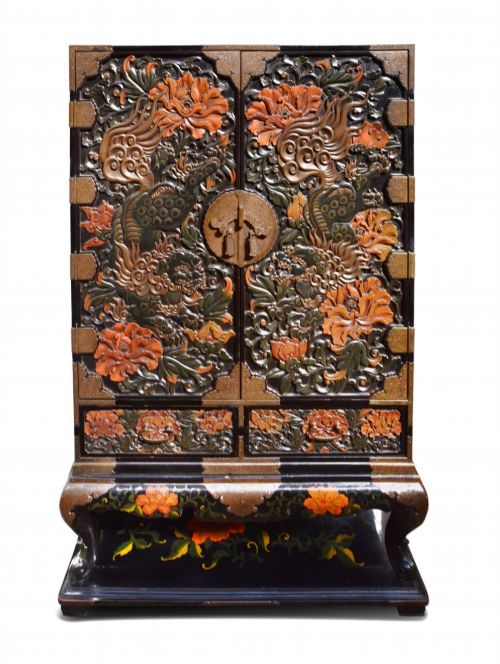
A Chinese relief carved chest is a robust storage piece designed for garments and valuables, frequently utilising aromatic camphor wood or lacquered timber. Buyers browsing this selection encounter trunks, blanket boxes, and occasional cabinets on stands originating from the nineteenth and early twentieth centuries.
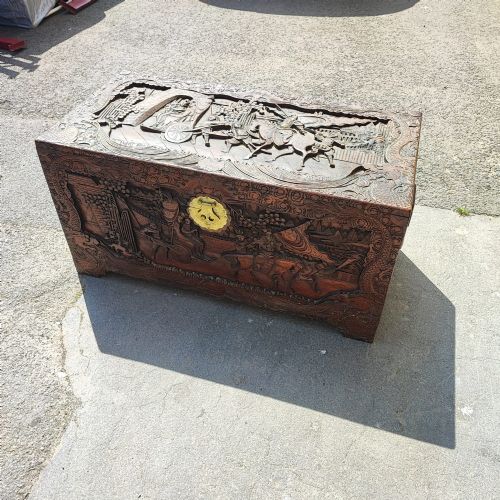
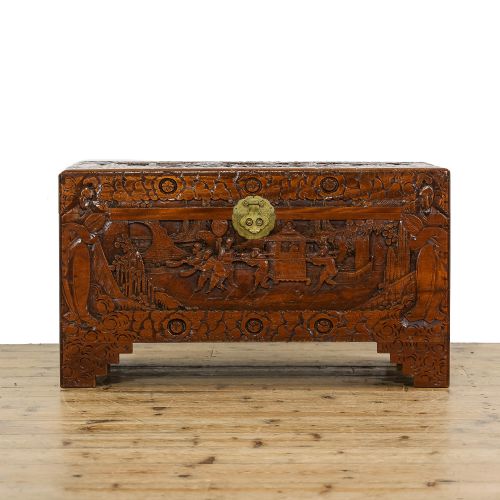
The prevalent form on this page is the camphor wood trunk, often heavily carved across the lid and sides with traditional motifs. These pieces bridge utilitarian storage and decorative art, serving equally well as coffee tables or bedroom blanket boxes.
Origins span late nineteenth-century export works through to pieces dated up to the 1930s. The regional styles reflect both traditional Chinese woodworking and items tailored specifically for the export market.
How They Were Made
Construction relies heavily on camphor wood, chosen for its insect-repellent properties and distinct aroma, alongside lacquered timber and applied brass hardware. Artisans joined these hardwoods using traditional joinery methods suited to large storage vessels.
Surface decoration is defined by deep relief carving, where figures, landscapes, or floral patterns are chiseled directly into the solid timber. Some variants employ lacquer finishes, building up layers to create a smooth, protective, and decorative exterior.
Listings span the nineteenth century through to the 1930s, featuring camphor wood, brass, lacquer, and general hardwood construction.
What Varies in Quality
Quality rests primarily in the depth, crispness, and complexity of the relief carving. Pieces with finely undercut details and dynamic composition stand apart from shallower, more repetitive surface incisions.
The selection of the timber and the integrity of the original brass hinges, locks, and handles also dictate the tier of the piece. Well-preserved lacquer finishes and solid structural joinery without excessive shrinkage elevate the standing of a chest.
The Chinese Relief Carved Chest Glossary
- Camphor Wood
- A durable, aromatic timber native to Asia, traditionally utilised for storage trunks to protect textiles from moths. Its distinctive scent remains a defining characteristic.
- Relief Carving
- A sculptural technique where figures and motifs project from a flat background. In these chests, the technique creates rich, dimensional surface textures.
- Chinoiserie
- European artistic interpretation of Chinese and East Asian artistic traditions. It appears on certain decorative cabinets and lacquered pieces within this category.
- Chinese Export
- Goods manufactured in China specifically for Western markets from the eighteenth century onwards. These pieces often blend traditional domestic forms with motifs appealing to foreign buyers.
- Lacquered Wood
- Timber treated with multiple coats of refined tree sap to create a hard, glossy, and protective surface. It provides a smooth canvas for painted or carved ornamentation.
Chinese Relief Carved Chest: Frequently Asked Questions
What were Chinese relief carved chests used for?
These chests were traditionally utilised for storing heavy garments, blankets, and valuable textiles. The dense camphor wood naturally deterred moths and insects, making them ideal for long-term preservation.
Over time, their decorative presence shifted them from purely utilitarian bedroom furniture to prominent living room storage and display pieces.
How do I care for a camphor wood chest?
Keep the wood away from direct heat sources and strong sunlight, which can dry out the timber and crack the surface. Dust regularly with a dry cloth and avoid harsh chemical polishes.
If the characteristic camphor aroma fades over the years, lightly sanding the interior unsealed surfaces can help revive the natural scent.
How do I date a Chinese carved chest?
Dating relies on examining the timber grain, the style of the brass hardware, and the depth of the carving. Nineteenth-century examples often display hand-forged fittings and denser, darker timber.
Pieces from the early twentieth century, including the 1920s and 1930s, frequently feature standardised brass joinery and deep, pictorial relief scenes tailored for export.
Can I use a chest as a coffee table?
The flat top and sturdy construction of these chests make them suitable alternatives to conventional coffee tables. They provide substantial internal storage while anchoring a room's seating area.
Ensure that hot mugs or condensation are kept off vulnerable lacquer or polished wood surfaces by using appropriate coasters and trays.