



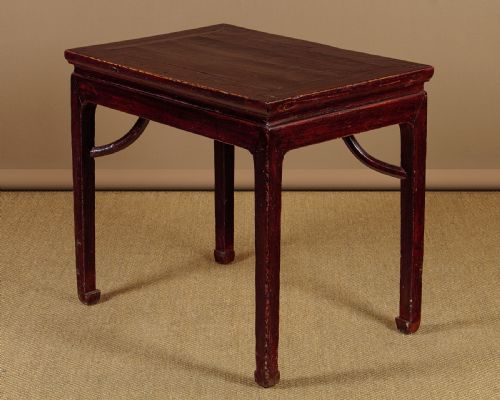


Chinese Red Lacquer Furniture
Chinese red lacquer furniture brings rich vermilion finishes, carved detailing and traditional forms into domestic spaces.
Chinese Red Lacquer Furniture
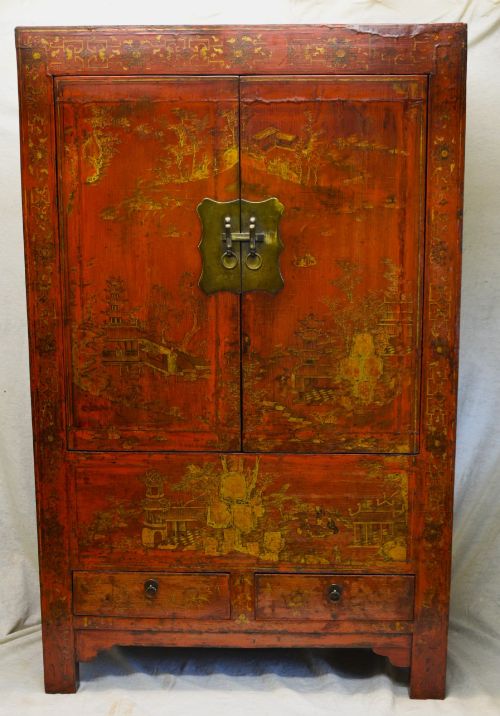
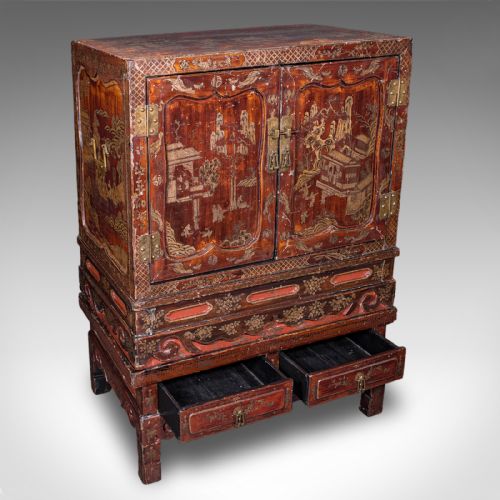
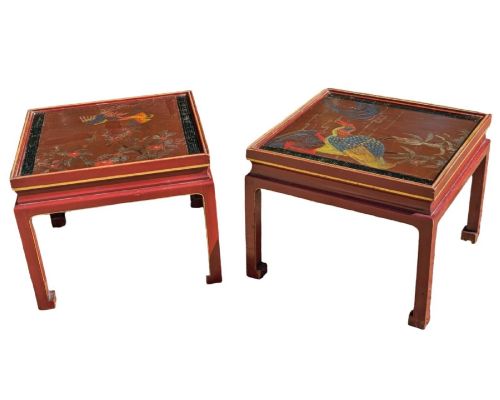
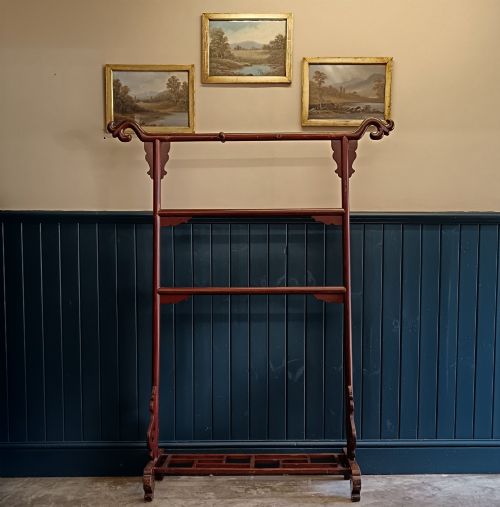
Chinese red lacquer furniture encompasses a range of wooden forms finished in vibrant red coatings, spanning the nineteenth century and the early decades of the twentieth century. Pieces encountered here include wedding cabinets, side cabinets, altar tables, console tables, armchairs and robe stands.
The selection reflects both traditional Chinese regional workshops and Victorian export interpretations in the Chinoiserie style. Buyers routinely encounter storage cabinets, occasional tables and seating originating from periods such as the Qing Dynasty and the broader nineteenth century.
Domestic pieces such as opium beds, apothecary cabinets and nests of tables demonstrate the variety of forms produced in elm, hardwood and lacquered wood. These items serve as functional storage and display surfaces that carry significant decorative presence through their distinctive red finishes.
Materials and Construction
Constructed primarily from elm and various hardwoods, these pieces utilise traditional joinery suited to foundational frames, cabinets and tables. The underlying wooden structure receives multiple coats of lacquer to build a durable and smooth surface.
Decorative elements often incorporate gold leaf highlights, black lacquer details and intricate carving into the hardened surface layers. Brass and iron hardware, including hinges and decorative plates, provide functional support and structural contrast to the red finishes.
Chinese Red Lacquer Furniture Retail Price Guide 2026
Typical asking prices for chinese red lacquer furniture among the pieces listed under this phrase on Sellingantiques today, from the lower quarter to the upper quarter. They describe what is for sale here now, not the wider market.
Listed forms feature nineteenth century wedding cabinets, side tables, robe stands, temple drums and opium beds.
Evaluating Quality
Quality rests in the depth and preservation of the lacquer surface, alongside the crispness of any carved wood detailing or applied gold leaf. Pieces showing finely rendered carving and stable foundational timber distinguish themselves from simpler or more worn examples.
The integrity of the original hardware, such as brass or iron mounts, contributes to the overall standard of a piece. Finer examples retain their original painted or lacquered surfaces with minimal disruption over decades of use.
The Chinese Red Lacquer Furniture Glossary
- Chinoiserie
- European decorative style reflecting Chinese artistic influences, frequently seen on Victorian furniture items.
- Qing Dynasty
- The last imperial dynasty of China, spanning from sixteen forty-four to nineteen twelve, associated with many traditional furniture forms.
- Cinnabar lacquer
- A specific type of red lacquer named after the mineral pigment used to achieve the coloration, often deeply carved.
- Altar table
- A traditional rectangular table featuring upturned ends or carved aprons, originally utilised for ceremonial purposes.
- Elm
- A sturdy hardwood commonly utilised in the construction of traditional Chinese cabinets, tables and chairs.
Chinese Red Lacquer Furniture: Frequently Asked Questions
What rooms suit chinese red lacquer furniture?
These striking pieces function effectively as focal points in living rooms, hallways and bedrooms where their strong colour can anchor the scheme.
Cabinets and console tables offer practical surface space and storage while adding traditional character to contemporary or eclectic interiors.
How do I care for red lacquer surfaces?
Maintenance requires gentle dusting with a soft, dry cloth and avoiding harsh chemical cleaners or abrasive materials that might damage the finish.
Keeping pieces away from direct sunlight and extreme humidity fluctuations preserves the integrity of the wood and lacquer over time.
How do I identify nineteenth century pieces?
Nineteenth century examples typically exhibit traditional construction methods, hand-applied lacquer finishes and authentic wear consistent with age.
Examining the interior timber, joinery techniques and hardware helps distinguish genuine nineteenth century production from later interpretations.
What is the difference between provincial and court styles?
Provincial pieces display simpler lines and regional utility, reflecting domestic requirements in areas such as Fujian.
Court and export items often feature more elaborate carved detailing, gilding and decorative motifs associated with formal design traditions.