
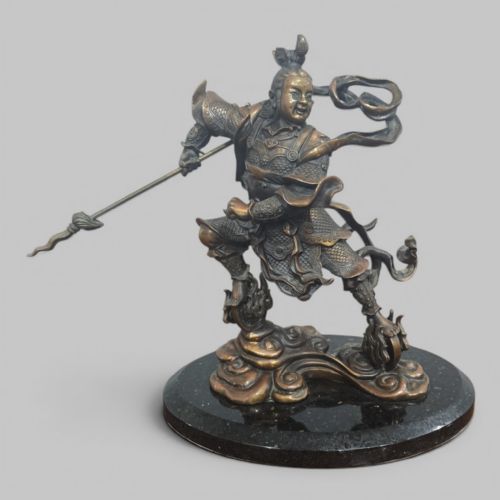


Chinese Metalwork Sculpture
Chinese metalwork sculpture brings heavy bronze, brass and cloisonne enamel animals, deities and figures into a room.
Chinese Metalwork Sculpture
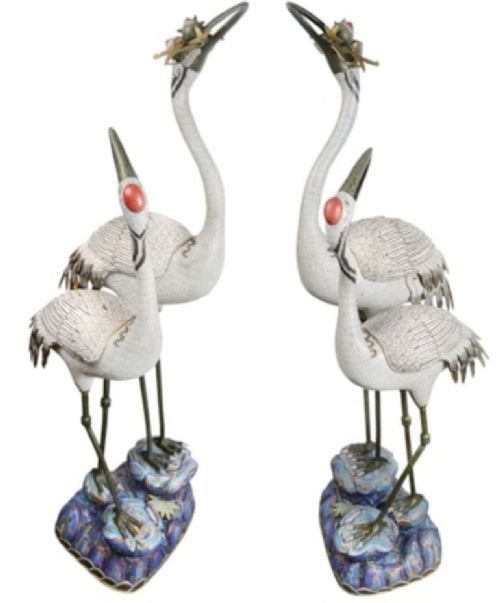
Searching for chinese metalwork sculpture reveals cast figures, statues and incense burners spanning the eighteenth to the early twentieth century. These pieces encompass depictions of animals such as horses, water buffalo, cranes and quails alongside traditional figures like Guanyin and scholars.
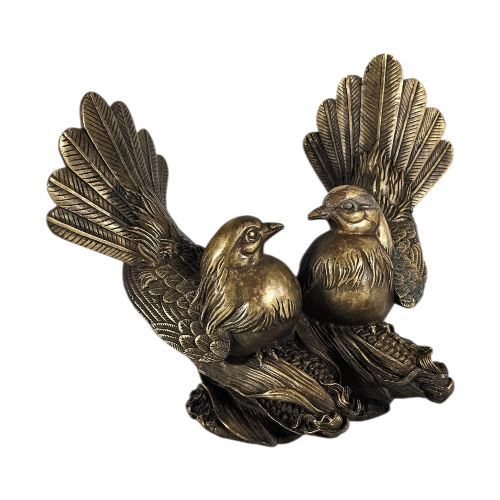
The selection on this page relies heavily on nineteenth-century bronzes and early twentieth-century cloisonne enamel works. Forms range from domestic pairs of pigeons and Foo dog burners to imposing temple lions and large busts mounted on stands.
Materials and construction
Metalworking traditions recorded in these pieces utilise bronze, brass, copper, cast iron and gilded bronze. Artisans shaped these heavy metals through casting, often pairing them with wooden stands or marble mounts to support the weight.
Cloisonne enamel provides a vibrant surface layer through soldered metal wires that create cells filled with coloured glass paste. Gilt bronze pieces receive a layer of gold applied to the base metal surface for a lustrous finish.
Materials across these listings include bronze, brass, copper, cast iron, gilded bronze and cloisonne enamel, often paired with wood and marble.
Distinctions in quality
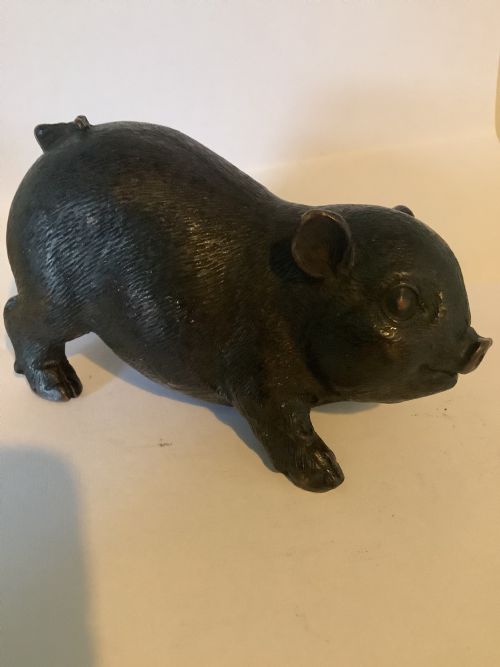
Quality rests in the crispness of the casting and the weight of the material, visible in substantial pieces like fourteen-kilogram iron busts or heavy bronze pairs. Finer examples show meticulous detail in feathers, fur, facial expressions and robes.
Surface treatment defines the upper tier, whether through expertly applied cloisonne enamel work, delicate gilding or the natural patination acquired over centuries. The integration of maker or reign marks also distinguishes standard production from imperial commissions.
Xuande Mark
The Chinese Metalwork Sculpture Glossary
- Bronze
- An alloy primarily of copper and tin that forms the foundation of most traditional figures and incense burners here. It takes a deep patina and supports intricate casting.
- Cloisonne enamel
- A technique where thin metal strips are soldered onto a metal base to form compartments filled with enamel paste and fired. This creates colourful decorative patterns across surfaces.
- Guanyin
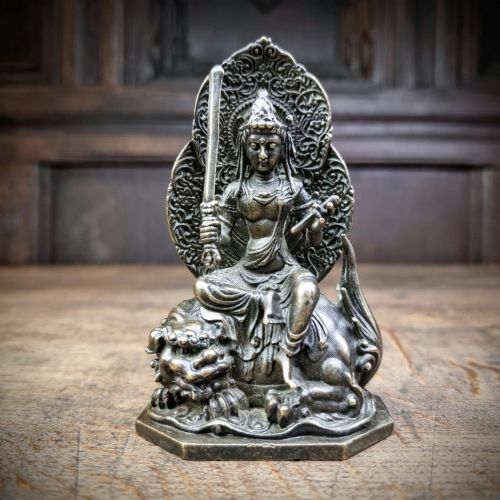
- A revered Buddhist figure representing compassion, frequently rendered in bronze or iron. These statues depict the deity with serene facial expressions and flowing garments.
- Foo dog
- A traditional guardian lion depicted in pairs guarding sacred spaces or domestic interiors. They often serve as incense burners with removable heads.
- Gilded bronze
- A metal sculpture coated with a thin layer of gold to enhance visual richness and protect the surface. This finish appears frequently on temple figures and imperial works.
Chinese Metalwork Sculpture: Frequently Asked Questions
What are chinese metalwork sculptures made from?
These pieces utilise bronze, brass, copper, cast iron and gilded bronze as their primary media. Many works also incorporate materials like cloisonne enamel, wood and marble for bases or surface decoration.
Heavier items often combine cast metal bodies with wooden stands or stone supports to display sculptures securely in domestic or temple settings.
How do I identify a nineteenth-century bronze?
Nineteenth-century pieces show distinct patination developed through age and handling on bronze, brass or iron surfaces. The casting style and subject matter often align with Qing dynasty traditions.
Examining the underside, weight and tool marks helps determine the period of manufacture alongside any accompanying reign marks or stylistic indicators.
What is cloisonne enamel?
Cloisonne enamel involves soldering thin metal wires onto a bronze or copper base to create enclosed cells. These compartments are filled with coloured enamel paste and fired repeatedly to produce vibrant patterns.
This technique creates hard, colourful surfaces seen on decorative animals and vessels from the late Qing and early republican eras.