
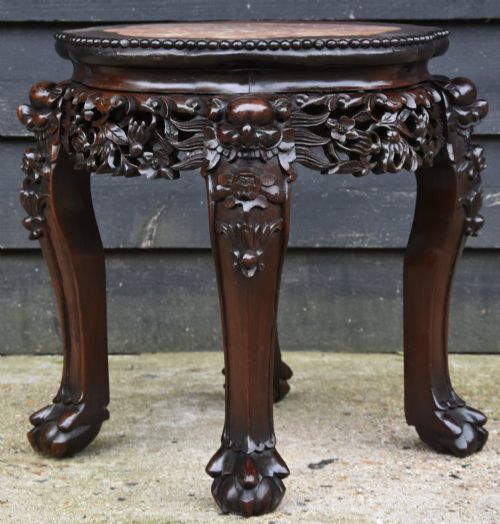
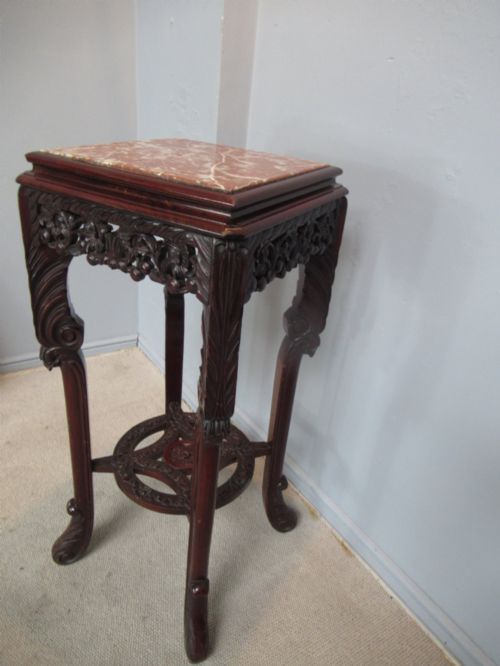
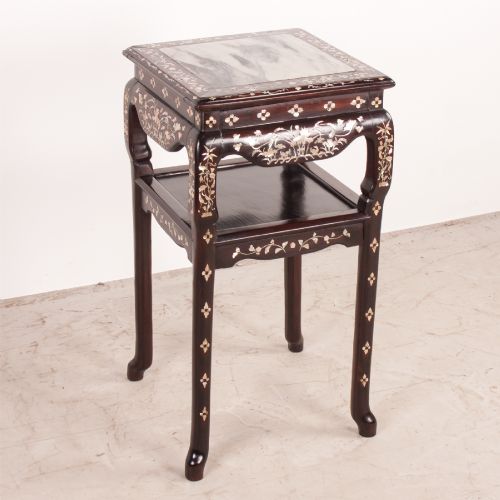
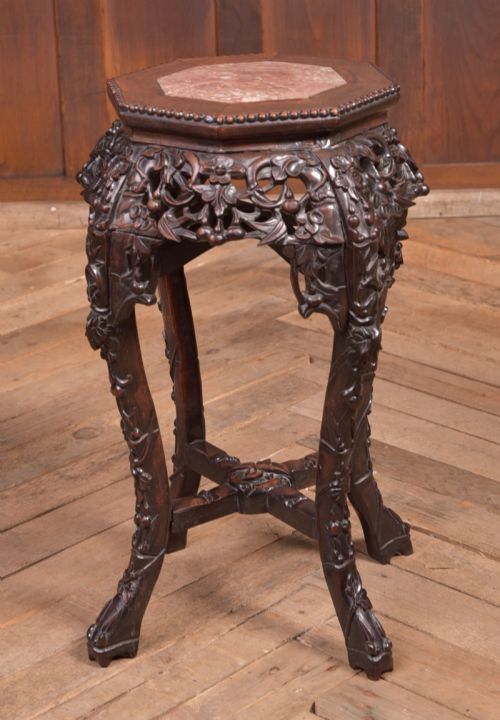



Chinese Marble Stand
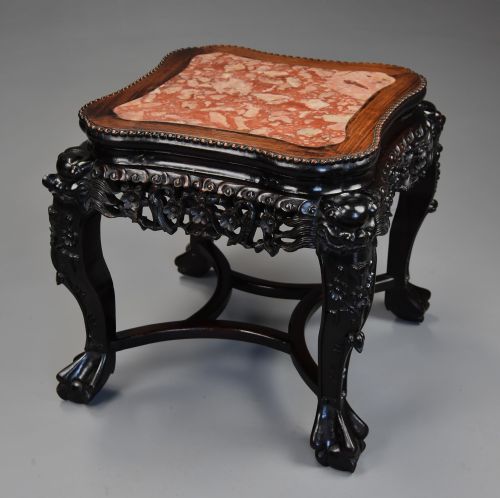
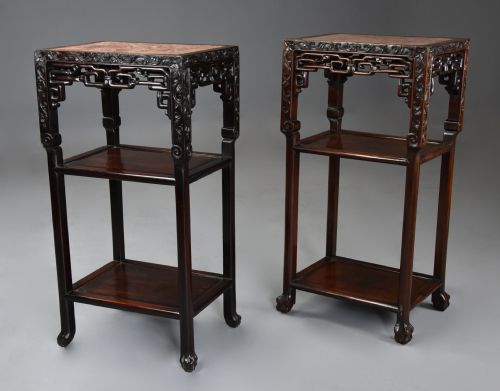
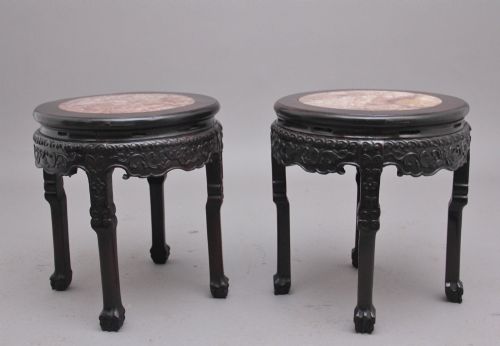
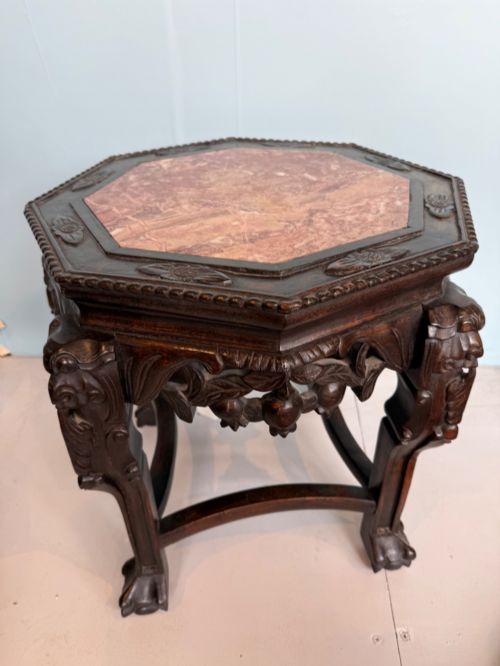
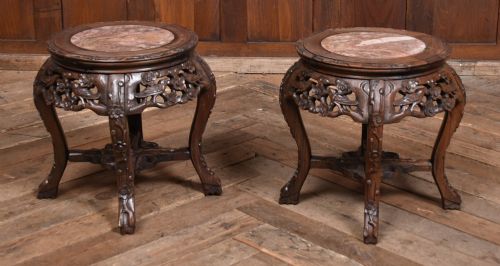
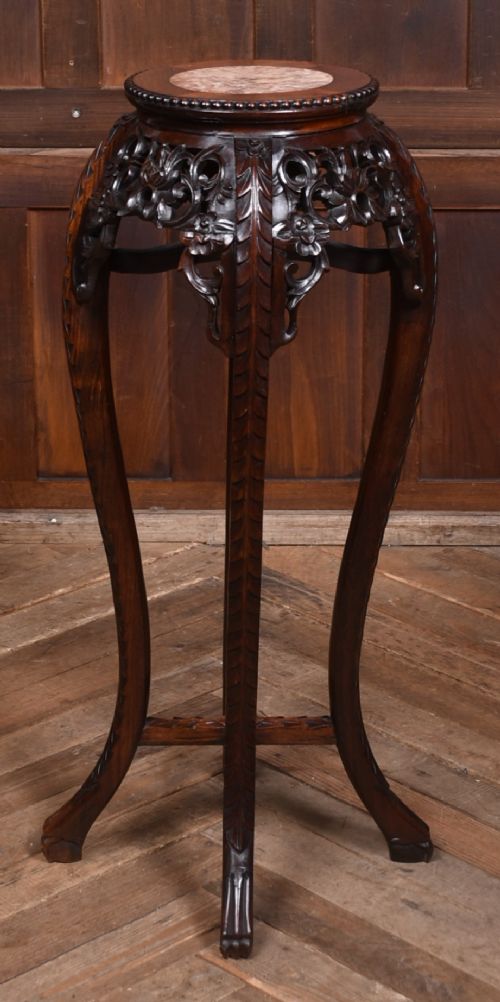
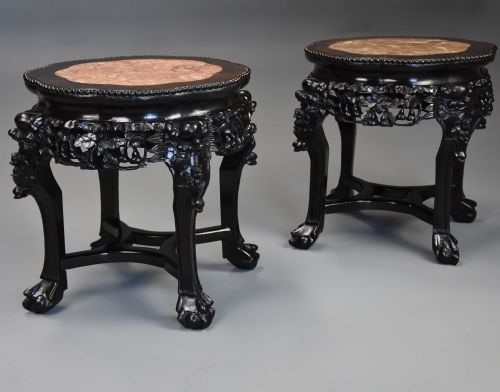
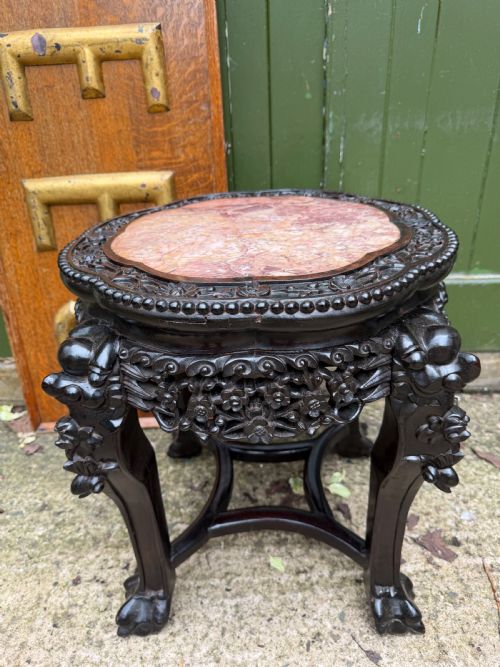
A chinese marble stand brings together dense exotic timbers and cool stone in a form designed to elevate planters and urns.
Chinese Marble Stand
When searching for a chinese marble stand, buyers encounter low tables, tall pedestals, and occasional furniture created to hold heavy plants and decorative vessels. The majority of pieces originate from the nineteenth century, spanning the late Qing Dynasty and Victorian export periods.
Common forms include plant stands, jardiniere supports, and urn holders alongside occasional side tables. These objects function equally well as lamp tables or low display bases within traditional and modern interiors.
Materials and Construction
Cabinetmakers constructed these supports using heavy Asian hardwoods such as rosewood, padouk, hongmu, and rootwood, occasionally incorporating mother-of-pearl inlay. The frames feature precise joinery designed to support the significant weight of stone tops without warping.
The listings combine rosewood, padouk, and hongmu frameworks with inset marble panels dating from the Victorian era and the late Qing Dynasty.
Distinctions in Execution
The degree of carving depth and crispness separates standard examples from exceptional pieces. Relief work on the aprons and legs ranges from simple moulded edges to deeply undercut foliage and dragon motifs.
Material selection dictates the upper tier of the range, particularly dense hongmu or well-figured rosewood paired with unblemished pink or rouge marble. Matched pairs and unusual proportions also elevate the status of a stand.
The Chinese Marble Stand Glossary
- Hongmu
- A dense, heavy Chinese hardwood often translated as red wood, highly valued for its dark colour and fine grain. It forms the structure of many high-status nineteenth-century stands.
- Jardiniere
- A large ornamental pot or planter for flowers, which necessitated sturdy low stands or tall pedestals to display them properly in reception rooms.
- Padouk
- An exotic tropical hardwood displaying a rich reddish-brown tone that darkens with age. Cabinetmakers utilised it for its exceptional strength and stability.
- Rouge marble
- A deep red or multi-coloured limestone variety with white veining, frequently chosen for the inset tops of export furniture.
- Rootwood
- Burl or root sections of timber shaped into organic, irregular forms for furniture frames. It provides a striking contrast to the geometric precision of inset stone tops.
Chinese Marble Stand: Frequently Asked Questions
What were chinese marble stands used for originally?
These supports held heavy porcelain planters, bronze urns, and large vases containing decorative flora. Raising these vessels protected polished floors and placed the plants at an optimal viewing height.
Over time, owners also utilised them beside seating furniture to hold lamps, tea wares, or small decorative objects.
How do you care for a marble top?
Clean the stone surface simply with a damp cloth and dry it thoroughly to maintain the natural finish. Avoid abrasive scouring pads and harsh chemical cleaners that can etch the polish.
Treat the surrounding hardwood frame with occasional wax polish appropriate for antique furniture to preserve the timber.
Are these stands sturdy enough for daily use?
The original mortise and tenon construction provides remarkable structural rigidity capable of supporting substantial weight. Their primary design purpose was to bear heavy stone and ceramic vessels securely.
Placing lamps, drinks, or decorative items on them today presents no structural concern provided the joints remain tight.
How can you tell the period of a stand?
Dating relies on timber characteristics, carving style, and the integration of the marble inset. Late nineteenth-century pieces often display deep Qing Dynasty carving traditions combined with export production methods.
Examining the underside reveals construction wear patterns and wood shrinkage that confirm genuine age.