



Chinese Landscape Painting
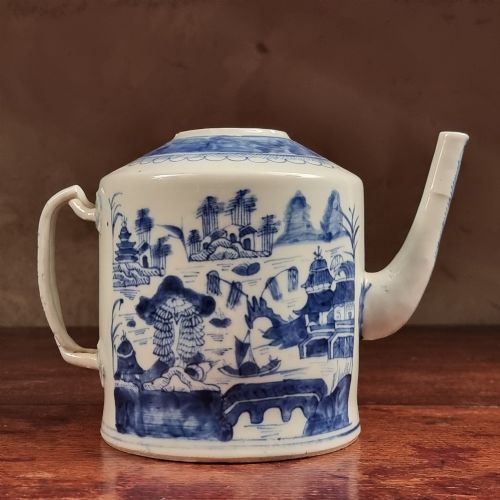
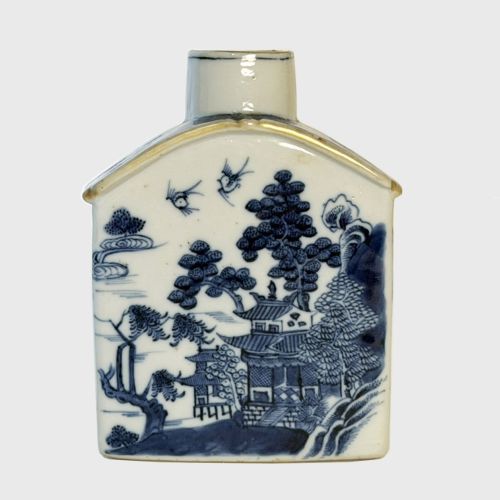
Chinese landscape painting brings quiet focus to a room, offering traditional ink and watercolour works alongside blue and white ceramics depicting mountain scenery.
Chinese Landscape Painting
When you search for chinese landscape painting, you encounter works on paper and silk alongside porcelain vessels that carry mountain and river scenes. These pieces capture traditional scenery through ink, watercolour, and cobalt pigment, spanning the eighteenth century to the mid twentieth century.
Silk paintings and framed watercolours sit alongside blue and white plates, teapots, and ginger jar lamps decorated with landscape motifs. The selection includes works signed by artists as well as export porcelain created in the Qing Dynasty style.
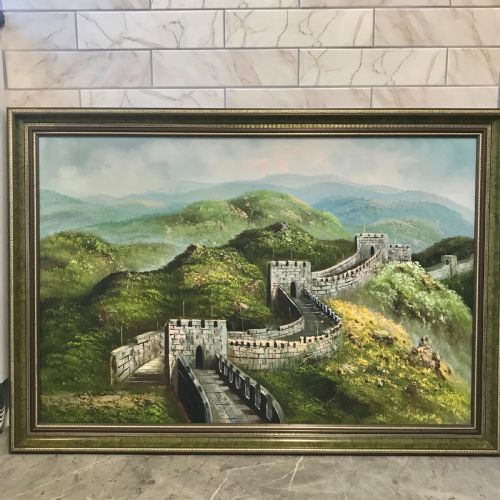
Mid twentieth century examples introduce album sketches and oil paintings depicting subjects such as the Great Wall of China. Earlier items ground the category in eighteenth century porcelain production and nineteenth century watercolours.
Materials and Techniques
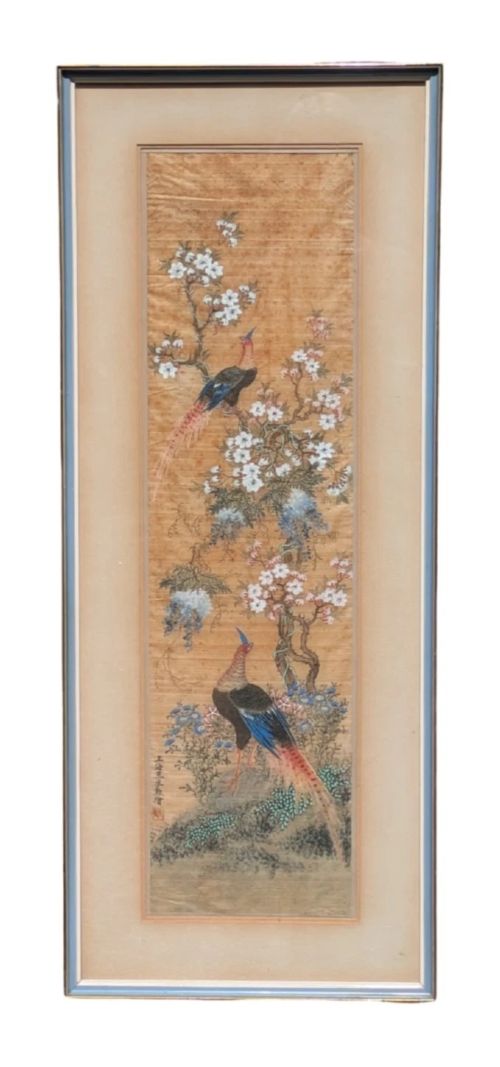
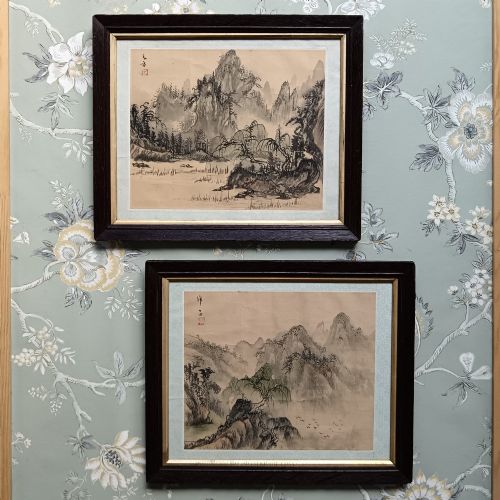
Makers applied ink and watercolour onto silk and paper bases, often framing the delicate compositions or binding them into albums complete with artist seals. These watercolours rely on careful brushwork to define mountains, water, and trees.
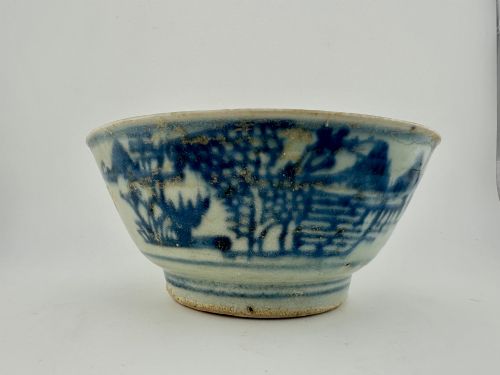
Ceramic pieces utilise cobalt pigment painted beneath a clear glaze on porcelain bodies, fired in kilns to produce blue and white bowls, plates, and vases. Canton enamel provides an alternative surface for polychrome decoration on metal vessels.
Wood serves as a support for lacquer chests and frames, while canvas accommodates mid twentieth century oil paintings. Brass mounts occasionally complete porcelain vases adapted into table lamps.
Chinese Landscape Painting Retail Price Guide 2026
Typical asking prices for chinese landscape painting among the pieces listed under this phrase on Sellingantiques today, from the lower quarter to the upper quarter. They describe what is for sale here now, not the wider market.
Cobalt blue and white ceramics appear alongside watercolours on silk and oil paintings of the Great Wall.
Quality and Execution
Execution of brushwork separates the finest watercolours and ink albums from simpler decorative items. Controlled lines and balanced compositions on silk demonstrate superior skill compared to hurried or repetitive ceramic decoration.
Provenance and documentation, such as certificates of authenticity or known shipwreck recovery history, elevate specific pieces. The clarity of cobalt pigment under porcelain glaze and the crisp preservation of paper and silk influence the standing of each item.
The Chinese Landscape Painting Glossary
- Shan Shui
- Traditional Chinese landscape painting style featuring mountains and water. These works focus on natural scenery rather than portraits.
- Qing Dynasty
- The last imperial dynasty of China, spanning from sixteen forty-four to nineteen twelve. Many porcelain and painting pieces date from or imitate the aesthetic of this period.
- Chinese Export
- Porcelain and decorative objects manufactured in China specifically for Western markets. These items often blend traditional motifs with shapes requested by European buyers.
- Cobalt
- Blue mineral pigment used under the glaze on porcelain before firing. It produces the deep blue coloration seen on ginger jars and plates.
- Canton Enamel
- Painted copper or metalware decorated with colourful enamel pigments. This technique was widely practiced during the Qing Dynasty for vessels like jardinières.
Chinese Landscape Painting: Frequently Asked Questions
How do I hang a silk painting?
Silk paintings require careful framing behind glass to protect the delicate fabric from atmospheric moisture and dust. Keep them out of direct sunlight to prevent the ink and watercolours from fading over time.
Ensure the hanging wall is stable and free from dampness. Professional framing using acid-free materials preserves the integrity of older silk works.
What is Shan Shui?
Shan Shui translates to mountain and water, representing traditional Chinese landscape painting. These works portray natural elements to express a spiritual relationship with the environment.
Artists use ink and brush strokes on paper or silk to evoke mist, peaks, and rivers rather than strict topographical accuracy.
Are mid-century paintings traditional?
Mid-century works in this category blend traditional subject matter, such as mountain ranges, with modern mediums like oil on canvas. Some pieces retain classical ink and brush techniques while others adopt realism.
This period bridges ancient aesthetic conventions with twentieth-century artistic interpretations of Chinese scenery.