

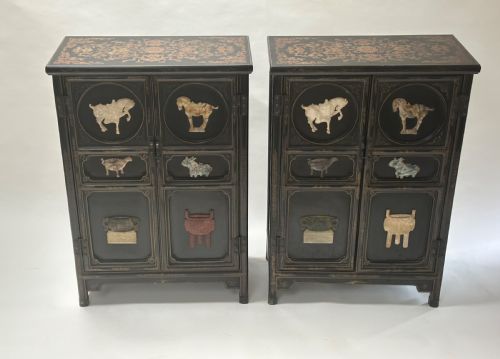


Chinese Lacquer Side Cabinet
A Chinese lacquer side cabinet brings vibrant colour and layered depth to a room, offering practical storage disguised as art.
Chinese Lacquer Side Cabinet
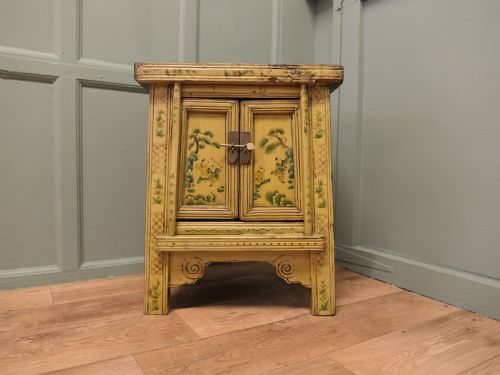
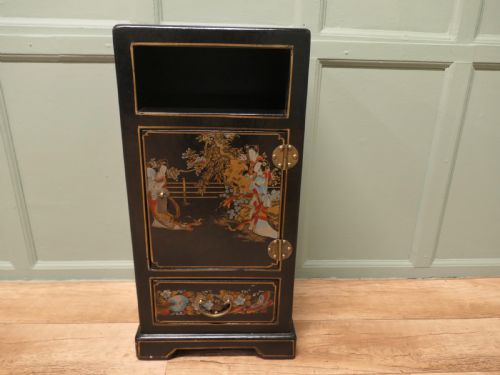
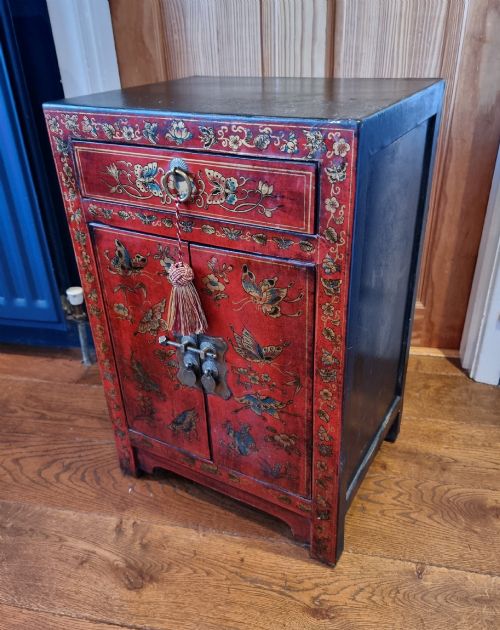
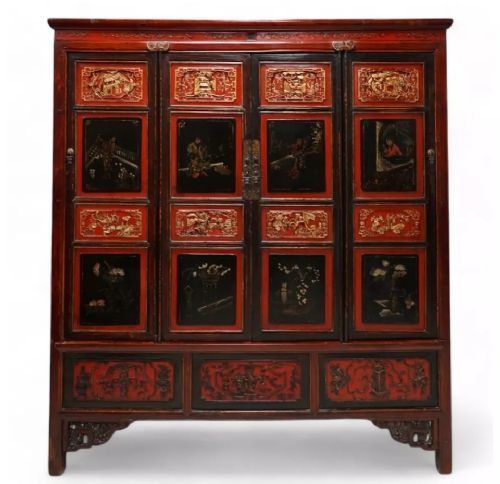
A Chinese lacquer side cabinet combines functional storage with elaborate surface decoration, frequently appearing in forms such as marriage cabinets, bedside units, and low cupboards. You will commonly encounter red lacquer, cream finishes, and dark grounds highlighted with gold leaf or carving.
The pieces on offer span the nineteenth century through to the early decades of the twentieth century, including Edwardian interpretations and pieces influenced by Qing Dynasty traditions. Side cabinets and smaller bedside versions dominate the selection, often presenting symmetrical pairs alongside individual statement pieces.
Materials and construction
Construction relies heavily on traditional timber frames, with elm and other hardwoods forming the structural carcase underneath the decorative finishes. Cabinet makers applied successive coats of lacquer to seal and protect the wood before adding detailed pictorial scenes.
Surface ornamentation incorporates applied gold leaf, carved details, and painted elements executed in contrasting tones like red, black, and cream. Metal hardware such as brass hinges and plates provides functional contrast to the painted surfaces.
Chinese Lacquer Side Cabinet Retail Price Guide 2026
Typical asking prices for chinese lacquer side cabinet among the pieces listed under this phrase on Sellingantiques today, from the lower quarter to the upper quarter. They describe what is for sale here now, not the wider market.
Some cabinets hide their treasures behind modest doors, waiting quietly to bring a splash of vermilion red to an otherwise grey hallway.
Judging the work
Quality rests primarily in the depth of the lacquer layers and the precision of the surface decoration, whether painted or carved. Superior examples display crisp detail in the gilded motifs and balanced proportions across doors and stands.
The integrity of the underlying timber carcase and the stability of the finish dictate the longevity of each piece. Finer cabinets retain harmonious colour saturation and crisp relief work rather than flattened or heavily obscured designs.
The Chinese Lacquer Side Cabinet Glossary
- Chinoiserie
- European artistic interpretation of Chinese decorative styles, popular in furniture decoration. This style frequently employs painted motifs on lacquer grounds to evoke traditional Asian scenes.
- Cinnabar
- A bright scarlet mineral pigment traditionally used in fine lacquerwork. Carved cinnabar produces deep relief patterns in rich red tones.
- Marriage cabinet
- A large traditional storage piece associated with domestic unions and dowries. These items often feature striking red finishes and substantial brass hardware.
- Elm
- A resilient hardwood commonly used in the construction of traditional Chinese cabinetry. Its grain provides a stable base for heavy layers of lacquer.
Chinese Lacquer Side Cabinet: Frequently Asked Questions
Where should I place a side cabinet?
These cabinets suit hallways, living spaces, and bedrooms where their decorative surfaces can function as focal points. Their modest footprints allow them to serve as practical sideboards or bedside storage without overwhelming the room.
Position them away from direct sunlight and heat sources to protect the delicate lacquer finishes and prevent timber movement.
How do I clean lacquer furniture?
Dust surfaces gently with a soft, dry cloth to remove everyday particles. Avoid chemical polishes, abrasive cloths, and excess moisture, which can damage the aged finish.
Maintaining a stable indoor humidity helps preserve both the wooden carcase and the layered lacquer surface over time.
Are these pieces original antiques?
The selection includes nineteenth-century pieces alongside early twentieth-century examples and Edwardian interpretations. Dating relies on construction methods, timber types, and the character of the lacquer work.
Evidence from past and present listings highlights traditional forms originating from periods like the Qing Dynasty up to the 1930s.
What styles are available here?
Styles range from traditional Chinese forms and Qing Dynasty designs to Western Chinoiserie interpretations. Red lacquer finishes dominate, accompanied by cream, black, and natural elm variants.
Many listings feature decorative elements such as gold leaf detailing, carved panels, and paired arrangements for bedside placement.