


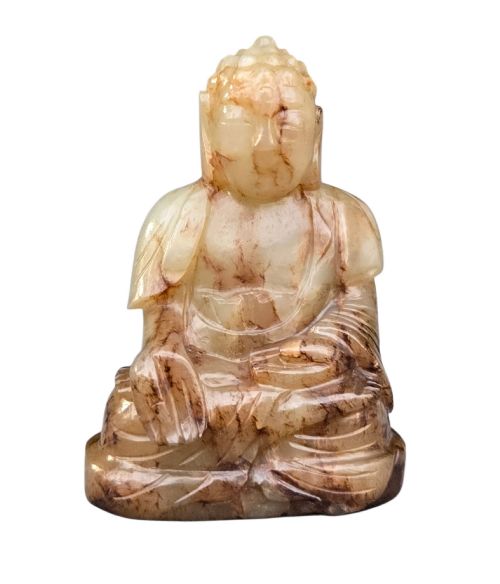

Chinese Jade Sculpture
These Chinese jade sculpture pieces bring carved nephrite, jadeite and hardstone into domestic spaces, prized for their centuries-old forms and organic depth.
Chinese Jade Sculpture
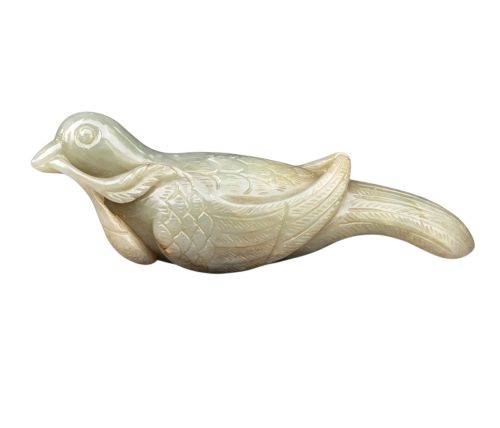
A Chinese jade sculpture encompasses carved nephrite, jadeite, celadon and hardstone creations spanning periods from pre-sixteenth century works through the Qing Dynasty, Victorian era and the nineteen-thirties. Pieces range from small miniatures of fish and cicadas to monumental landscape sculptures, scholar's water birds, mythical beasts and bonsai groupings fitted to hardwood stands.
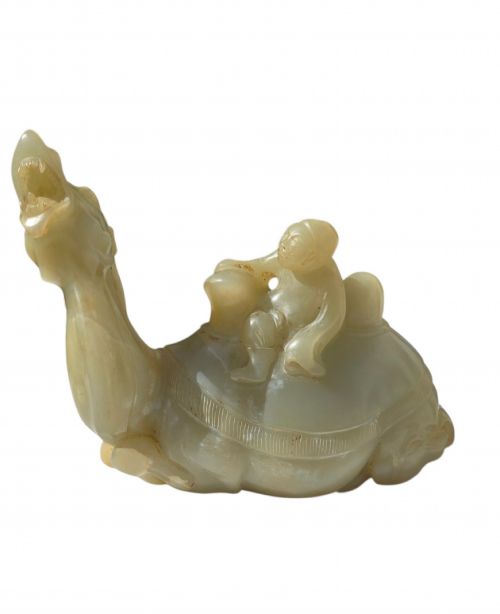
The objects most frequently met on this page belong to the nineteenth and eighteenth centuries, reflecting Qing Dynasty output, alongside later Republic Period pieces and twentieth-century hardstone compositions. Formats include ceremonial vessels, brush washers, lotus-form cups, dragon motifs and figures of Buddha or riders mounted upon camels.
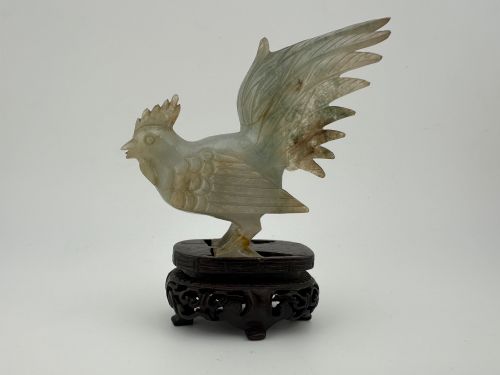
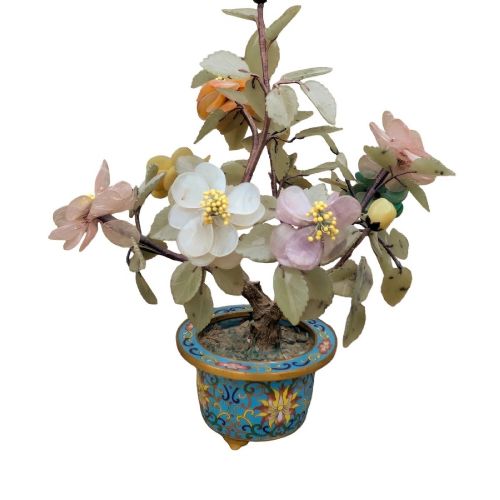
Makers and workshops across these eras shaped specific minerals into functional ornaments and pure decorative objects. The selection balances traditional motifs such as aquatic scenes and roosters with botanical bonsai trees set within cloisonne jardinieres.
Sculptural depth and material selection
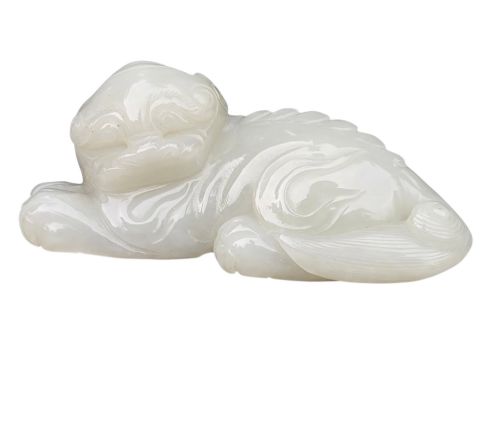
Quality rests upon the natural character of the stone and the ambition of the carving. Superior works exploit natural colour variations, such as russet markings on pale celadon jade, to define the anatomy of mythical beasts, dragons or birds.
Depth of relief and undercut detailing separate standard decorative objects from imperial-style or monumental sculptures. The crispness of line in miniature figures, cicadas and lotus cups demonstrates the carver's mastery over dense nephrite and jadeite.
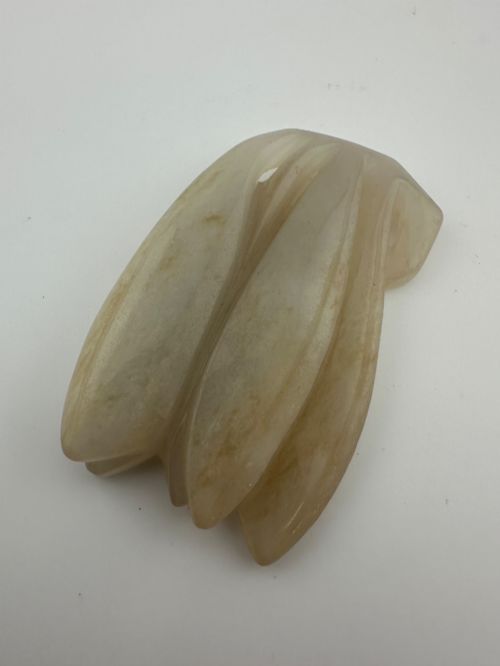
A tiny carved fish miniature shares shelf space with a monumental camel carrying its rider.
The Chinese Jade Sculpture Glossary
- Celadon jade
- A pale green or grey-green mineral prized in Chinese carving. Its subtle hue often shows russet natural inclusions.
- Nephrite
- One of the two primary minerals classified as jade, known for its dense, tough fibrous structure. It resists fracturing during intricate carving.
- Jadeite
- A pyroxene mineral brighter and more crystalline than nephrite. It frequently appears in vibrant green or white tones within later pieces.
- Qing Dynasty
- The final imperial dynasty of China, lasting from sixteen-fourteen-fourteen to nineteen-twelve. Most period sculptures here date to its later decades.
- Bowenite
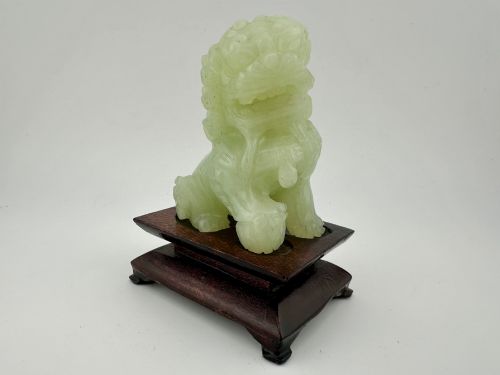
- A serpentinite rock resembling jade in hardness and appearance. Carvers utilised it for large animal and rider groups.
- Hardwood stand
- A carved wooden base tailored to the contours of a jade boulder or sculpture. It elevates the stone for display.
Chinese Jade Sculpture: Frequently Asked Questions
What periods do these sculptures date from?
The pieces span from pre-sixteenth century temple figures to eighteenth-century Qing Dynasty scholar's items and nineteenth-century carvings.
Later examples include twentieth-century hardstone bonsai trees and Republic Period figures mounted on wooden bases.
How do nephrite and jadeite differ?
Nephrite is a tough, fibrous amphibole mineral typically seen in celadon, white and pale green tones throughout earlier dynasties.
Jadeite is a denser pyroxene mineral that tends to present more crystalline structures and vibrant white or green colorations.
How were these sculptures displayed?
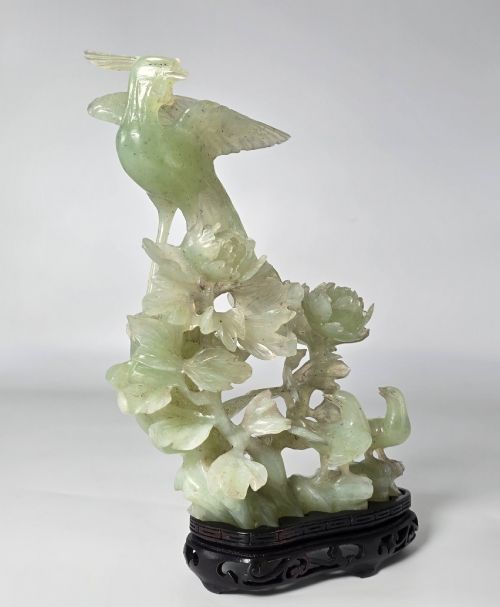
Many of the larger landscape sculptures, brush washers and boulder carvings sit upon custom-carved hardwood stands designed to support their irregular bases.
Smaller miniatures, such as fish and cicadas, functioned as scholar's desk ornaments or personal decorative objects.
What are hardstone bonsai arrangements?
These decorative compositions combine carved jade, quartz and other hardstones to form flowering trees and foliage.
The assembled branches are typically set within cloisonne or ceramic jardinieres, often dating to the early twentieth century.