



Chinese Immortal Figure
When you search for a chinese immortal figure, you are looking at centuries of craftsmanship depicting revered Daoist and Buddhist sages carved in wood, porcelain, and stone.
Chinese Immortal Figure
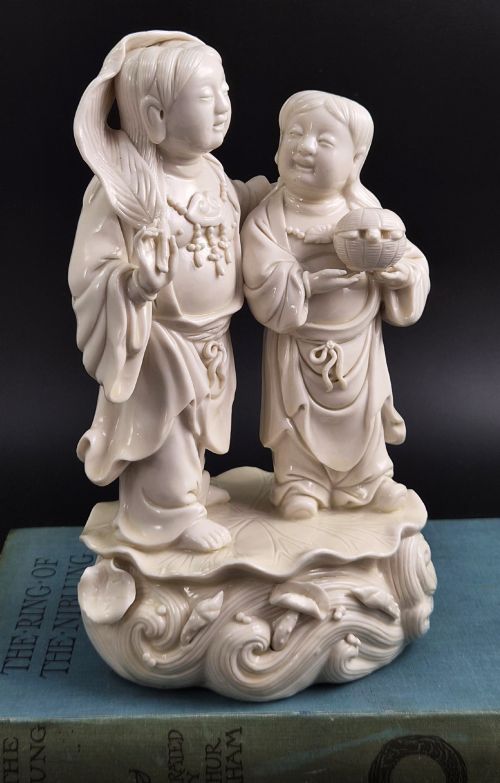
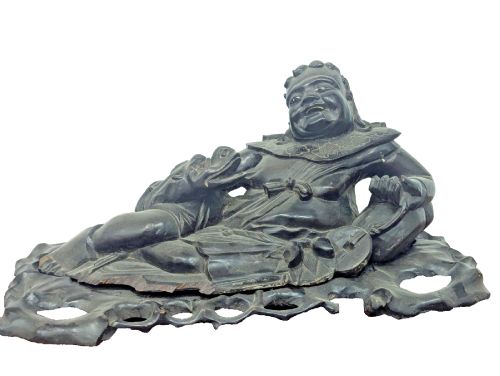
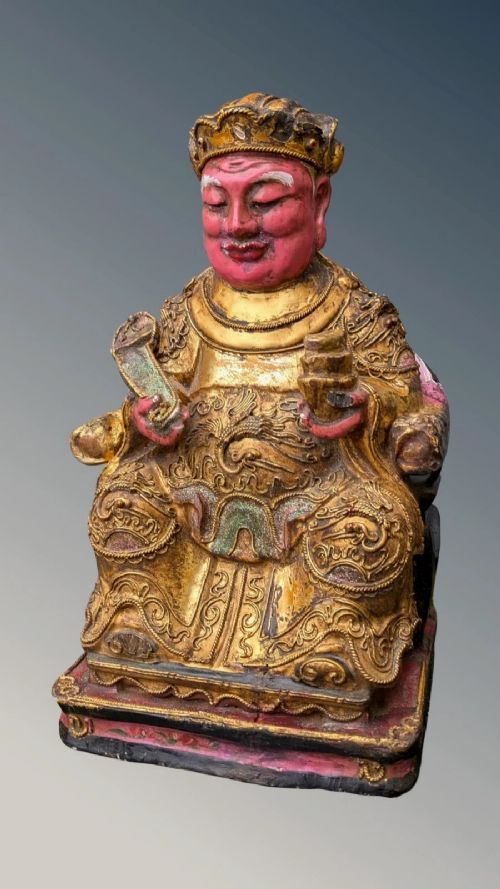
A chinese immortal figure represents traditional deities, sages, and figures such as Liu Hai, Budai, and Shoulao. These sculptures appear most frequently as carved hardwood, root wood, and porcelain pieces originating from the Qing Dynasty through the Republic Period.
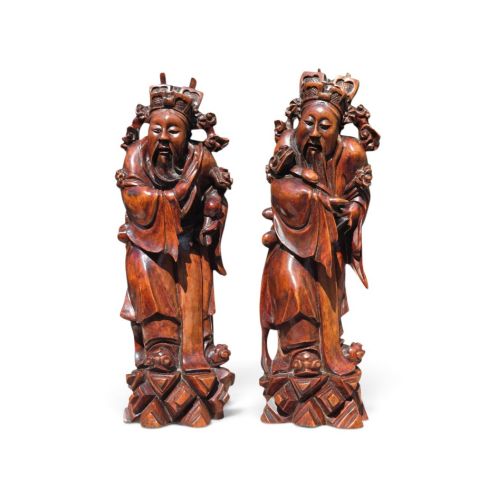
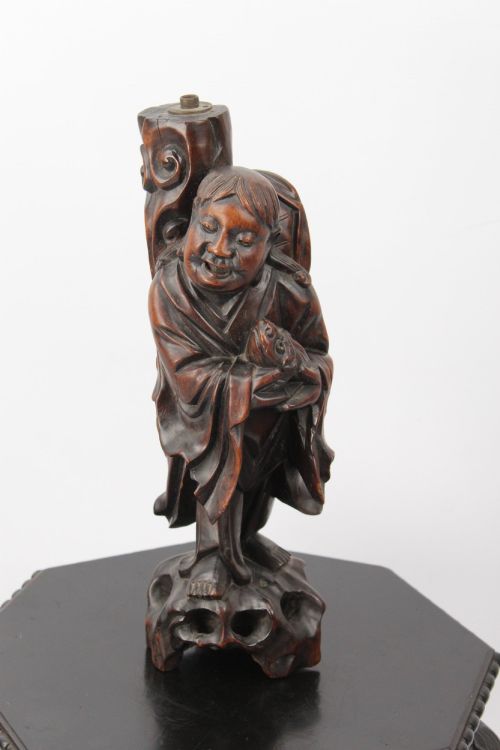
Buyers encounter individual statues, matched pairs, and figural lamp conversions depicting these venerated subjects. The forms range from miniature giltwood groups to monumental hardwood carvings created for domestic display and scholarly settings.
How they were made
Carvers utilised dense timbers, including hardwood, root wood, and bamboo, exploiting natural burls and grains to form the robes and postures of each deity. Other examples employ porcelain, ceramic, jadeite, agate, and hard stone decorated with polychrome enamels and turquoise glazes.
Makers applied gesso and gold leaf to specific wooden elements, while bronze and brass pieces utilised traditional metal casting methods. Artisans shaped hardstones and jade through meticulous grinding and polishing to achieve detailed figural groups.
Listings feature hard materials like jadeite, agate, and hard stone alongside organic root wood and dense hardwoods.
What varies in quality
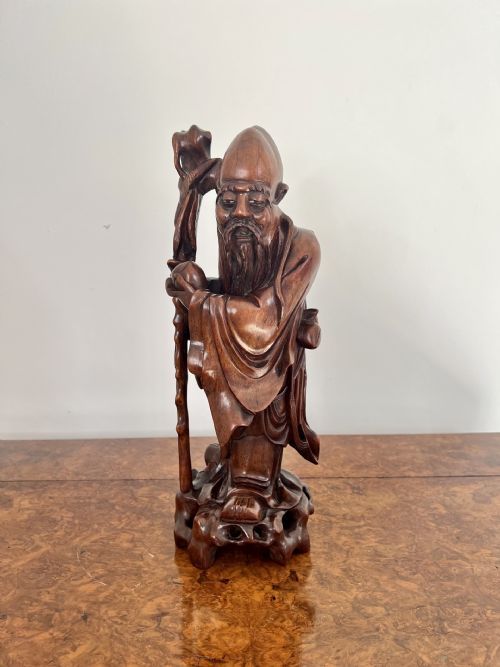
Quality rests in the depth and fluidity of the carving, where master carvers define facial expressions, flowing drapery, and anatomical details with sharp precision. Root wood and hardwood figures demonstrate superior artistry when the natural growth of the timber integrates harmoniously with the form of the sage.
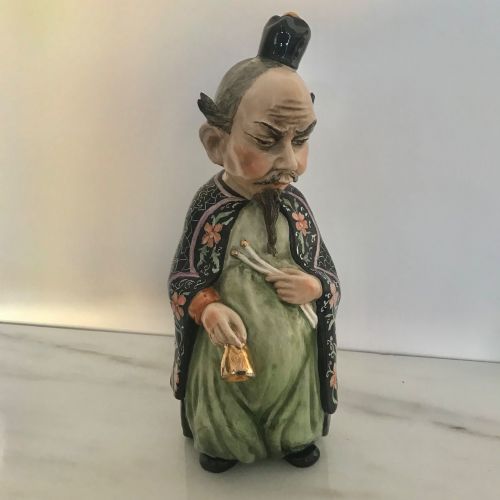
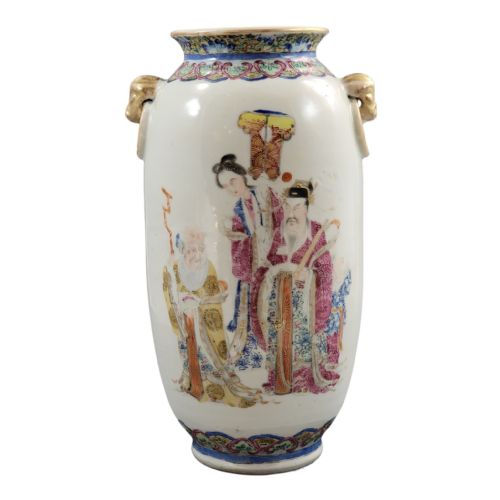
In ceramic and porcelain pieces, the finesse of the hand enamel decoration, the clarity of the famille rose palette, and the crispness of the glaze determine the standing of the work. Matched pairs and signed Republic Period vases represent the higher tier of execution.
Gao Hengsheng
The Chinese Immortal Figure Glossary
- Root wood
- A material sourced from the twisted subterranean parts or burls of trees, shaped into organic furniture and sculptures. Carvers follow the natural contours of the wood to suggest figures and landscapes.
- Shoulao
- The Daoist god of longevity, commonly depicted with a high forehead and holding a peach and a staff. He appears frequently in porcelain and carved hardwood figures.
- Qing Dynasty
- The final imperial dynasty of China, lasting from 1644 to 1912, known for prolific production in ceramics, jade, and hardwood carving. Pieces from this era span strict traditional forms to late transitional styles.
- Republic Period
- The era in Chinese history following the fall of the Qing Dynasty in 1912, lasting until 1949. Workshops during this time continued traditional porcelain and carving arts alongside new aesthetic influences.
Chinese Immortal Figure: Frequently Asked Questions
What is a chinese immortal figure?
A chinese immortal figure is a sculptural representation of a Daoist or Buddhist sage, such as Liu Hai or Shoulao, associated with longevity and good fortune.
These figures served as devotional objects or decorative arts in traditional Chinese interiors, rendered in materials ranging from carved hardwood to painted porcelain.
How can I tell the period?
Dating relies on stylistic markers, material characteristics, and the nature of the craftsmanship, such as the distinct famille rose enamels of the late Qing period or the organic forms of root wood carvings.
Examining the wear, patina, and base materials helps differentiate earlier Qing Dynasty works from later Republic Period examples.
Were these figures meant for display?
These sculptures were created for placement within homes, scholarly studios, and temples as symbols of blessing and spiritual protection.
Larger statues and matched pairs occupied prominent rooms, while miniature carvings and snuff bottles were handled closely by collectors.
How do I care for root wood?
Root wood carvings require stable environmental conditions away from direct sunlight and sudden temperature shifts to prevent the timber from drying or splitting.
Gentle dusting with a soft brush maintains the surface patina without disturbing the intricate grain and polished finish.