






Chinese Hardwood Seating
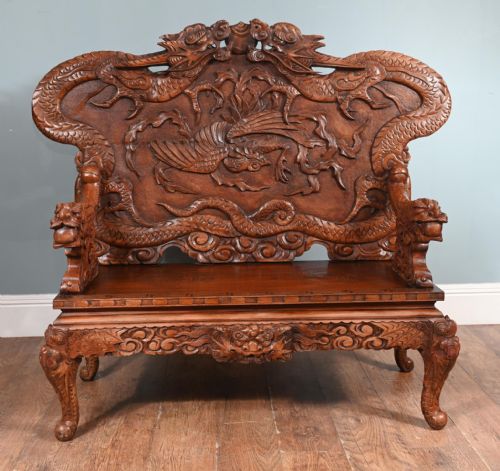
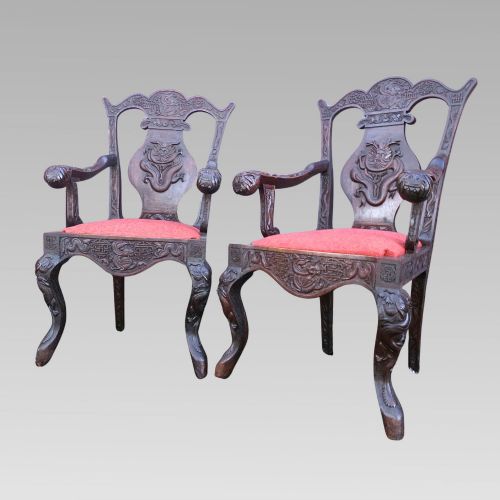
These pieces of chinese hardwood seating bring dense grain and carved dragon motifs into domestic interiors.
Chinese Hardwood Seating
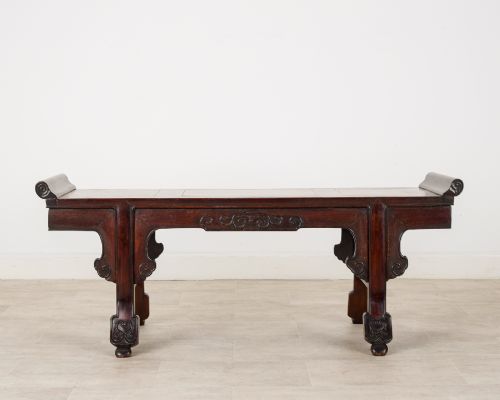
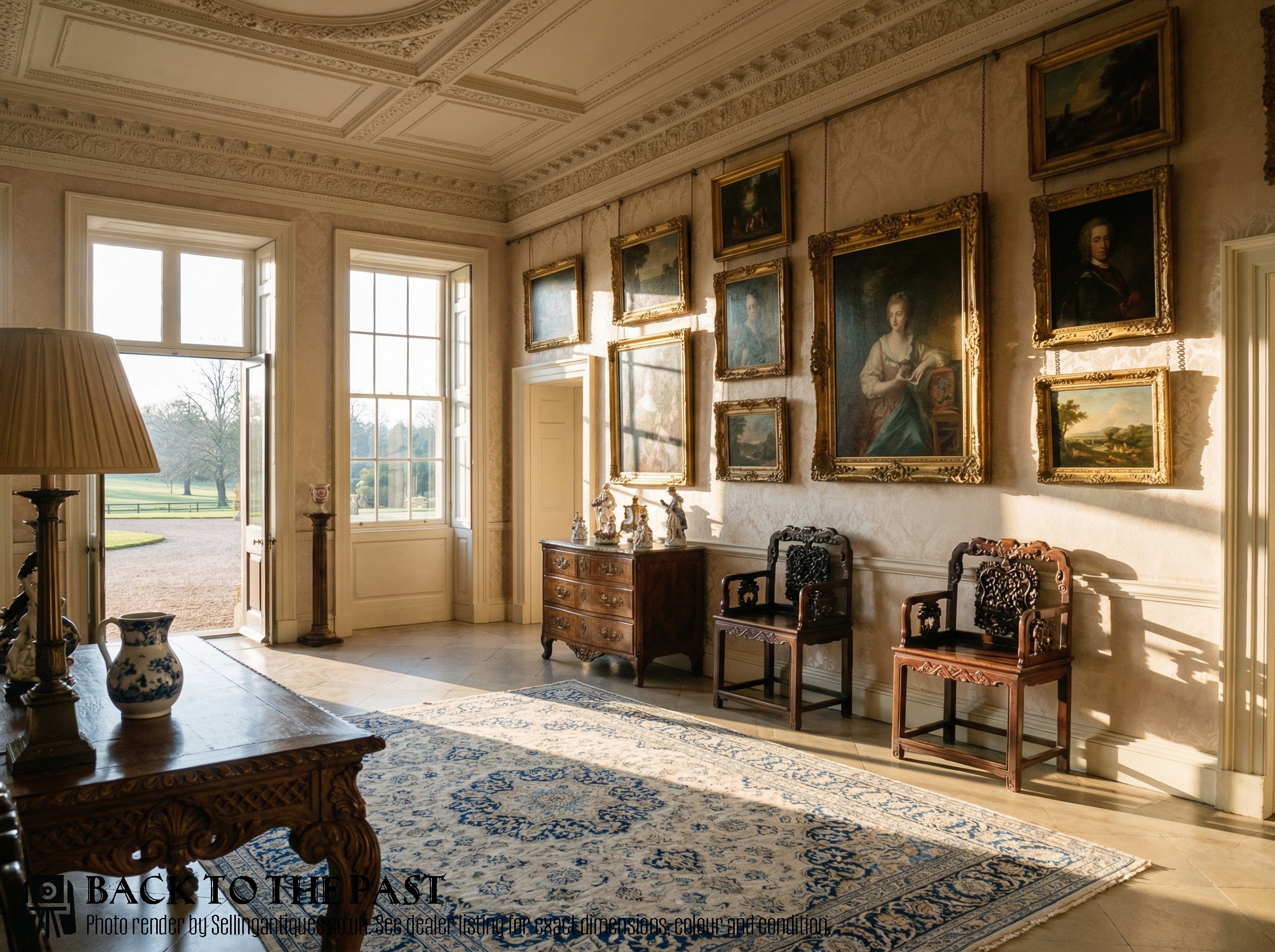
Chinese hardwood seating encompasses armchairs, benches, settles, and stools originating from the nineteenth and early twentieth centuries. The selection on this page relies heavily on Qing Dynasty and traditional Chinese export styles, spanning throne chairs to window seats.
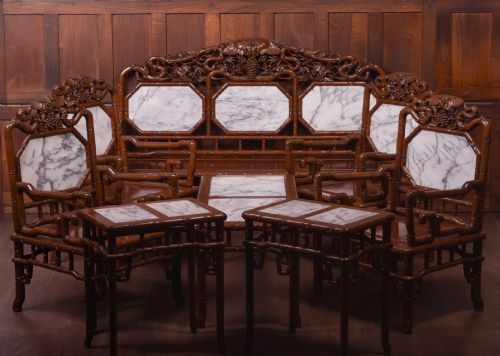
Buyers encounter sturdy elm, hongmu, and teak benches alongside carved horseshoe armchairs and parlour suites. These heavy timber forms reflect traditional craftsmanship designed for reception halls and formal rooms.
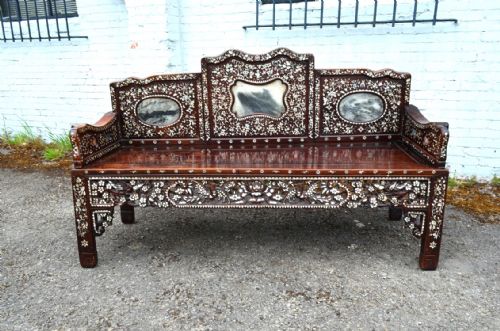
Pieces range from rustic stools to elaborate throne chairs inlaid with mother-of-pearl or brass. Each form demonstrates structural joinery suited to daily utility or ceremonial presentation.
Materials and Technique
Makers utilised dense hardwoods such as hongmu, huanghuali, and elm, relying on natural timber grain rather than applied finishes. Joinery typically avoided iron nails, depending instead on intricate interlocking wood joints.
Carving and inlay required specialist labour, employing deep relief work for dragons and motifs alongside delicate mother-of-pearl or brass wire settings. Lacquer and marble inserts provided contrasting textures within the dense wooden frames.
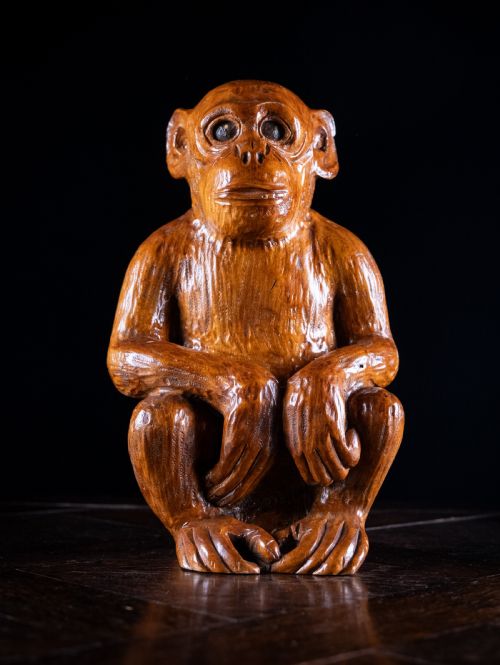
Carved monkeys and dragons peer from nineteenth-century timber frames, quietly watching over modern hallway parcels.
Markers of Excellence
The distinction between standard utility items and exceptional pieces rests upon the crispness of the wood carving and the choice of timber. Dense, heavily figured hongmu or huanghuali commands greater attention than plain elm or softwoods.
Structural integrity and the precision of traditional mortise and tenon joinery dictate longevity. Intricate mother-of-pearl inlay work that remains flush with the surrounding wood surface indicates superior workshop execution.
The Chinese Hardwood Seating Glossary
- Hongmu
- A dense, dark tropical hardwood favoured in traditional Chinese furniture construction for its weight and rich colour. This timber takes a fine polish without requiring heavy varnishing.
- Horseshoe armchair
- A seating form characterised by a continuous curved back and arm rail that sweeps downward in a single fluid line. The design provides ergonomic support while maintaining a clean silhouette.
- Settle
- A high-backed wooden bench with solid sides designed to block draughts in domestic spaces. These pieces often incorporate panelled storage beneath the seat.
- Cinnabar lacquer
- A technique involving multiple layers of coloured resin carved in deep relief over a wooden core. This method produces intricate decorative surfaces on panels and seats.
Chinese Hardwood Seating: Frequently Asked Questions
How do I identify a Qing dynasty chair?
Qing dynasty chairs generally display dense hardwoods like hongmu, accompanied by deep relief carving depicting dragons or traditional motifs. These pieces carry structural weight and use interlocking joinery without metal fasteners.
Examination of the timber grain and the crispness of the hand-carved details helps distinguish these formal seating pieces from later reproductions.
Were these benches used outdoors?
Historical Chinese benches and altar seats served primarily interior functions within reception halls, parlours, and domestic living spaces. Their dense hardwood construction was intended for sheltered environments.
Placing these items outdoors exposes the timber and inlay work to moisture fluctuations that can damage traditional joinery and surface lacquers.
How should I care for hardwood furniture?
Maintenance requires keeping timber away from direct heat sources and sudden humidity shifts to prevent wood shrinkage and cracking. Regular dusting with a dry cloth preserves the natural polish of the hardwood.
Avoid applying modern silicone polishes, as traditional surfaces respond better to occasional applications of neutral beeswax where appropriate.