






Chinese Hall Bench
These chinese hall bench pieces bring robust timber construction and intricate carving into an entranceway, offering both a seat and a statement of craft.
Chinese Hall Bench
A chinese hall bench serves as a substantial seating option in an entrance hall or living space, drawing on traditions of Chinese cabinet making and domestic furniture. The selection includes items designated as hall benches, settles, corner benches, and seating sets.
The forms span the nineteenth century, nineteen hundred, and nineteen thirty, alongside pieces linked to the Qing Dynasty and Chinese Export styles. Buyers encounter both straightforward timber seating and more elaborate configurations incorporating armchairs or corner designs.
Materials range from rosewood and hardwood to elm, ebonised hardwood, and cinnabar lacquer, occasionally featuring marble insets or bone inlay. These works reflect both traditional Chinese craftsmanship and export production intended for Western interiors.
How they were made
Carpenters utilised dense timbers such as rosewood, hardwood, and blonde elm, employing traditional joinery methods that allowed the wood to expand and contract naturally without metal fasteners. These construction techniques provided structural stability for large seating forms.
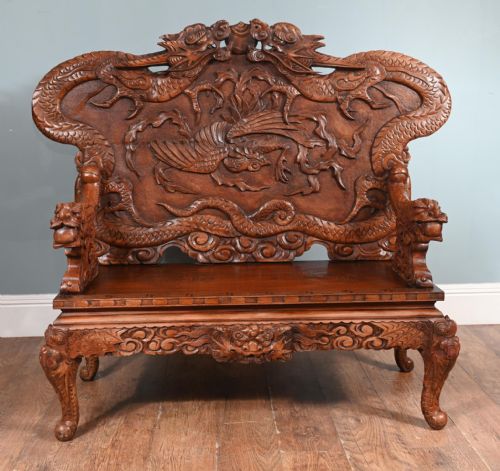
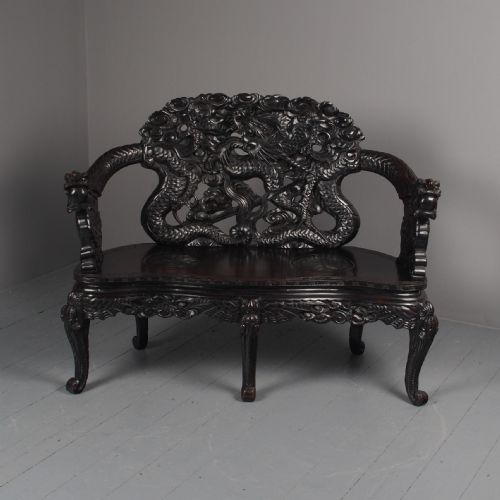
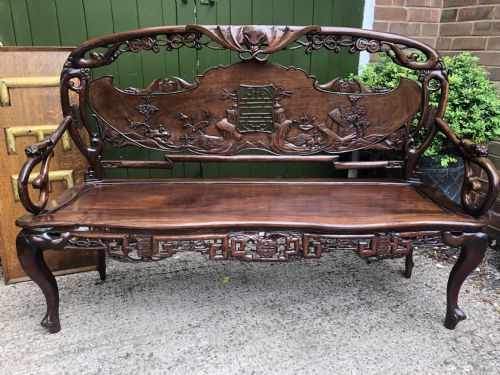
Surface decoration involved deep relief carving depicting motifs like dragons and horses, alongside finishes in cinnabar lacquer, ebonised polish, or plain polished wood. Selected examples integrated inset marble panels or intricate bone inlay into the timber framework.
Chinese Hall Bench Retail Price Guide 2026
Typical asking prices for chinese hall bench among the pieces listed under this phrase on Sellingantiques today, from the lower quarter to the upper quarter. They describe what is for sale here now, not the wider market.
Decorative techniques represented across the available pieces include cinnabar lacquer, marble insets, and bone inlay.
What varies in quality
Distinction across the range lies in the depth and precision of the carved ornamentation, particularly on backrests and aprons where dragon and figurative motifs appear. Sharply defined chisel work and balanced composition distinguish finer examples from simpler commercial production.
The choice of material heavily influences the character of the bench, with dense hardwoods like rosewood and huanghuali holding a different visual weight compared to elm or ebonised softer woods. The integrity of lacquer work and the precise fitting of marble insets also separate standard items from superior pieces.
The Chinese Hall Bench Glossary
- Hardwood
- Dense timber derived from broad-leaved deciduous trees, utilised extensively in traditional Chinese furniture for its strength and capacity to hold fine detail. It forms the primary structural material for most surviving benches.
- Cinnabar lacquer
- A traditional finish created by applying numerous layers of coloured resin derived from the lacquer tree, which is subsequently carved when dry. This technique yields a smooth, resilient surface suited to decorative panels.
- Settle
- A wooden bench featuring a high back to block draughts, often equipped with solid arms and a storage box beneath the seat. In this context, it describes robust hall seating configurations.
- Bone inlay
- A decorative method where small pieces of animal bone are shaped and pressed into recesses carved into the wood surface. It creates contrasting geometric or figurative patterns against dark timbers.
- Qing Dynasty
- The final imperial dynasty of China, lasting from sixteen forty-four to nineteen twelve, known for distinctive furniture styles that incorporated rich carvings and formal proportions.
Chinese Hall Bench: Frequently Asked Questions
Where should I place a Chinese hall bench?
These benches suit spacious hallways, entryways, or large living rooms where their length and carved backrests can be appreciated properly. They function well against plain walls that allow the timber grain and relief work to stand out.
Because many examples incorporate high backs or side arms, measuring the available floor space and clearance for doors is essential before positioning one in a domestic interior.
How do I care for hardwood and lacquered surfaces?
Maintenance involves dusting with a soft, dry cloth and avoiding placement near direct heat sources or strong sunlight, which can dry out the timber or crack lacquer. Consistent indoor humidity levels help preserve the structural integrity of older wood.
Applying specialised wax sparingly to unlacquered hardwood maintains the finish, while lacquered or marble-inset sections require gentle cleaning without harsh chemical solvents.
What is the difference between a bench and a settle?
A bench typically offers a simple seat supported by legs or trestles, sometimes featuring a low backrest or carved panel. A settle provides greater enclosure, featuring a high back and solid arms designed to shield occupants from draughts in entrance halls.
Both forms appear within traditional Chinese seating arrangements, though settles often display more architectural framing and substantial proportions.