


Chinese Green Glazed Vessel
A Chinese green glazed vessel brings deep, translucent tones and ancient kilns straight to your table.
Chinese Green Glazed Vessel
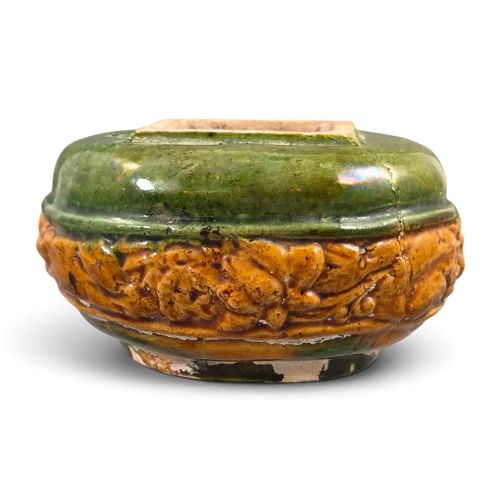
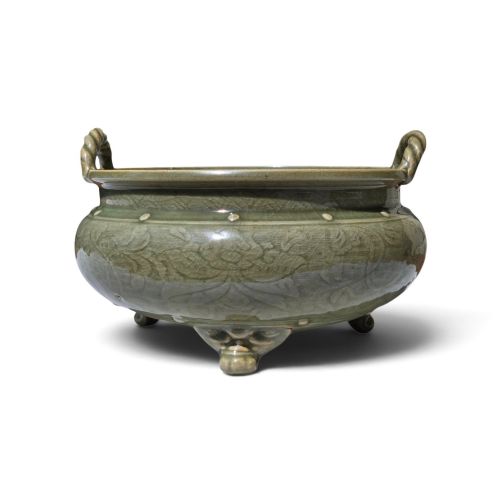
A chinese green glazed vessel encompasses an array of ceramic forms originating from diverse dynasties, ranging from early scholar's water vessels to monumental tripod censers. Collectors most frequently encounter Longquan celadon pieces alongside Song and Ming dynasty examples on this market.
The selection extends from delicate bowls and jars adorned with ducks and lotus motifs to globular vases and globular tea dust glazed vessels. Figures and models of granaries also appear, reflecting the broad utility and sculptural scope of these historic wares.
How they were made
Potters shaped these objects from durable bodies of stoneware and earthenware, often applying a distinctive celadon or lead glaze to achieve a glassy, jade-like finish. Controlled firing in reduction kilns produced the characteristic green tones that define the surface appearance.
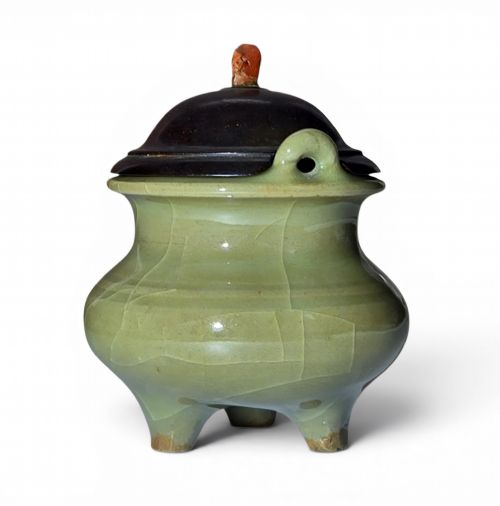
Auxiliary materials sometimes complement the ceramics, as seen in bespoke zitan wood and coral covers fitted to miniature tripod censers. These added elements demonstrate fine craftsmanship extending beyond the fired clay body itself.
What varies in quality
The sophistication of the glaze application and the depth of the crackle or colour variation dictate the visual success of a chinese green glazed vessel. Pieces exhibiting a rich, even celadon coating with subtle translucency command greater attention from discerning collectors.
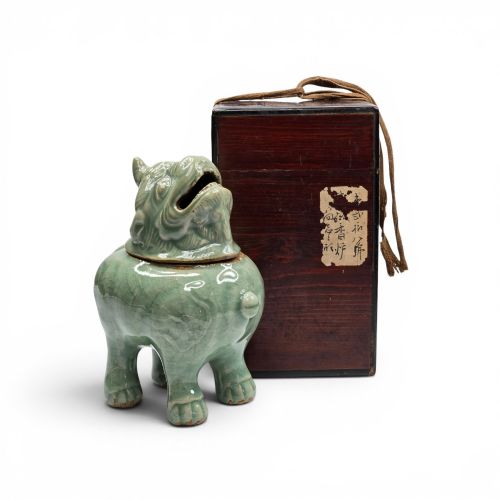
Form and proportion also define the standard, where crisp moulding of decorative elements like ducks, lotus, or mythical beasts such as the luduan displays superior artisan skill. The integration of period-appropriate additions, such as fitted zitan wood covers, elevates the standing of specific vessels.
Joseph Holdcroft
The Chinese Green Glazed Vessel Glossary
- Celadon glaze
- A transparent green glaze applied to stoneware, producing subtle variations in hue from sea-green to olive. This finish mimics the appearance of jade and results from iron oxides reacting in the kiln.
- Tripod censer
- A three-footed vessel traditionally used for burning incense in scholar's studios and temples. These forms often date from the Ming dynasty and earlier eras.
- Stoneware
- A heavy, dense ceramic fired at high temperatures until semi-vitrified. It absorbs little moisture and forms the robust body for many historic green glazed vessels.
- Zitan wood
- A dense, dark hardwood prized in Chinese furniture and decorative arts for its fine grain. It frequently forms bespoke covers for miniature censers.
- Scholar's water vessel
- A small ceramic container used to hold water for ink grinding in traditional calligraphy. These portable items form a distinct category of antique scholar's objects.
Chinese Green Glazed Vessel: Frequently Asked Questions
How do I date a celadon glaze?
Dating relies on observing the characteristics of the clay body, the tone of the green glaze, and the forming technique used by the potter. Earlier pieces often display distinct crackle patterns and tactile weight typical of Song and Ming kilns.
Examining baseline wear and auxiliary fittings, such as period wood covers, helps confirm the chronological context of the ceramic.
What was a tripod censer used for?
A tripod censer served primarily for burning aromatic incense during scholarly contemplation, religious rituals, or daily domestic life. The three feet elevated the vessel to protect furniture and ensure even heat distribution.
Over time, these incense burners became prized display objects in scholar's studies and elite households.
Are these vessels waterproof?
Stoneware and earthenware vessels with lead or celadon glazes are generally impervious to water, though older pieces may develop microscopic fissures over centuries. Scholars historically used small vessels specifically for holding water for ink stones.
Care should be taken with antique ceramics to avoid prolonged exposure to moisture if internal hairline fractures are present.
How do I clean an antique vessel?
Dusting gently with a soft, dry cloth is the safest method to maintain the surface of a historic ceramic. Avoid harsh chemical cleaners, abrasives, or soaking, which can damage fragile glazes or porous earthenware bodies.
Consult a professional conservator if deeper cleaning is required to remove stubborn residue from ancient interiors.