



Chinese Glass Art
Chinese glass art brings remarkable colour and intricate detail to interior spaces, offering miniature painted worlds and reflective panels.
Chinese Glass Art
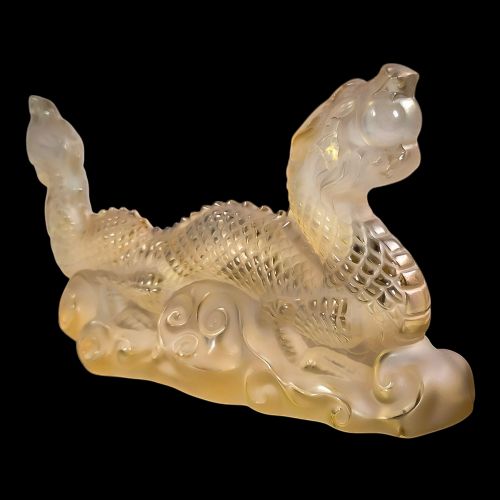
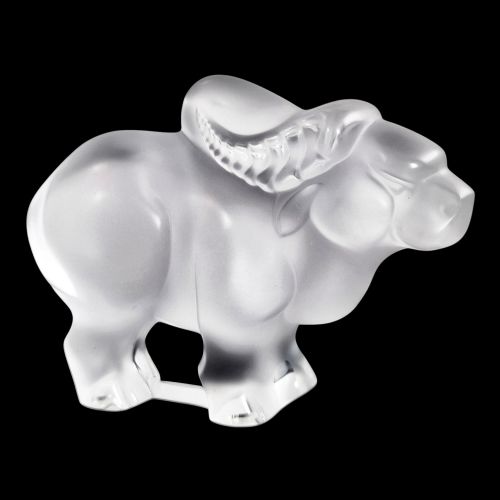
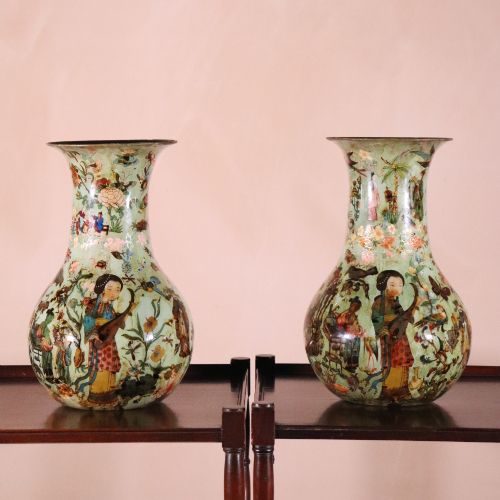
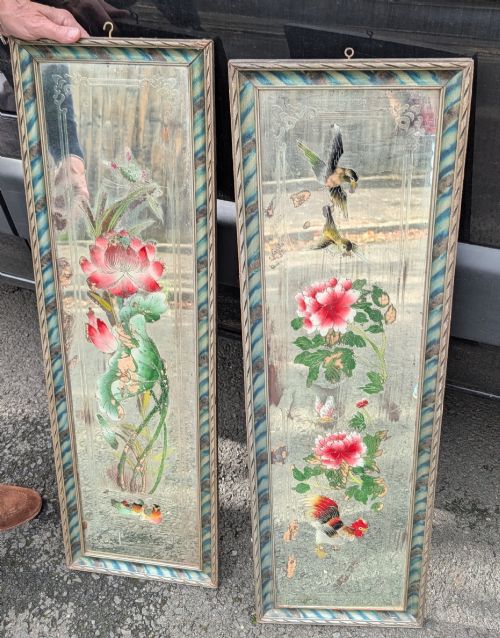
Chinese glass art encompasses reverse glass paintings, delicate mirror panels, miniature snuff bottles, and vibrant vases.
Most examples found here date from the nineteenth century through to the mid-twentieth century, showing traditional Qing Dynasty styles and export aesthetics.
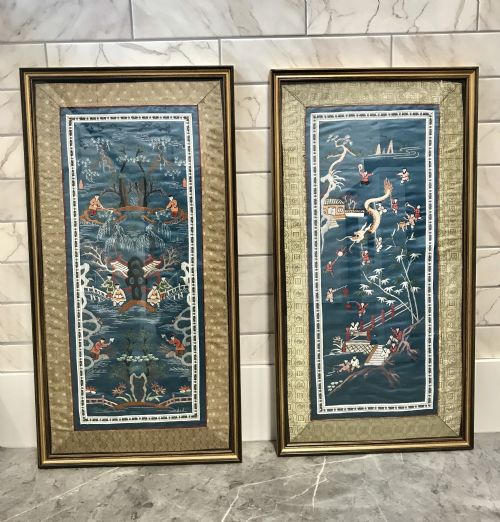
Forms range from wall-hanging mirrors and textile art under glass to octagonal blue bottle vases and inside-painted vessels.
How they were made
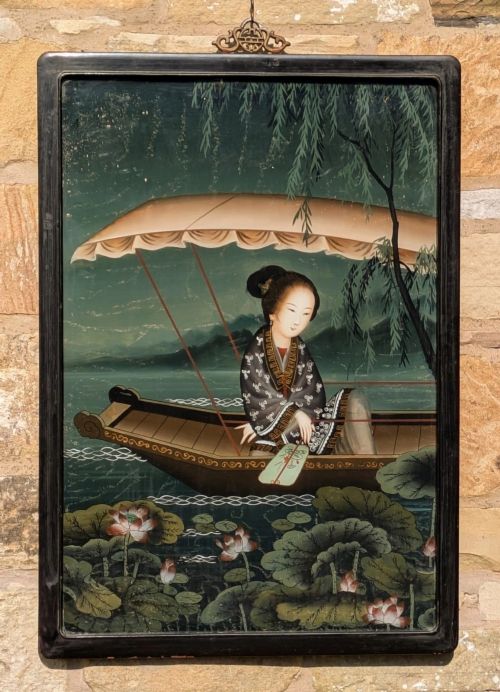
Makers utilised transparent and mirror glass as a canvas, applying oil paint and pigments to the reverse side to create crisp compositions when viewed from the front.
Some works incorporate organic and precious materials, framing glass panels within carved wood, or complementing designs with silk, gold leaf, and brass fixtures.
Intricate internal painting required specialised microscopic brushwork applied through the tiny neck of small glass snuff bottles.
Chinese Glass Art Retail Price Guide 2026
Typical asking prices for chinese glass art among the pieces listed under this phrase on Sellingantiques today, from the lower quarter to the upper quarter. They describe what is for sale here now, not the wider market.
Listings feature items spanning the nineteenth and twentieth centuries, using glass, wood, paint, brass, mirror glass, oil paint, silk, and gold leaf.
What varies in quality
The precision of brushwork defines the upper tier of painted glass panels and miniature bottles, where controlled lines distinguish skilled execution from simpler output.
The integrity of the reflective silvering and the condition of the glass substrate alter the visual weight and clarity of reverse painted mirrors.
The harmony between the glass body and associated materials such as hand-carved wooden mounts or brass fittings indicates the care taken in the original workshop.
The Chinese Glass Art Glossary
- Reverse glass painting
- A technique where the artist paints directly onto the back of a glass pane so the image displays correctly from the front. This method requires painting foreground elements before background details.
- Plique-a-jour
- An enamelling technique similar to cloisonne where enamel is applied within a cellular framework without a backing, allowing light to shine through the translucent material. It creates a stained-glass effect on small decorative items.
- Qing Dynasty
- The final imperial dynasty of China, lasting from sixteen forty-four to nineteen twelve. Pieces from this era often influence later styles and export wares found in the West.
- Snuff bottle
- A small container used to hold powdered tobacco during the Qing period. These vessels evolved into highly decorative art objects carved from glass, stone, or porcelain.
- Mirror glass
- Flat reflective sheeting used historically for decorative wall art and export trade pictures. The silvering process often ages with distinctive patination.
Chinese Glass Art: Frequently Asked Questions
What is Chinese reverse glass painting?
Reverse glass painting involves applying pigments directly onto the rear surface of a glass panel. When viewed from the unpainted side, the finished image displays a polished brilliance.
Artists had to plan compositions in reverse, painting fine details and foregrounds first before layering background colours.
How were inside-painted snuff bottles made?
Makers used miniature, bent bamboo or metal brushes inserted through the microscopic opening of a glass bottle. They painted upside down and backwards on the interior walls.
This demanding discipline required immense steady control to produce miniature portraits, landscapes, and calligraphy.
How do I date these glass pieces?
Dating relies on examining the substrate glass, framing materials, and stylistic conventions. Nineteenth-century examples often display specific export trade characteristics and hand-beveled mirror plates.
Twentieth-century pieces generally show shifts toward brighter factory-produced pigments and alternative decorative forms like Peking glass vases.
How should I hang heavy glass art?
Wall-hanging mirrors and reverse-painted panels require secure fixings anchored directly into wall studs or solid masonry. The weight of the glass combined with wooden frames needs proper load-bearing support.
Avoid relying on simple picture wire alone for heavier nineteenth-century export mirrors.