
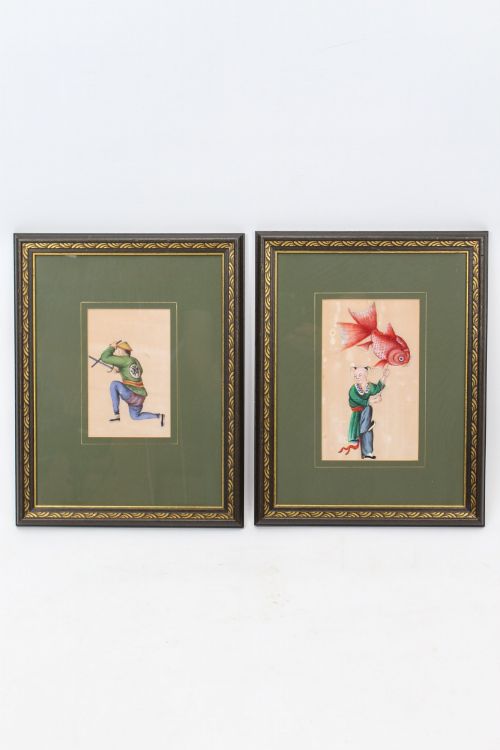


Chinese Export Watercolour Paintings
Chinese export watercolour paintings bring vivid Qing dynasty artistry into your rooms, offering detailed glimpses of nineteenth-century life rendered on delicate pith paper.
Chinese Export Watercolour Paintings
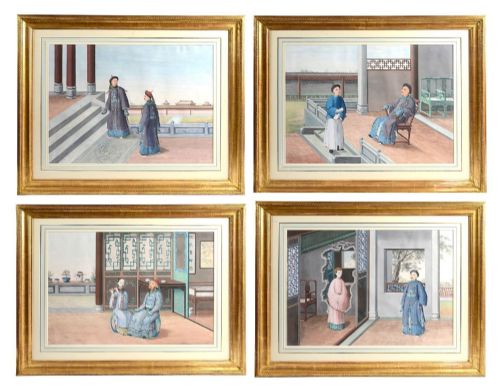
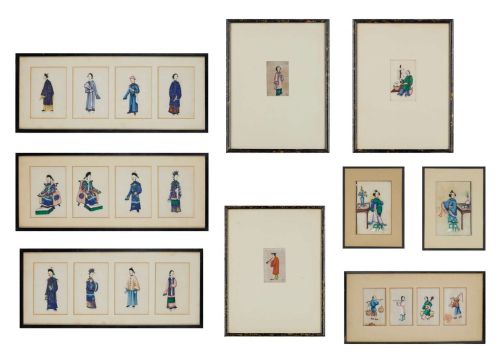
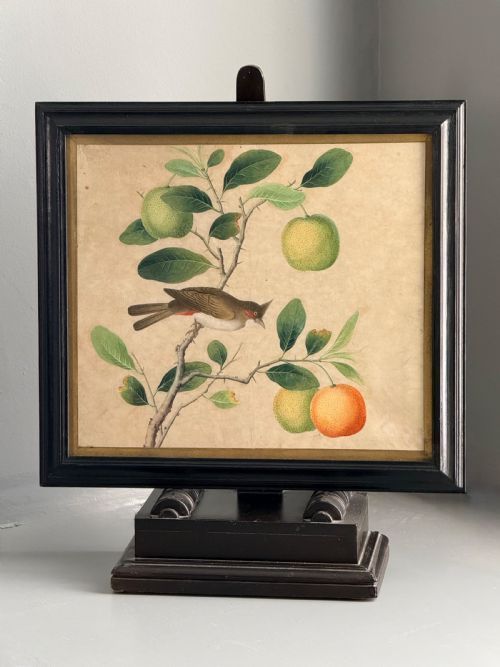
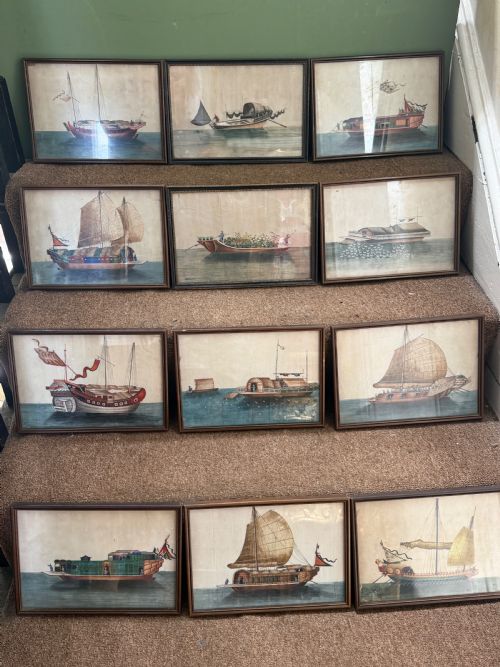
Chinese export watercolour paintings represent a distinct category of historical art created primarily for Western markets during the Qing dynasty. These works frequently capture maritime scenes, floral studies, and intricate figural compositions designed to appeal to foreign buyers.
You will most commonly encounter nineteenth-century pieces on this page, often framed or mounted in sets. These artworks range from individual depictions of insects and junks to extensive series detailing traditional trades and social scenes.
The objects span multiple periods, including the Regency era and the late nineteenth century, reflecting the steady production of export art. Whether presented as single sheets or complete sets, they provide tangible connections to historical trade between China and the West.
How they were made
Artists painted these works using watercolour and gouache pigments applied directly onto prepared supports. The resulting surfaces display vibrant colour retention and fine brushwork that define the style.
Many of these works utilise pith paper, often historically termed rice paper, which is cut from the spongy pith of the Tetrapanax papyrifer plant. This fibrous material absorbs pigments in a way that gives the colours a characteristic velvety depth.
The listings here feature nineteenth-century and Regency periods, utilising materials such as pith paper, gouache, and wood.
What varies in quality
The fineness of the brushwork and the complexity of the composition distinguish standard decorative items from superior examples. Masterful handling of pigment brings remarkable life to subjects such as butterflies, insects, and maritime fleets.
The preservation of the fragile pith paper and the vibrancy of the original gouache pigments heavily influence the overall standard of a piece. Complete sets that retain their original mounting or framing offer greater historical cohesion.
The Chinese Export Watercolour Paintings Glossary
- Pith paper
- A delicate, absorbent material sliced from the pith of a specific plant native to southern China. It is commonly used as a painting surface in nineteenth-century export art.
- Gouache
- An opaque water-based medium that provides dense, flat areas of colour with a matte finish. It frequently appears alongside watercolour in export paintings.
- Export art
- Goods manufactured in China specifically for foreign markets and Western tastes. This category encompasses paintings, ceramics, and textiles produced during the Qing dynasty.
- Junk
- A traditional Chinese sailing ship with battened sails, frequently depicted in maritime export paintings. These vessels were vital to regional trade and navigation.
Chinese Export Watercolour Paintings: Frequently Asked Questions
What is pith paper?
Pith paper is a delicate, fibrous material sliced from the pith of the Tetrapanax plant rather than pressed from rice. It provides a soft, absorbent surface that gives gouache and watercolour pigments a unique velvety texture.
Because of its fragile nature, paintings on this medium require careful framing and protection from excessive light and handling.
How should I frame these paintings?
These works benefit from conservation-grade framing that keeps the delicate paper away from direct contact with the glass. Proper mounting ensures the fragile edges remain secure without the use of harsh adhesives.
Keep framed pieces out of direct sunlight to prevent the vibrant nineteenth-century pigments from fading over time.
Are these works hand painted?
Every piece in this category is an original hand-painted artwork created by artists working in centres such as Canton. Artisans produced these items in workshops to cater to Western visitors and export traders.
Close inspection reveals individual brushstrokes and the subtle variations characteristic of hand-applied watercolour and gouache.
How do I date these paintings?
Dating relies on stylistic clues, costume details, the type of framing, and the specific characteristics of the paper and pigments used. Many pieces date from the nineteenth century and the Qing dynasty.
Comparing the subject matter and painting technique with dated examples helps narrow down the period of production.