
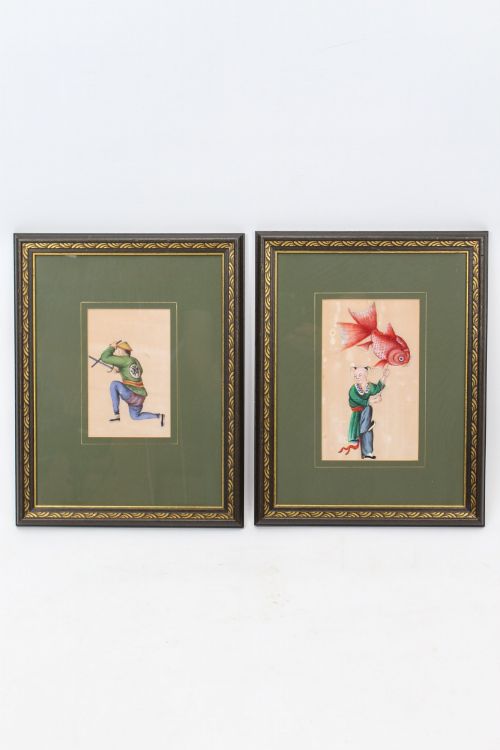


Chinese Export Pith Paper
Chinese export pith paper paintings are delicate historical works, offering buyers colourful scenes of 19th-century life rendered on fragile pith plant stem material.
Chinese Export Pith Paper
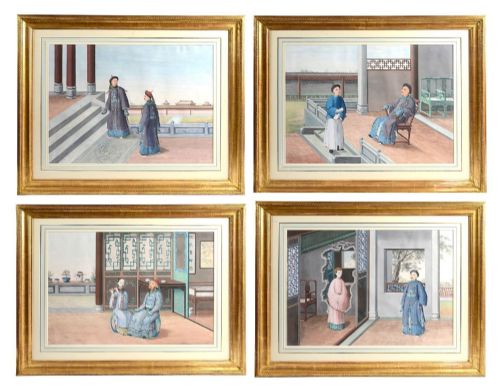
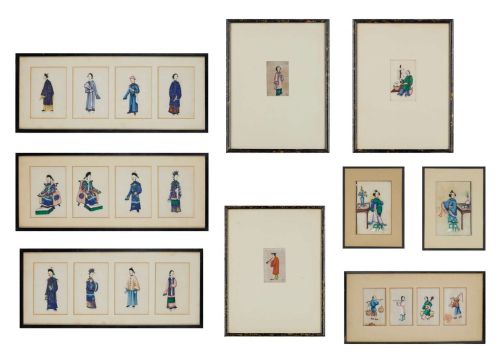
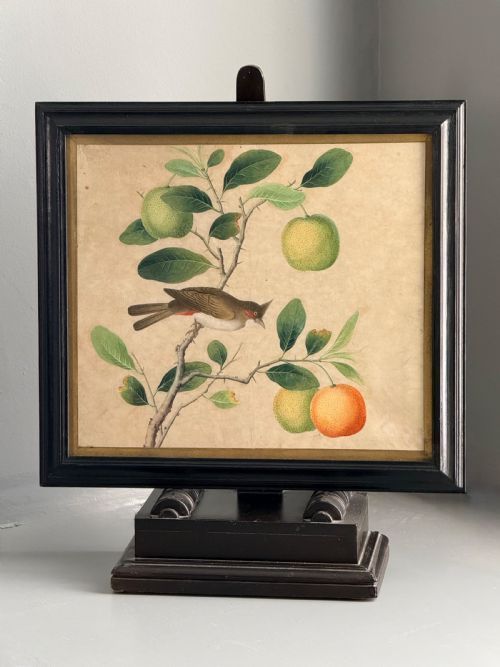
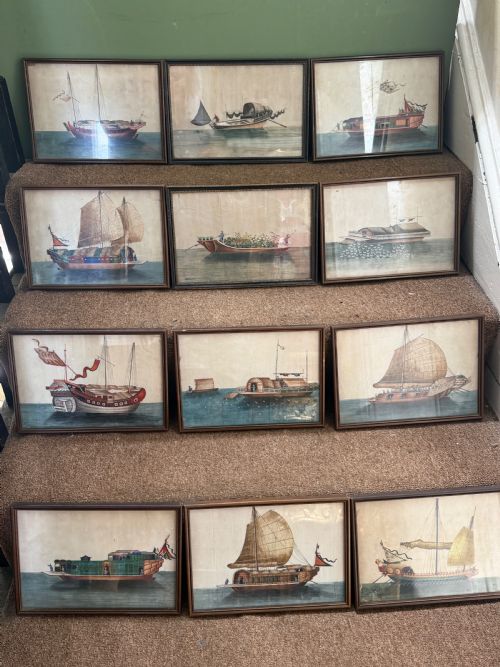
Chinese export pith paper pieces are delicate works of art created for Western markets during the nineteenth century, encompassing both individual sheets and mounted sets. Buyers searching for chinese export pith paper will most frequently encounter nineteenth-century examples, including late Qing dynasty productions depicting figures, flora, and junks.
The surviving examples range from small pairs to framed sets of twelve or twenty-one paintings, often originating from Canton. These works capture specific subjects like butterflies and insects alongside traditional maritime and figural scenes.
Materials and technique
These artworks utilise pith paper, often historically miscalled rice paper, which is carefully sliced from the spongy internal pith of the Tetrapanax papyrifer plant. Artists then applied vibrant watercolours and gouache directly onto this porous, velvety surface.
The finished paintings frequently received framing in wood or glass, occasionally with gilt wood details, to protect the fragile organic support material from damage.
Nineteenth-century artists occasionally painted microscopic butterflies on pith paper so finely that viewers needed a magnifying glass to appreciate them.
Assessing quality
Quality in these works lies in the delicacy and preservation of the watercolour and gouache medium upon the fragile pith surface. Sets that retain their original scale and vibrant pigment without extensive flaking represent the upper tier of the range.
The precision of the brushwork in depicting intricate subjects such as butterflies, flora, or maritime junks distinguishes superior export art from more standard production.
The Chinese Export Pith Paper Glossary
- Pith paper
- A delicate material sliced from the stem of the Tetrapanax papyrifer plant. It possesses a spongy, absorbent texture that holds watercolour pigments with a distinctive velvety finish.
- Gouache
- An opaque water-based paint utilised by artists to achieve bright, saturated colours. It forms the primary medium for many nineteenth-century export paintings.
- Canton
- A major Chinese port city that served as the primary hub for producing and exporting decorative arts to Western buyers during the Qing dynasty.
- Junk
- A traditional Chinese sailing ship with battened sails. These vessels frequently appear as subjects in nineteenth-century export artwork.
Chinese Export Pith Paper: Frequently Asked Questions
What is pith paper made from?
Pith paper is sliced from the spongy interior of the stem belonging to the Tetrapanax papyrifer plant native to southern China.
It is not actually made from rice, despite the historical misnomer rice paper often applied by early Western collectors.
Are these works from the Qing dynasty?
Many examples date from the nineteenth century during the Qing dynasty, specifically aligned with the export art trade.
Makers produced these pieces in workshops aimed primarily at European and American visitors and traders.
Why are they called export art?
Export art describes items manufactured in China specifically for overseas markets rather than domestic use.
These pieces often blended traditional Chinese painting techniques with subjects that appealed to Western buyers.