



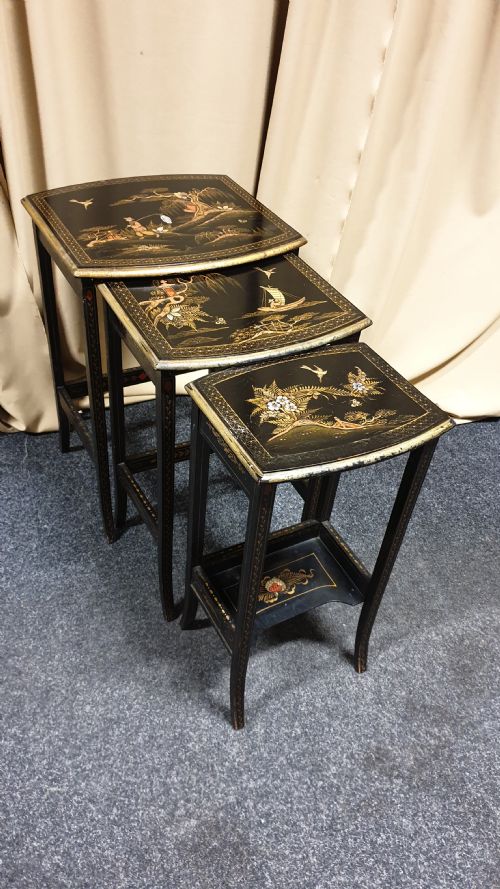


Chinese Export Coffee Table
A chinese export coffee table brings tactile oriental craftsmanship and rich hardwood timber directly into a modern sitting room.
Chinese Export Coffee Table
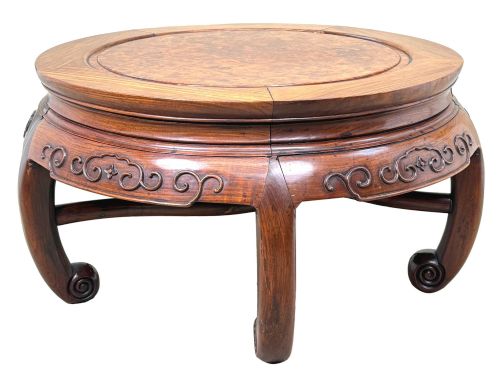
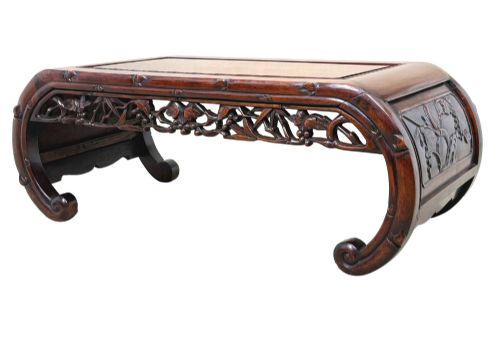
A chinese export coffee table encompasses various low wooden forms adapted from traditional oriental furniture, including circular tables, opium tables, and occasional tables. These pieces span the nineteenth century and the early twentieth century, drawing on Victorian and Edwardian periods as well as Qing dynasty influences.
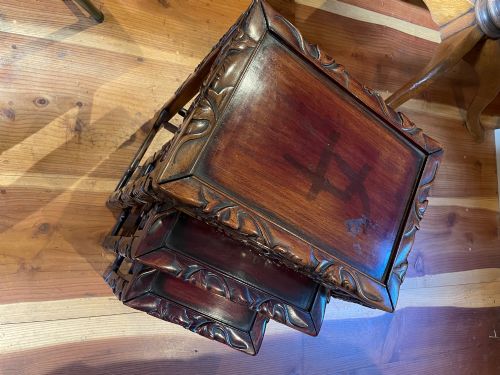
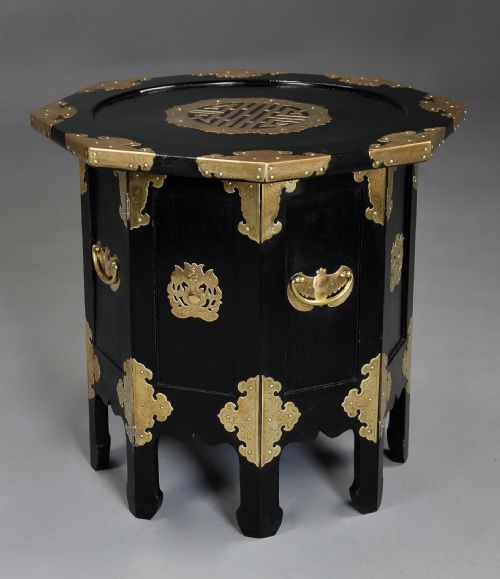
Buyers frequently encounter nested sets of tables, carved side tables, and repurposed camphorwood or pig skin trunks functioning as coffee tables. Styles range from straightforward oriental hardwood constructions to heavily decorated black lacquer and chinoiserie pieces.
Materials and construction
Makers utilised dense timbers such as hardwood, rosewood, teak, and Hongmu, often pairing them with burr wood veneers or applying deep black lacquer. These sturdy woods provided a stable foundation for intricate hand carving and inlaid decorative schemes.
Surface decoration involved meticulous hand carving of motifs like dragons, alongside brass accents and ebonised finishes. Lacquered surfaces and painted chinoiserie designs required multiple layers to achieve a durable, lustrous finish on tables and trunks.
Chinese Export Coffee Table Retail Price Guide 2026
Typical asking prices for chinese export coffee table among the pieces listed under this phrase on Sellingantiques today, from the lower quarter to the upper quarter. They describe what is for sale here now, not the wider market.
Listings feature woods spanning hard timber, rosewood, teak, burr wood, and ebonised finishes across the nineteenth and early twentieth centuries.
Assessing quality in construction
The standard of a chinese export coffee table rests on the depth and crispness of the hand carving and the selection of timber. Heavy carving on tables and chests demonstrates greater artisan skill than simple flat surfaces.
Finish application separates standard utility items from finer decorative examples, particularly in the smoothness of black lacquer and the precise fit of nested tables. The integration of brass hardware and inlaid details further distinguishes finer workshop output.
The Chinese Export Coffee Table Glossary
- Chinoiserie
- European artistic interpretation and imitation of Chinese decorative styles. It appears frequently on lacquered furniture and decorated nesting sets.
- Hongmu
- A dense, dark tropical hardwood valued in traditional Chinese furniture making. It provides structural stability and a fine grain for carved tables.
- Opium table
- A low rectangular or circular wooden table originating from domestic interiors. These low forms translate directly into compact modern coffee tables.
- Camphorwood
- A fragrant timber utilised for trunks and chests. Its natural properties protected contents from insects before conversion into coffee tables.
Chinese Export Coffee Table: Frequently Asked Questions
What is a chinese export coffee table?
A chinese export coffee table is typically a nineteenth century or early twentieth century low wooden table, nest of tables, or repurposed trunk created in Asia for Western markets. These pieces blend traditional oriental construction methods with forms suited to Western drawing rooms.
Materials range from plain oriental hardwoods to intricately carved teak, ebonised wood, and black lacquer surfaces decorated with chinoiserie motifs.
How were nesting tables used?
Nesting tables provided versatile surface space that could expand or contract depending on entertaining needs. Sets of three or four tables stacked neatly underneath one another when floor space was required.
In period interiors, individual tables from the nest were pulled out to hold tea cups or decorative objects before returning to the main stack.
Can trunks serve as coffee tables?
Trunks and chests, including camphorwood and pig skin shipping trunks, function effectively as coffee tables by offering a flat upper surface combined with internal storage. Their substantial proportions anchor a seating area while concealing household items.
These pieces reflect travel and trade origins, bringing distinct character and utility to a living space.
How do I date these tables?
Dating relies on identifying period characteristics, construction techniques, and materials associated with the nineteenth century, Victorian era, or early twentieth century. Stylistic cues such as heavy dragon carving or specific lacquer techniques help narrow the timeframe.
Comparing structural joinery and hardware styles against documented pieces further clarifies the production era.