
Chinese Ceramic Jars
Chinese ceramic jars bring centuries of kiln mastery into a room, offering bold painted detail and heavy porcelain forms that anchor any mantel or cabinet.
Chinese Ceramic Jars
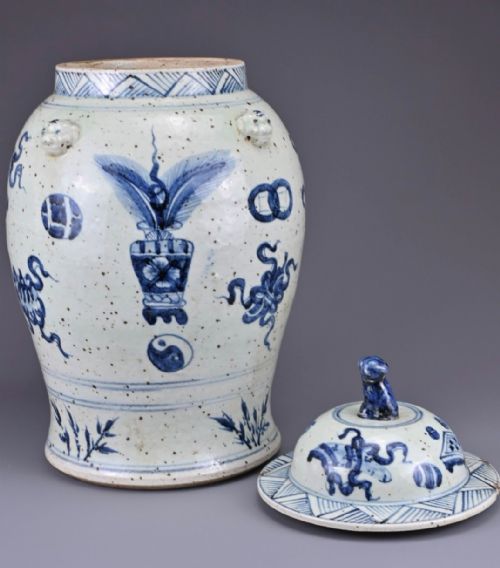
Chinese ceramic jars span from early earthenware vessels to high-fired porcelain storage containers made for domestic use or export. The pieces gathered here lean heavily into the nineteenth century, alongside earlier pottery and export examples.
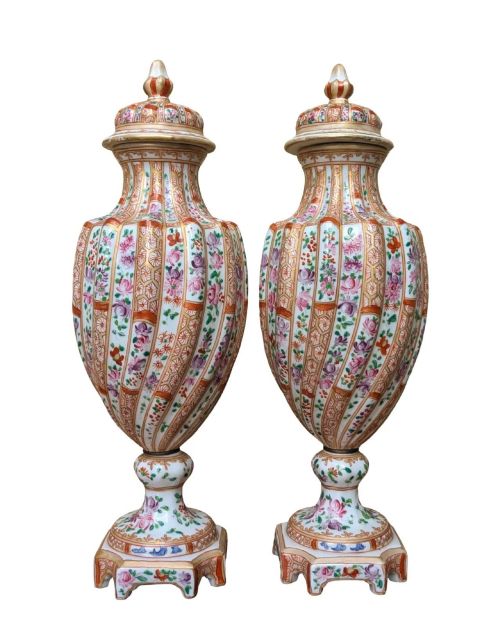
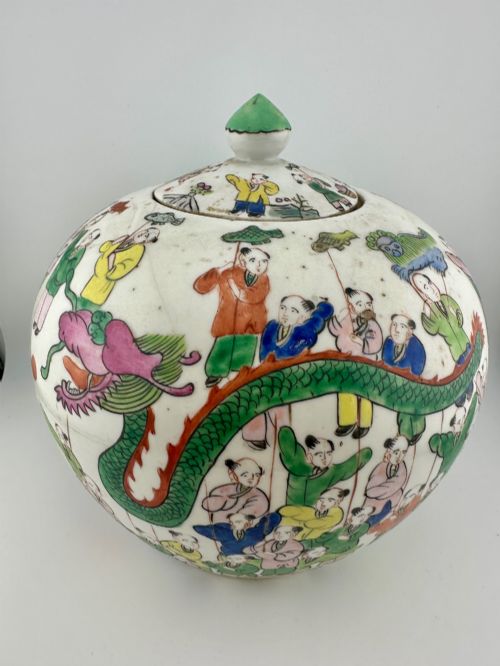
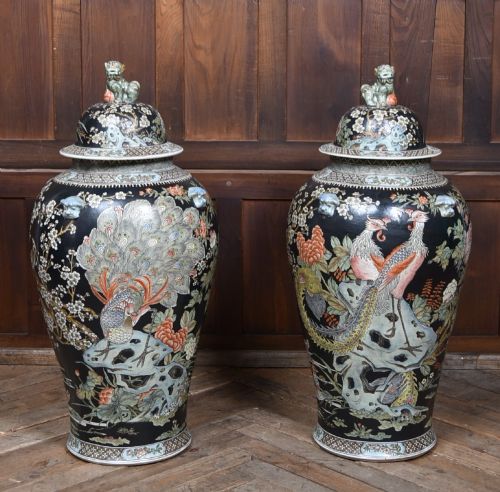
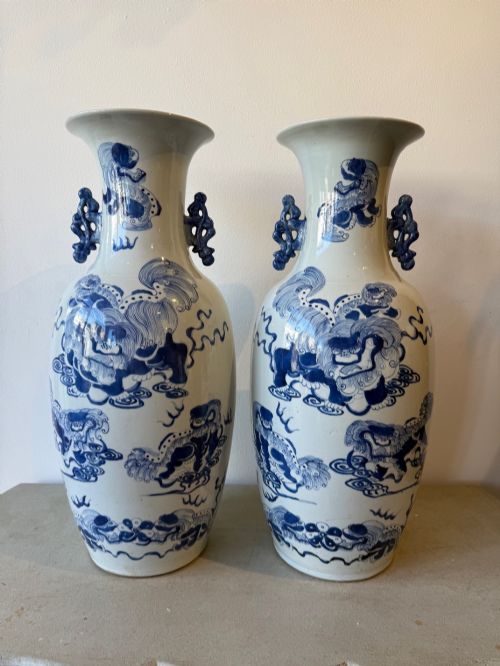
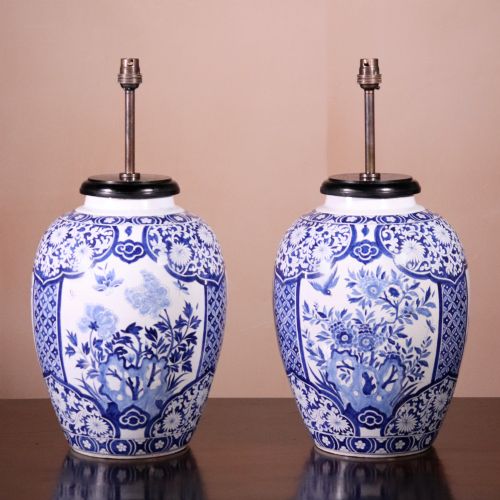
Forms range from ginger jars and lidded urns to double-gourd vases and large floor vessels. Many survive with their original covers, though several nineteenth-century pieces now function as table lamps fitted with wiring.
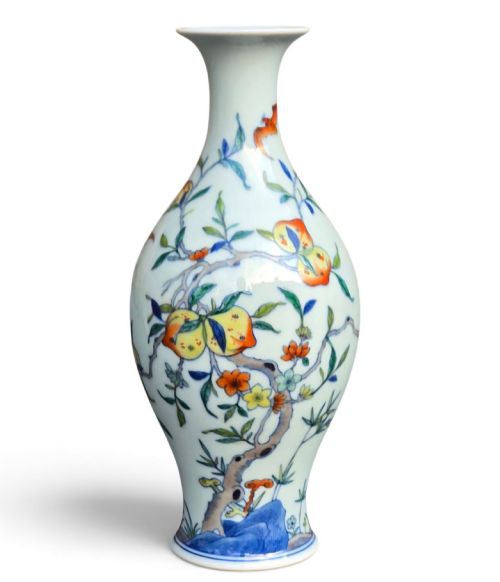
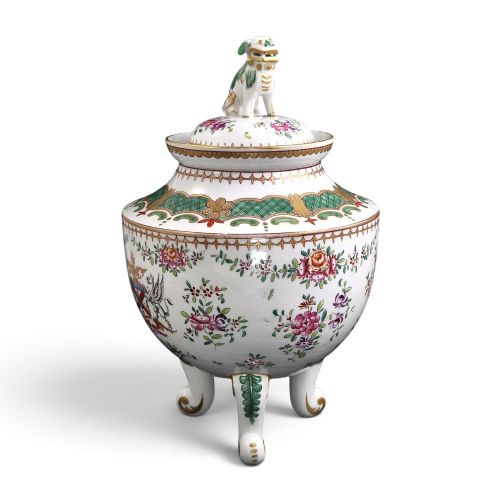
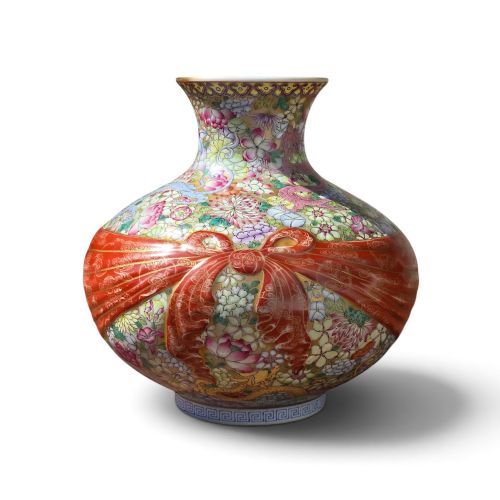
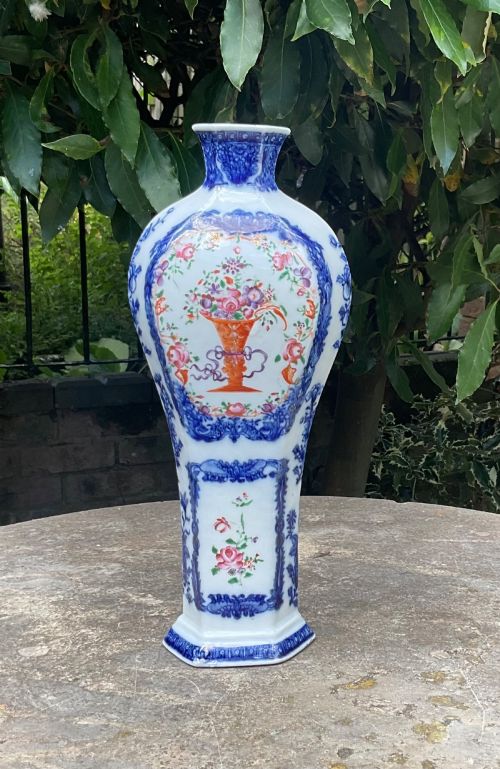
Makers drew on imperial designs, producing blue and white patterns, famille rose enamels, and monochrome glazes. These styles echo classic periods such as the Kangxi and Qianlong reigns, even when created decades later.
Materials and technique
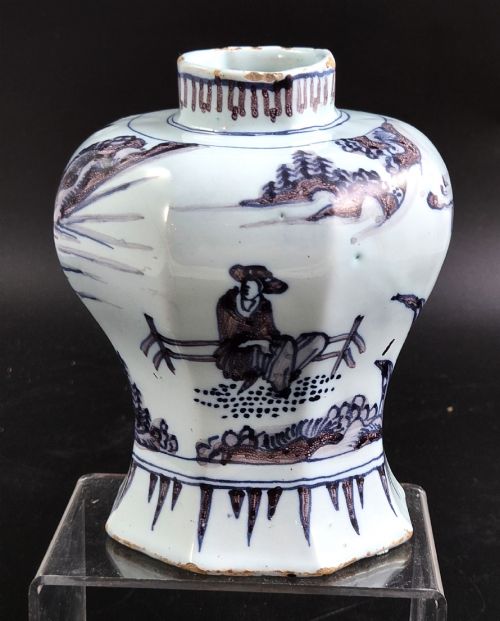
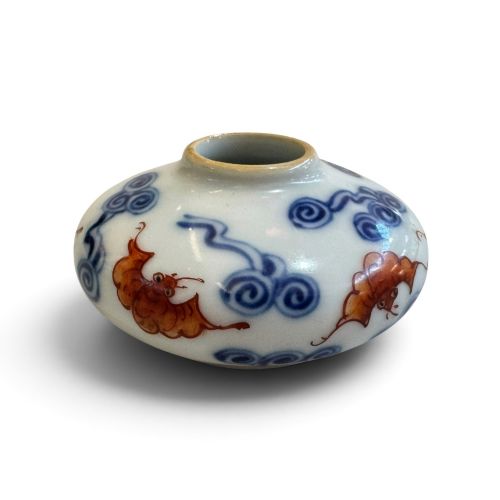
Potters relied on dense white clay to form durable porcelain bodies capable of holding fluid cobalt blue pigments beneath a clear glaze. Iron-red pigments, enamel colours, and gold leaf were frequently added in secondary firings to build layered surface scenes.
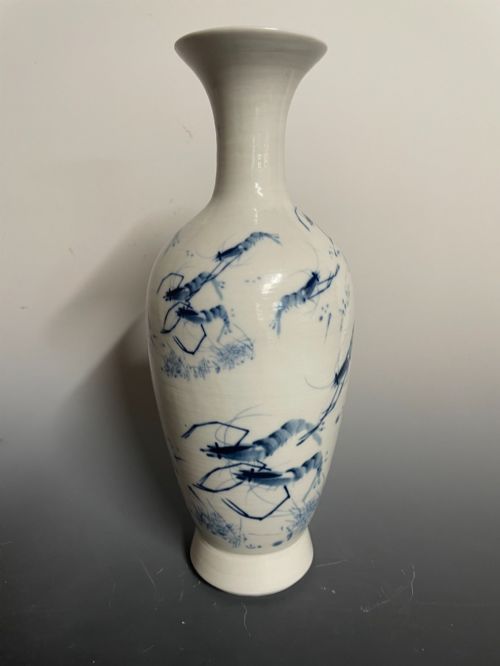
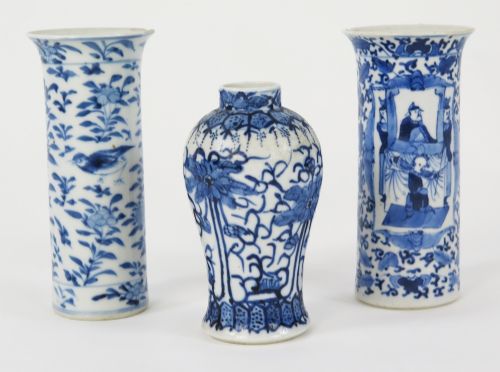
Cobalt blue decoration required precise brushwork directly onto the unglazed clay before dipping and firing at high temperatures. Enamel painting followed a separate, cooler kiln cycle to bond opaque colours like pinks, greens, and yellows to the glazed surface.
Listings feature porcelain, enamel, brass, and wood, spanning periods from Neolithic pottery to twentieth-century floor vases.
Assessing quality
The weight of the porcelain and the smoothness of the glaze also separate ordinary production from finer output. Even pieces made to honour earlier imperial styles succeed when the potting remains substantial and the glaze pools evenly.
Edme Samson·Samson Paris·Jingdezhen
The Chinese Ceramic Jars Glossary
- Famille Rose
- A palette of opaque pink and red enamel colours introduced during the Qing dynasty. It allowed artists to shade delicate floral and figural compositions.
- Ginger Jar
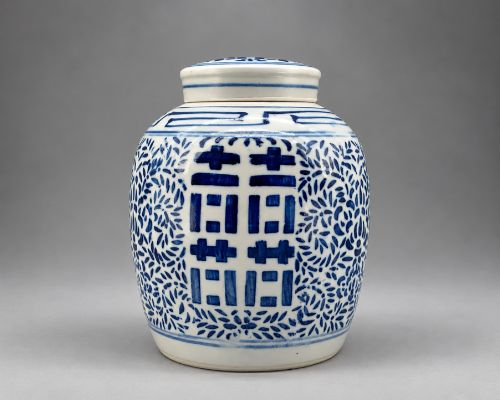
- A wide-shouldered ceramic vessel with a short neck, originally designed for storing spices and herbs. Collectors prize them for their symmetry and painted panels.
- Celadon
- A pale green or grey-green glaze resembling jade, achieved through iron oxides in a reduction kiln atmosphere. It dates back many centuries in Chinese ceramic production.
- Double-Gourd
- A vessel shape formed by two stacked bulbous sections, mimicking the fruit of the bottle gourd. This form symbolises good fortune and long life in traditional designs.
Chinese Ceramic Jars: Frequently Asked Questions
How do I spot a reproduction?
Examine the glaze texture, base wear, and pigment depth under natural light. Genuine older pieces display natural age micro-abrasions and subtle variations in hand-painted strokes that mechanical printing fails to replicate.
Compare the weight and clay body with documented examples from the same period. Modern copies often feel lighter or show uniform modern kiln marks rather than genuine firing stilt scars.
Were all ginger jars used for ginger?
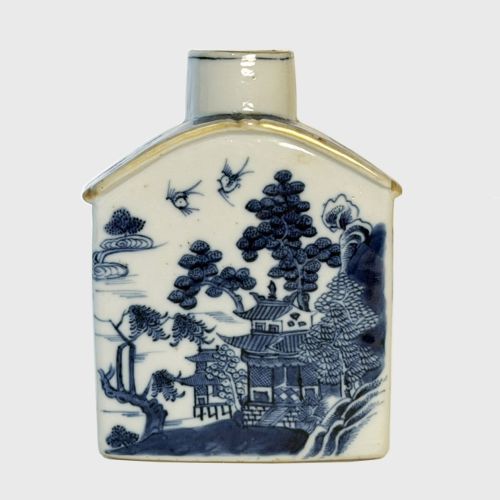
Most of these vessels stored spices, oils, tea, or other dry goods for domestic use and export transport. Their sturdy shapes kept contents secure during long journeys.
Over time, Western collectors applied the term ginger jar to describe this specific lidded, wide-shouldered form regardless of its original pantry contents.
Can I use these lamps safely?
Many nineteenth-century jars were converted into table lamps by running a cord through a drilled base or mounting them with hardware. Check the existing wiring carefully and consult an electrician to ensure compliance with modern standards.
Avoid placing converted jars in damp areas or exposing them to direct heat sources that might weaken old porcelain or mounted brass fittings.