


Chinese Camphor Wood Coffer
A Chinese camphor wood coffer brings aromatic storage and robust joinery into a room, offering the distinct utility of the China trade.
Chinese Camphor Wood Coffer
A Chinese camphor wood coffer functions primarily as a storage chest, blanket box or travel luggage piece designed to protect textiles from insects. These items span the eighteenth, nineteenth and early twentieth centuries, appearing in styles from plain campaign formats to richly carved export pieces.
Buyers will most frequently encounter nineteenth-century chests and blanket boxes alongside examples from the nineteen-tens, twenties and thirties. Forms range from small caskets and luggage boxes to large carved trunks and low table conversions.
Origins include Chinese export workshops, Anglo-Chinese colonial environments and China trade production centres. The timber itself provides both structural integrity and a characteristic herbal scent.
Materials and construction
Makers utilised solid camphor wood for its natural insect-repelling qualities and stability in transit. Timbers were joined using traditional woodworking techniques suited to large storage boxes and travel trunks.
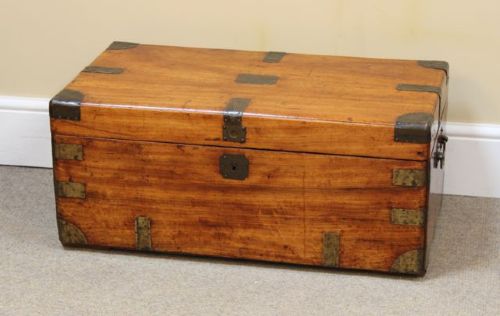
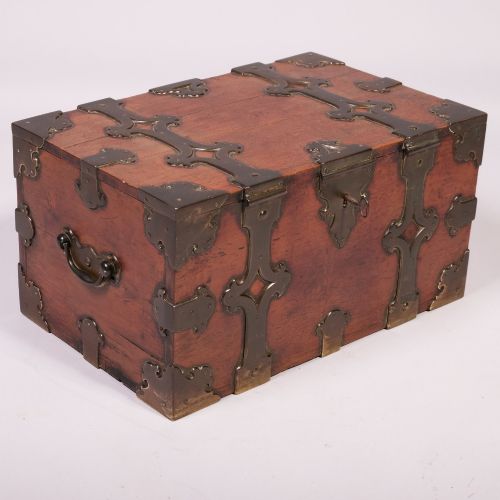
Metal hardware played a crucial structural role, with brass mounts, strapwork and corner plates reinforcing the corners and edges. Some examples incorporate leather coverings or painted polychrome pigments over the timber base.
Listings feature camphor wood chests spanning the eighteenth, nineteenth and early twentieth centuries, incorporating brass, leather, oak and pigment.
Judging quality and craftsmanship
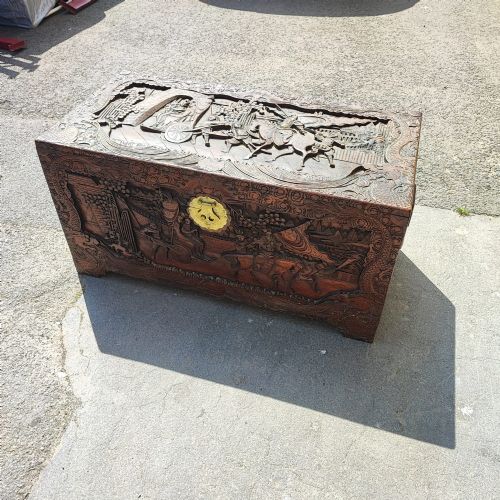
Quality reveals itself in the crispness and depth of the hand carving, where deeply modelled floral or figural motifs distinguish superior trunks from simpler surfaces. The weight and finish of the brass mounts also signal the standard of production.
The choice of timber stock and the tightness of the joinery determine structural integrity across decades of use. Intact original leather bindings and well-preserved painted polychrome decoration elevate specific export pieces.
The Chinese Camphor Wood Coffer Glossary
- Camphor wood
- An aromatic hardwood native to Asia, prized for its insect-deterring properties and durability. It forms the primary material for these chests and trunks.
- China trade
- Commerce conducted between China and Western nations primarily during the eighteenth and nineteenth centuries. This trade generated specialised export goods including heavy luggage chests.
- Campaign trunk
- A portable chest built for military officers or travellers, typically featuring recessed brass handles and reinforced corners. These pieces were designed to withstand frequent transport.
- Casket
- A smaller decorative box used for precious items or documents. They share the hinged lid and sturdy construction of larger coffers.
- Polychrome
- Decorated in multiple colours, often seen on painted export trunks. Pigments were applied to the wood surface to create pictorial scenes.
Chinese Camphor Wood Coffer: Frequently Asked Questions
How do I use a camphor chest at home?
These chests serve effectively as blanket boxes, end-of-bed storage units or living room coffee tables. The natural aroma helps keep stored woollens and linens fresh.
Larger trunks provide substantial concealed storage while anchoring a room with traditional wood or brass detail.
How can I tell the age of a chest?
Age is indicated by construction methods, the style of brass mounts and documentation or stylistic cues from periods like the nineteenth century or the nineteen-twenties. Early eighteenth-century pieces often feature simpler brass-mounted designs.
Later nineteenth and twentieth-century examples frequently display deeper hand-carved motifs or Art Deco influences.
Why do these chests smell strongly?
The distinct herbal scent comes from the natural oils inherent in camphor wood. This oil acts as a built-in deterrent against insects and dampness.
The aroma remains active within the timber for generations and intensifies slightly when the lid is opened.