


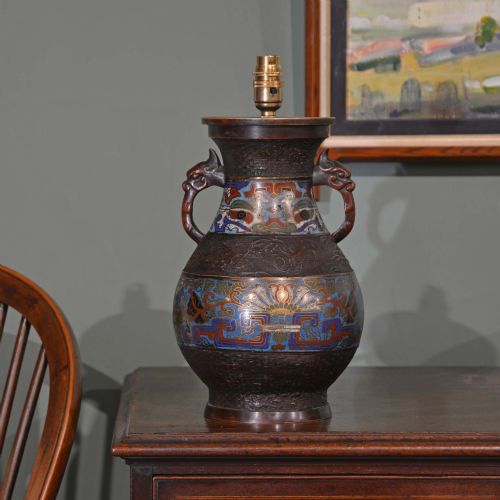


Chinese Bronze Table Lamp
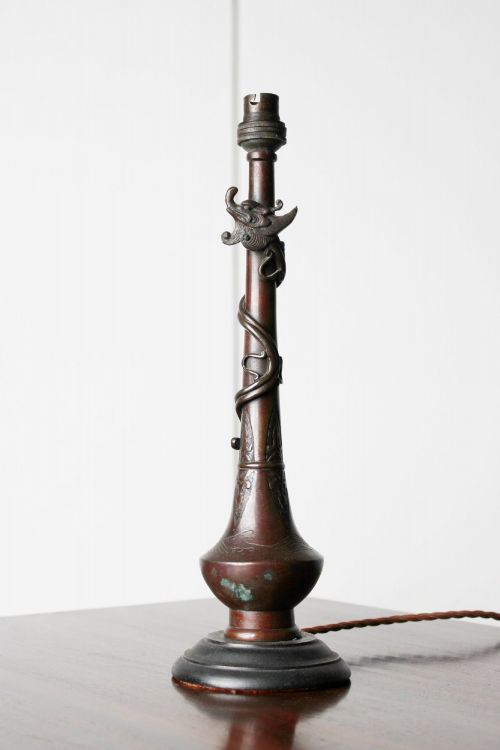
A chinese bronze table lamp brings weight and distinct patination to a room, combining cast metal with turned or converted antique vases.
Chinese Bronze Table Lamp
A chinese bronze table lamp comprises cast metal bodies, often incorporating patinated bronze, ormolu, or brass mounts alongside ceramic vessels.
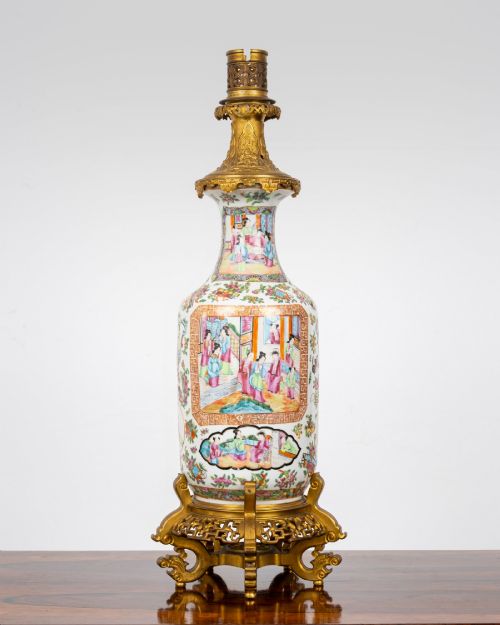
The selection ranges from Victorian and Edwardian interpretations to earlier forms, frequently utilising porcelain bodies such as celadon, rose medallion, and cloisonne enamel fitted for electricity.
Many examples reflect nineteenth century tastes for oriental design, spanning French chinoiserie, archaistic styles, and exported export porcelain mounted in gilt metal.
Materials and Construction
Casting and chasing form the foundation of the metal components, utilising bronze, brass, and patinated white metal shaped into bases and collars.
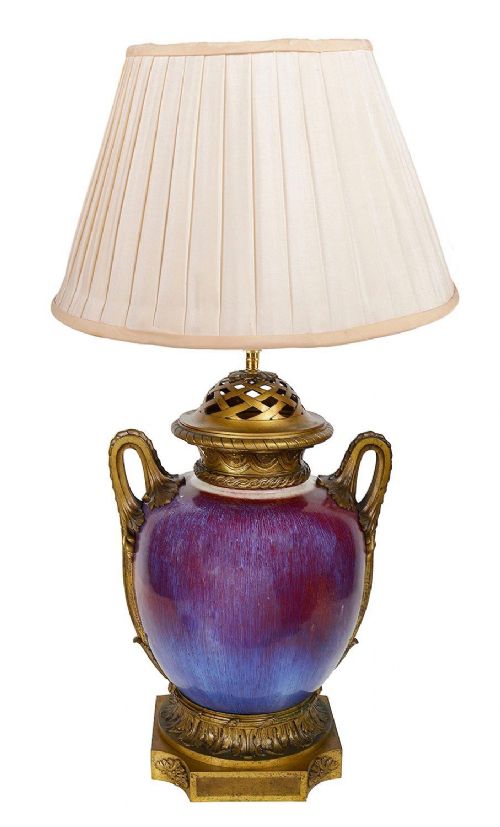
Mounts in ormolu and gilt bronze secure porcelain bodies like blue and white, sang de bouef, and famille rose vases that were subsequently converted into lighting.
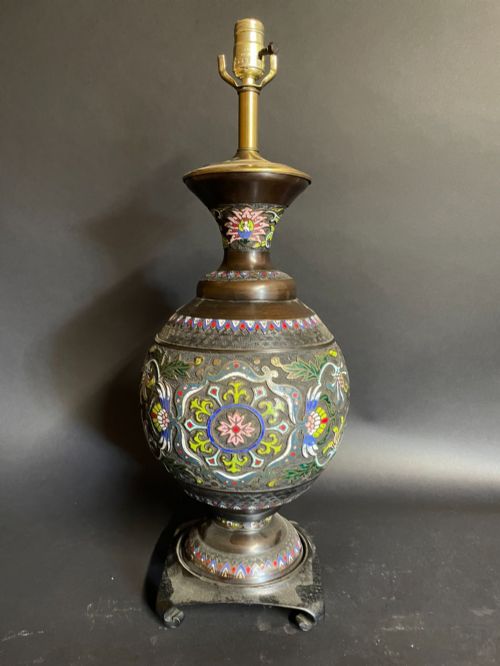
Enamelling techniques such as cloisonne provide vibrant colour across vessel surfaces, paired with fabric shades and structural metalwork.
Many of these lamps began life as export porcelain resting quietly in scholar studios before finding new purpose wired for electricity.
Assessing Quality and Execution
The precision of the bronze casting and the crispness of the chased ormolu mounts dictate the refinement of the piece.
Integration between the ceramic body and the metal mounts reveals the skill of the conversion, particularly where gilt bronze frames delicate porcelain.
The Chinese Bronze Table Lamp Glossary
- Ormolu
- Gilt bronze mounted onto decorative objects. This technique involves applying a finely ground gold-mercury amalgam to a bronze base.
- Cloisonne
- Enamelling work where wire compartments hold coloured glass paste. These cells are soldered to a metal base before firing and polishing.
- Celadon
- A pale green jade-like ceramic glaze originating in China. It appears frequently on nineteenth century vases converted into lamps.
- Sang de bouef
- A deep red oxblood ceramic glaze highly prized in Chinese porcelain. The rich colour derives from copper fired in a reducing atmosphere.
- Chinoiserie
- European decorative style reflecting Chinese artistic influences. Makers in France and Britain reinterpreted these motifs during the Victorian and Edwardian periods.
Chinese Bronze Table Lamp: Frequently Asked Questions
How are antique vases wired for lamps?
Most antique examples use drilled bases or bracket mounts designed to secure electrical fittings without damaging the core ceramic structure.
Professional conversion preserves the integrity of the original vessel while accommodating modern wiring standards.
What is the difference between bronze and ormolu?
Bronze is a copper and tin alloy used to cast the primary structural bodies and figures of these lamps.
Ormolu specifically refers to gilded bronze mounts applied as decorative accents around the porcelain and metal elements.
How do I identify a nineteenth century mounting?
Nineteenth century mounts often display hand-chased detailing and heavier gilt bronze or ormolu construction.
Stylistic cues draw heavily from French chinoiserie and Victorian interpretations of oriental design.
Can cloisonne enamel lamps be cleaned safely?
Surface dust can be removed gently with a dry microfibre cloth to protect the delicate wire cells.
Liquid cleaners should be avoided to prevent tarnishing the bronze and disturbing the enamel work.