

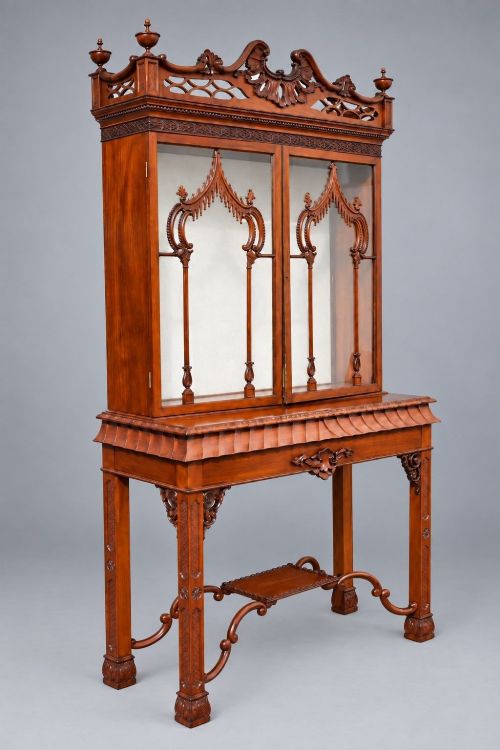


Chinese Vitrine
A chinese antique vitrine brings structural display cabinets into a room, offering glazed protection for cherished objects.
Chinese Vitrine
A chinese antique vitrine serves as a display cabinet designed to showcase fine porcelain, silver, and curiosities behind glazed panels. These pieces emerge from the nineteenth century, including years such as 1880, 1890, and 1900, spanning the Victorian era and the Qing Dynasty period.
The forms on this page include large-scale cabinets on stands, silver cabinets, and glazed display furniture. Makers and workshops worked within the Chinese Chippendale, Chinoiserie, and Asian Export traditions to produce these storage items.
Buyers meet mahogany, cherrywood, and carved hardwood structures when browsing this selection. Each piece combines functional shelving with stylistic carving associated with the revival aesthetics of the nineteenth century.
How they were made
Cabinet makers utilised dense hardwoods, mahogany, and cherrywood to build the foundational frames of these display pieces. These timbers were shaped through traditional joinery and finished with detailed carved wood elements.
Glazing was fitted into doors and side panels to protect the interior contents from dust while maintaining visibility. Brass hardware and fabric linings often completed the construction of these cabinets and stands.
Chinese Vitrine Retail Price Guide 2026
Typical asking prices for chinese vitrine among the pieces listed under this phrase on Sellingantiques today, from the lower quarter to the upper quarter. They describe what is for sale here now, not the wider market.
Materials recorded across the selection include glass, mahogany, hardwood, fabric, brass, and cherrywood.
What varies in quality
The refinement of the carved wood ornamentation separates standard production from exceptional examples. Crisp execution in Chinoiserie motifs and Chinese Chippendale fretwork dictates the aesthetic standing of a cabinet.
The choice of primary timber, from plain hardwoods to well-figured mahogany or cherrywood, alters the visual weight of the furniture. Scale and proportion also influence how successfully a cabinet on stand commands a room.
The Chinese Vitrine Glossary
- Vitrine
- A glass-fronted display cabinet used for exhibiting fine objects and porcelain. These pieces protect delicate items while offering all-round visibility.
- Chinoiserie
- The European interpretation and imitation of Chinese artistic traditions and motifs in decorative arts. This style gained popularity across furniture and cabinet making during the nineteenth century.
- Chinese Chippendale
- A distinct style combining eighteenth-century English furniture designs with intricate Chinese fretwork and lattice patterns. Revival pieces from the Victorian period frequently adopted these decorative conventions.
- Hardwood
- Dense timber derived from broad-leaved trees, utilised for durable cabinet construction. These woods take fine carving and retain structural integrity over generations.
- Cabinet on stand
- A raised display enclosure supported by an open framework or lower table structure. This elevation lightens the visual presence of heavy timber furniture.
Chinese Vitrine: Frequently Asked Questions
What is a chinese antique vitrine used for?
These cabinets were designed to display collections of porcelain, silver, and small decorative objects safely behind glass.
The enclosed shelving kept dust away from delicate items while allowing guests to view the collection from across the room.
How do I date a nineteenth century cabinet?
Dating relies on examining the timber species, construction methods, and stylistic revival markers present in the woodwork.
Pieces from the 1880s and 1890s often exhibit specific Chinese Chippendale or Chinoiserie characteristics popular during the Victorian era.
Where do these display cabinets originate?
The pieces available reflect both Asian Export manufacturing and European Victorian workshops producing revival furniture.
Craftsmen drew upon Qing Dynasty aesthetics and English Chippendale patterns to create these cross-cultural designs.
How should I care for mahogany and hardwood?
Maintain stable room humidity to prevent timber movement and protect the delicate carved surfaces from direct sunlight.
Regular dusting with a dry, soft cloth preserves the polished finish of the hardwood and cherrywood frames.