

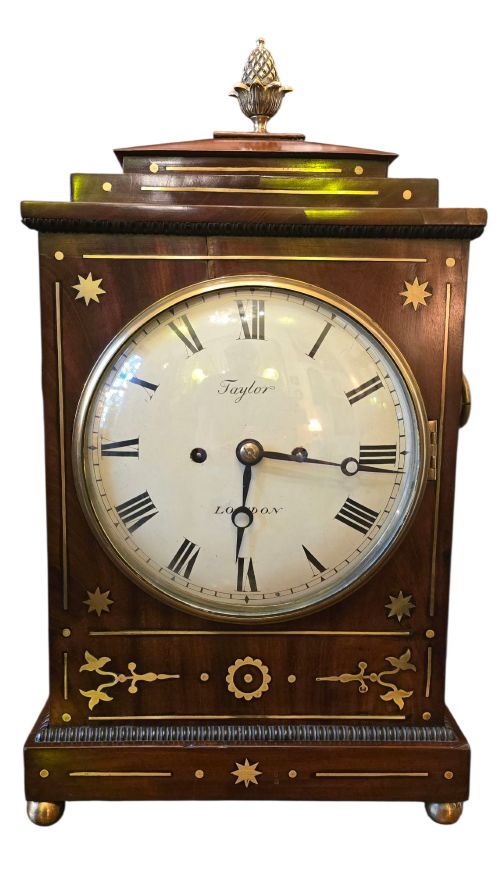
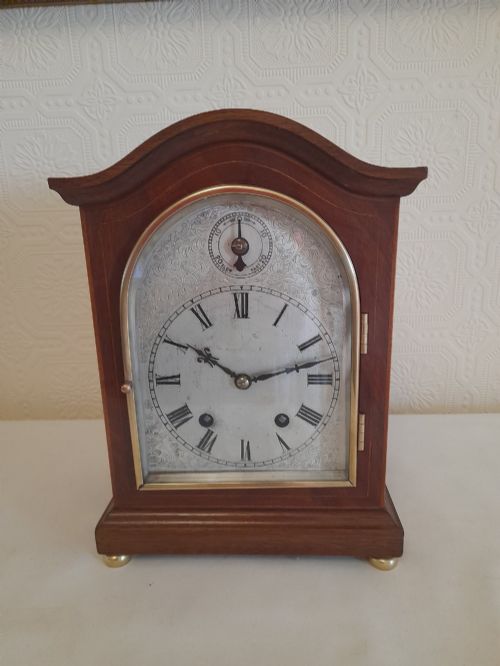
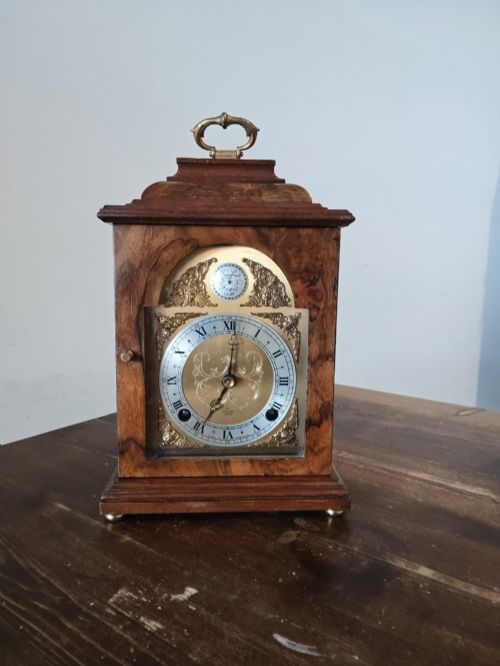
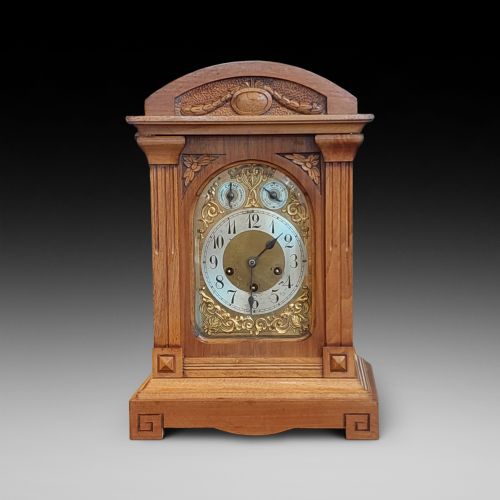
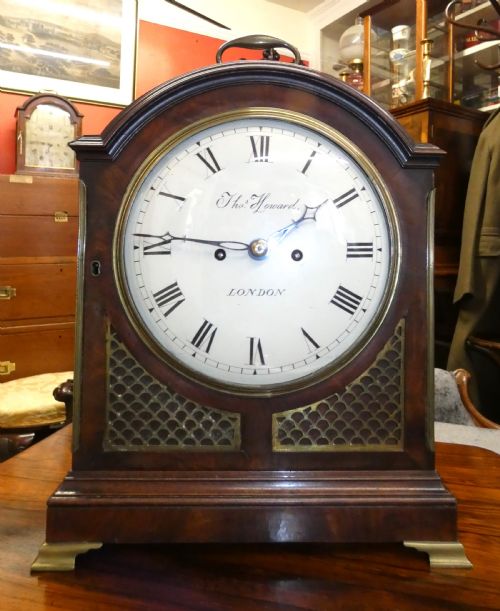
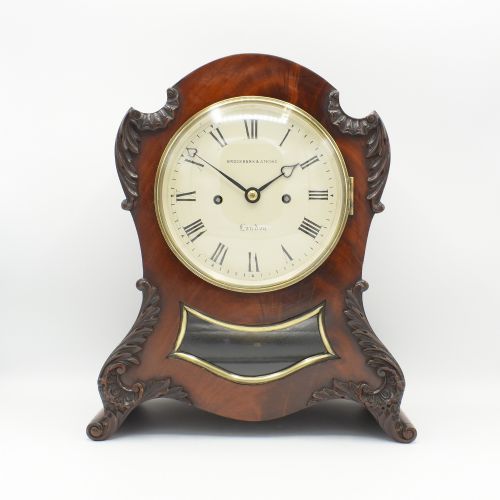
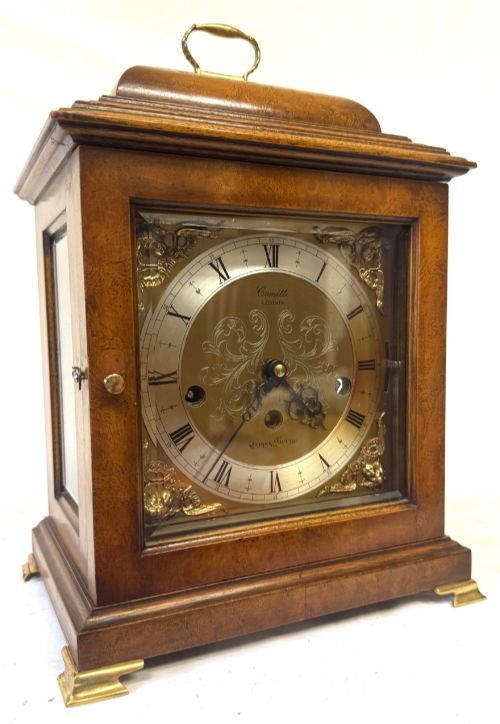
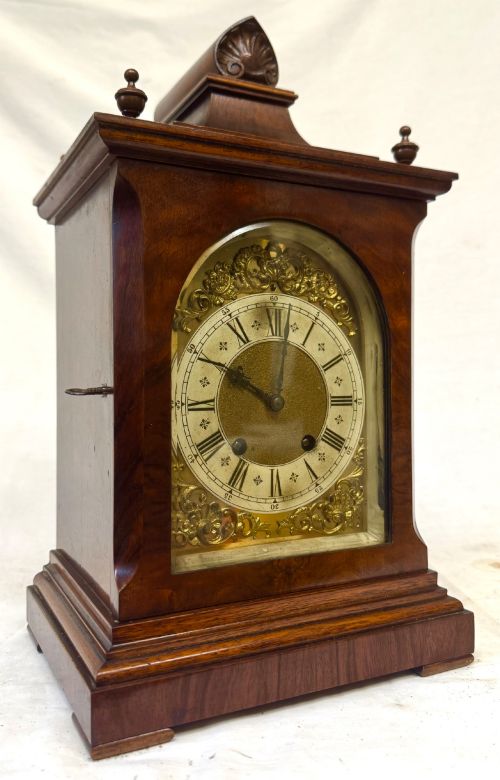
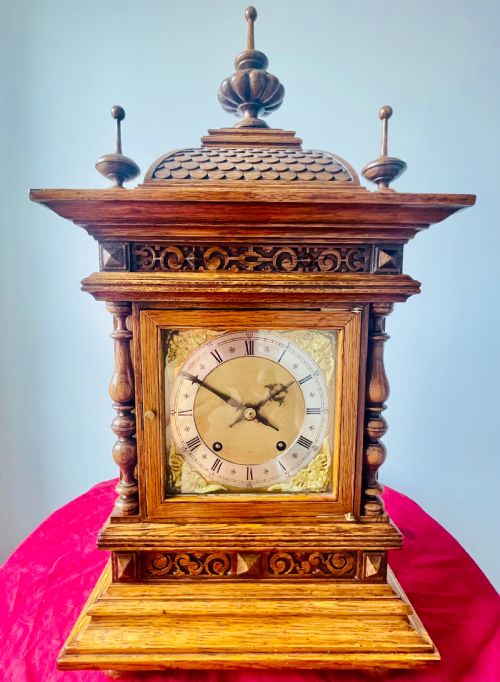
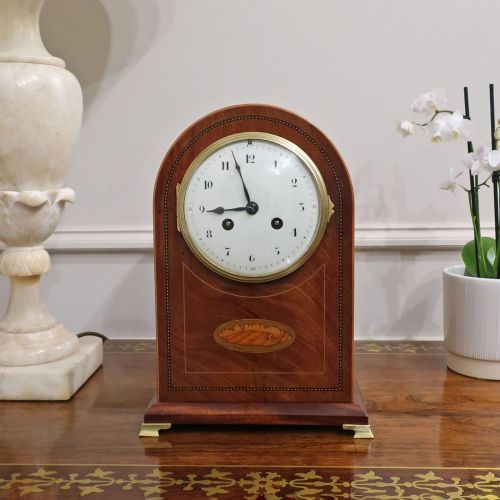
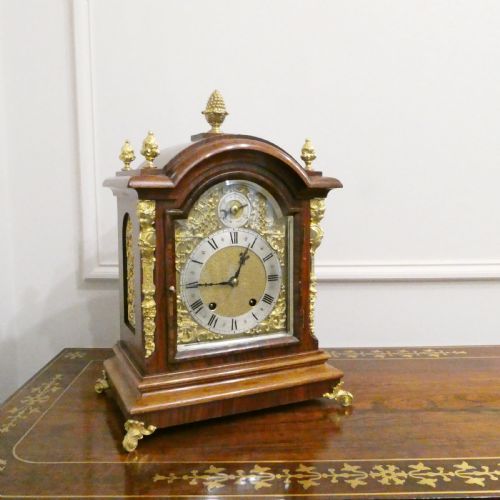

Chime Bracket Clock
A chime bracket clock sits on a table or shelf, sounding the hours and quarters with bells, gongs, or rods.
Chime Bracket Clock
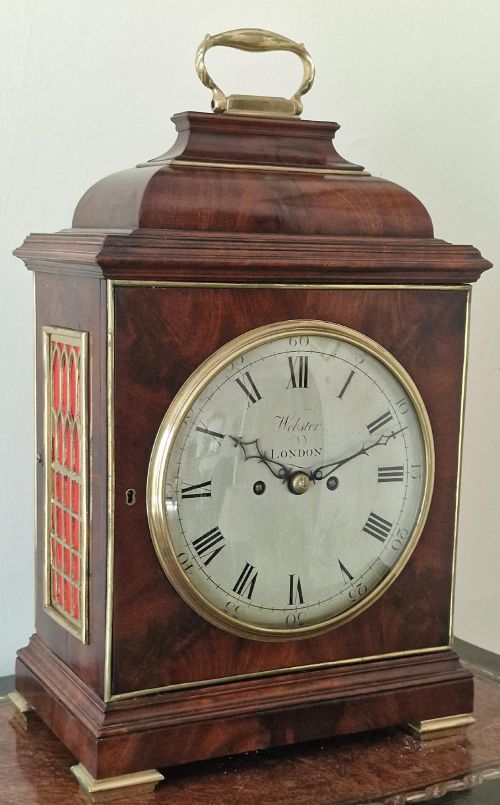
When you search for a chime bracket clock, you are looking at portable mechanical timepieces designed to sit on brackets, tables, or mantelpieces while sounding musical or quarter-hour notes. These portable clocks originated when bracket clocks needed secure platforms or wall brackets to support their heavy brass movements and wooden cases.
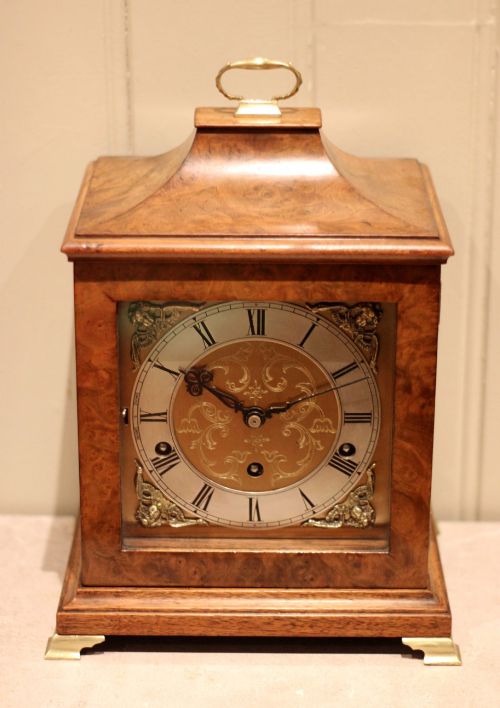
On this page, you will most frequently meet examples spanning the Georgian, Regency, and Victorian periods alongside later Edwardian and mid-century British and German productions. These pieces range from simple striking table clocks to complex three-train musical movements housed in burr walnut, mahogany, oak, and ebonised wood.
Makers and retailers such as Winterhalder and Hofmeier, Elliott of London, and Gustav Becker represent the various workshop traditions found within these listings. Buyers seek these items for their combination of mechanical complexity, cabinet-maker woodwork, and the acoustic charm of traditional chimes.
Materials and Construction
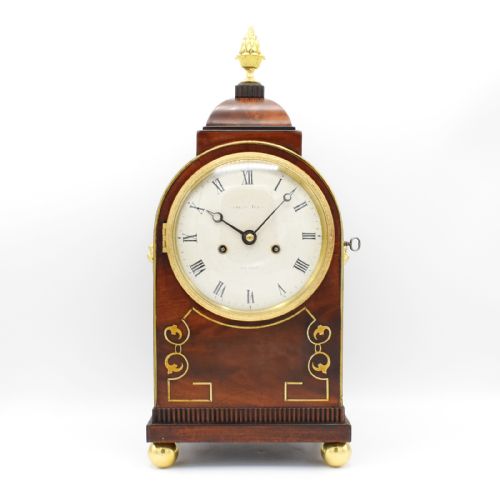
Cabinet makers constructed the outer housings using dense hardwoods like mahogany, walnut, and oak, frequently adding satinwood inlay, brass mounts, or ormolu details. Cases often feature glass panels, pad tops, or lancet shapes designed to project the sound of the internal gongs or bells.
Clockmakers built the internal mechanisms around brass plates, gear trains, and escapements driven by springs or fusee chains. Dials incorporated silvered brass chapters, enamel cartouches, or ornate cast brass spandrels to indicate the hours and minutes.
Chime Bracket Clock Retail Price Guide 2026
Typical asking prices for chime bracket clock among the pieces listed under this phrase on Sellingantiques today, from the lower quarter to the upper quarter. They describe what is for sale here now, not the wider market.
Some Victorian bracket clocks were given to doctors as retirement tokens, preserving local medical history inside the chime box.
Quality Variations
The sophistication of the movement dictates the standing of a piece, moving from simple two-train time-and-strike systems to complex triple-train movements playing multiple tunes on bells or gongs. Triple fusee configurations and movements bearing the signatures of noted makers demonstrate higher standards of horological engineering.
Cabinet execution separates standard production from exceptional work, visible in the choice of flame mahogany or burr walnut veneers, hand-carved wooden details, and fire-gilded ormolu mounts. Original fretwork side panels, well-preserved dials, and integrated matching brackets further elevate the stature of an individual clock.
Winterhalder and Hofmeier·Elliott of London·Gustav Becker·Mappin and Webb·Lenzkirch·Thwaites and Reed·Schneckenburger
The Chime Bracket Clock Glossary
- Bracket clock
- A portable mechanical timepiece originally designed to stand on a wall bracket or table. These pieces typically feature sturdy wooden cases and brass carrying handles.
- Fusee
- A conical pulley connected to the mainspring by a chain or cord that ensures even power delivery as the spring unwinds. This mechanism improves timekeeping accuracy across the running period.
- Ting Tang
- A striking mechanism that uses two bells or gongs to sound the quarters with a two-note sequence. It typically precedes the hour strike.
- Three train
- A movement driven by three separate gear trains that separately power the timekeeping, the hour strike, and the chiming melodies. This setup enables complex musical outputs like Westminster chimes.
- Boulle
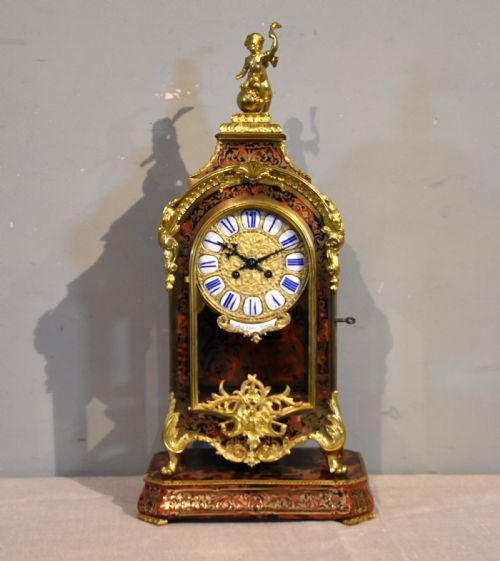
- A decorative technique employing tortoiseshell and brass inlay applied to wooden furniture and clock cases. It originates from the workshop of André-Charles Boulle in seventeenth-century France.
Chime Bracket Clock: Frequently Asked Questions
How do I wind a bracket clock?
Use the designated winding key to turn the arbors located on the dial face in the correct direction until resistance is felt. Avoid over-winding to protect the tension of the internal mainsprings.
Ensure you wind all active trains on triple-train or chiming movements so the mechanism remains synchronised. Regular winding maintains steady tension across the gear train for reliable timekeeping.
What is a fusee movement?
A fusee movement uses a conical drum linked to the mainspring via a chain to equalise the declining power of the spring as it unwinds. This traditional mechanism provides uniform force to the escapement throughout the run.
Clocks featuring fusee mechanisms are often regarded as higher quality due to the intricate machining required. They demand careful handling during transport to prevent the chain from slipping off the cone.
Why does the clock chime incorrectly?
Chiming mechanisms can get out of sequence if the hands are moved too quickly or if the clock runs down completely before being rewound. The rack and snail components temporarily lose synchronization during rapid adjustments.
Allow the mechanism to run through its natural cycle so the gathering pallet resets the strike train. Most minor timing discrepancies resolve themselves after a full rotation of the hour hand.