





Children and Dog Painting
A children and dog painting captures an enduring domestic bond, offering intimate glimpses into historical family life through canvas and paper.
Children and Dog Painting
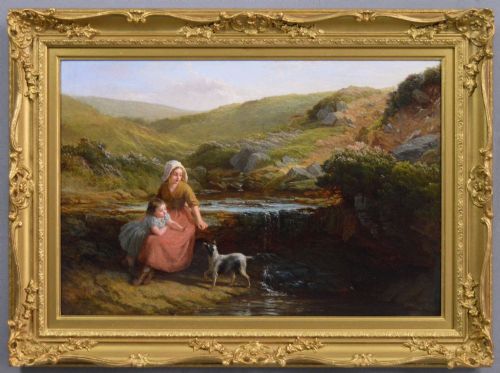
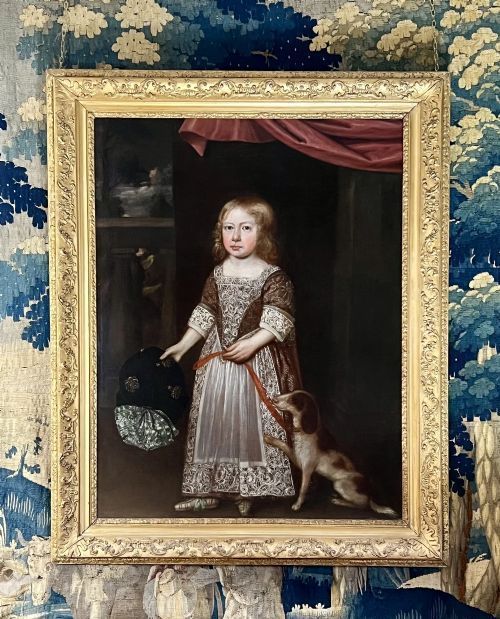
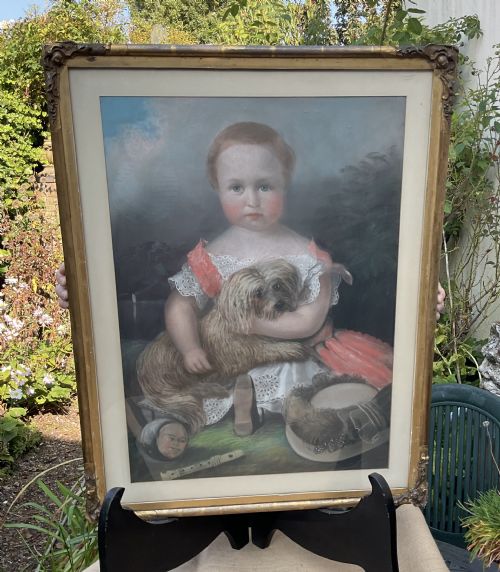
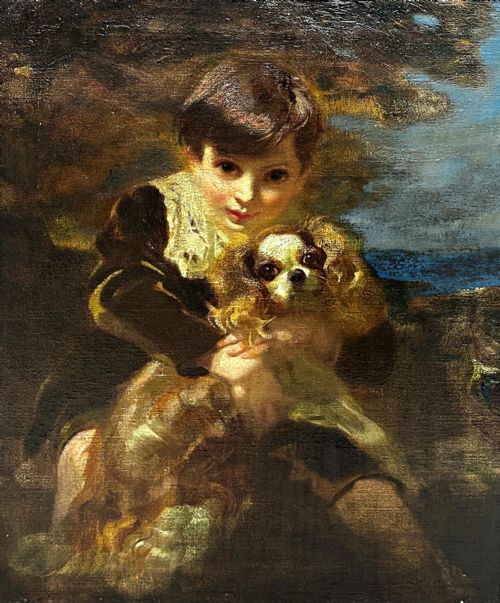
A children and dog painting primarily depicts young subjects alongside their canine companions, ranging from formal aristocratic portraits to naive provincial studies. Buyers searching this phrase encounter works spanning from the seventeenth century through to the mid-twentieth century.
The selections on this page heavily feature oil on canvas and watercolour paintings, housed within period frames such as gilt wood and maple. Provincial and folk art interpretations sit alongside academic portraits by named artists.
Subjects include named individuals like Louisa Cooke with her dog Mr Quiz, alongside anonymous children depicted with King Charles spaniels, terriers, and various hounds. These works document evolving domestic fashions and the historical status of pets within the household.
Materials and construction
Artists relied primarily on oil paint applied to stretched canvas or wooden panels, utilising rich pigments to render both human subjects and animal textures. Watercolours on paper appear frequently in nineteenth and twentieth-century works, often protected behind glass.
Frames play a crucial role in the physical structure of these artworks, utilising giltwood and maple constructions that reflect the decorative tastes of periods from the Georgian era onwards.
Current listings demonstrate an extensive span of periods, ranging from seventeenth-century Northern European works to 1940s realism.
Assessing quality in portraiture
Quality rests upon the artist's ability to capture anatomical proportion and psychological engagement between the child and the animal. Academic works demonstrate sophisticated handling of light and fabric, whereas naive and folk art pieces prioritize directness and charm over strict perspective.
The preservation of the original paint surface and the intact nature of contemporary framing determine the desirability of each piece. Works retaining documented provenance or attribution to recognised schools command greater interest from collectors.
John Alfred Wheeler·Mary Beale·Arthur Claude Strachan·Frank Owen Salisbury·Richard Buckner·Mabel Lucie Attwell
The Children and Dog Painting Glossary
- Naive art
- Artwork created by an artist without formal academic training, often characterised by a flat perspective and straightforward charm. These pieces rely on sincerity of expression rather than strict adherence to classical proportions.
- Provincial school
- Regional artwork produced outside metropolitan artistic centres, reflecting local tastes and traditions. These paintings frequently capture domestic life with unpretentious directness.
- Giltwood
- Wood carved and coated with a thin layer of gold leaf or gilt powder. This material is standard for period picture frames intended to complement formal oil paintings.
- Watercolour
- A painting method in which the paints are made of pigments suspended in a water-based solution. Works in this medium are typically executed on paper and mounted under glass for protection.
Children and Dog Painting: Frequently Asked Questions
How do I date a portrait?
Dating relies primarily on the costume worn by the child, including collars, dresses, and hair styling characteristic of specific decades. Frame construction and canvas preparation techniques also provide reliable chronological markers.
Secondary clues include the breed of the dog and any inscribed details or signatures on the reverse of the canvas or panel.
What is naive folk art?
Naive folk art refers to paintings produced outside the established academic traditions, often by self-taught provincial artists. These works prioritize storytelling and character over technical perspective and anatomical accuracy.
Collectors prize them for their honesty, charm, and direct record of historical domestic life.
How should I hang these paintings?
These artworks require stable environmental conditions away from direct sunlight and excessive humidity to protect fragile canvas, paper, and pigment layers. Consistent indoor temperatures prevent warping in wooden panels and frames.
Ensure wall fixtures safely support the weight, particularly for larger giltwood-framed oil paintings.
Why are dogs included in portraits?
Dogs in historical portraits symbolised loyalty, fidelity, and domestic virtue, particularly within family and children's commissions. They also reflected the status and leisure of the household.
Including a pet added warmth and narrative interest to otherwise formal compositions.