


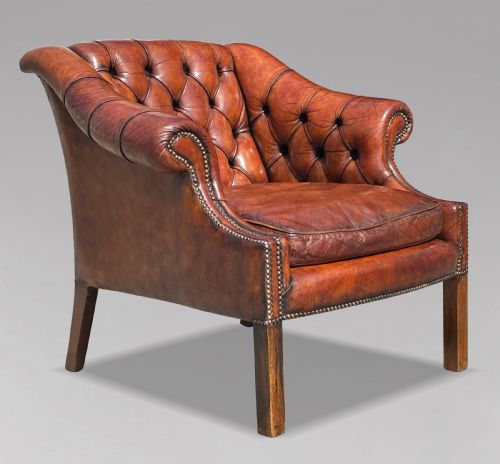
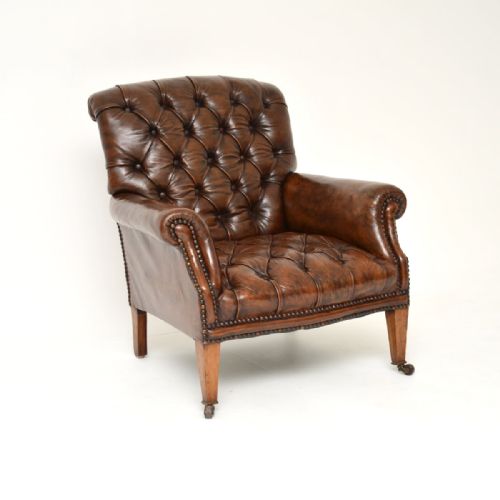


Chestnut Leather Buttoned Armchair
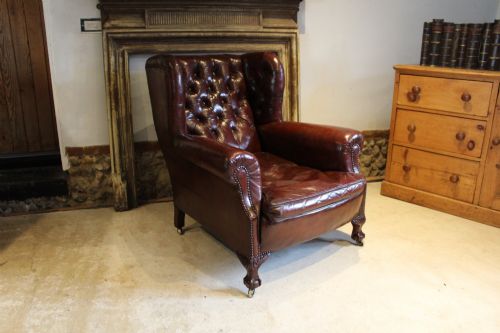
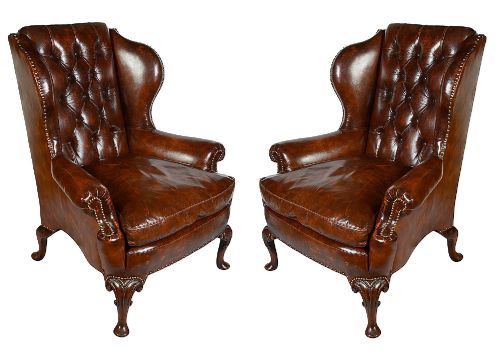
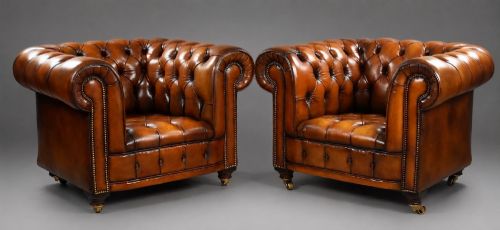
These chestnut leather buttoned armchairs combine deep-buttoned hides with sturdy timber frames, offering genuine comfort and rich historic character for your room.
Chestnut Leather Buttoned Armchair
A chestnut leather buttoned armchair provides a deeply cushioned seat designed for enduring comfort in libraries, studies, and drawing rooms. Buyers seeking this style encounter substantial seating options originating from the nineteenth century through the early twentieth century.
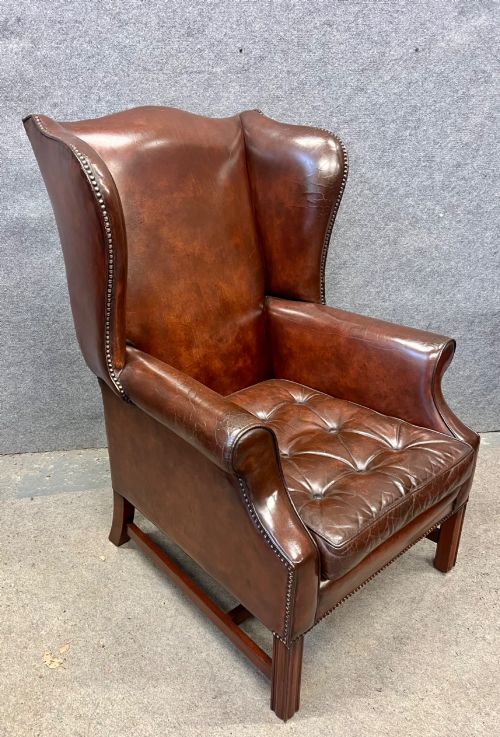
The selection ranges from Victorian library desks chairs and club armchairs to Regency recliners and Georgian Revival wing chairs. Many examples feature robust timber frames paired with chestnut upholstery that has developed a rich patina over decades of use.
Materials and construction methods
Craftsmen built the supporting framework using hardwoods such as mahogany, oak, rosewood, and general hardwood. These dense timbers provided the structural integrity required to support heavy daily use in offices and libraries.
Upholsterers stretched leather over deep padding and secured the cushions with traditional buttoning techniques. Brass elements often appeared alongside the woodwork to accent the structural joins and leather edges.
Chestnut Leather Buttoned Armchair Retail Price Guide 2026
Typical asking prices for chestnut leather buttoned armchair among the pieces listed under this phrase on Sellingantiques today, from the lower quarter to the upper quarter. They describe what is for sale here now, not the wider market.
Listings feature woods including mahogany, oak, rosewood, and general hardwood paired with brass accents across Victorian and Edwardian periods.
Assessing quality and craftsmanship
The distinction between standard examples and superior pieces rests in the execution of the timber carving and the suppleness of the hide. Finely worked mahogany and rosewood frames display crisp detailing that simple hardwood structures lack.
The depth and precision of the buttoning dictate the longevity of the upholstery work. Evenly spaced tufting ensures the internal padding remains supportive rather than slumping over time.
The Chestnut Leather Buttoned Armchair Glossary
- Chestnut leather
- A warm, reddish-brown hide colour commonly utilised for traditional seating upholstery. This shade deepens and mellows with age and regular handling.
- Buttoned
- An upholstery technique where buttons are pulled deep into the padding to create a textured, diamond-patterned surface. This method secures the internal filling and adds visual structure.
- Library chair
- A heavy, supportive armchair designed specifically for prolonged reading or desk work. These pieces typically feature sturdy timber arms and robust wooden frames.
- Wing chair
- An armchair featuring protective side panels attached to the back and armrests. This historic form originally deflected draughts in large, cold rooms.
Chestnut Leather Buttoned Armchair: Frequently Asked Questions
How do I care for antique leather?
Clean the hide gently with a dry cloth and nourish the surface periodically using a suitable leather balsam. Avoid placing the chair near direct heat sources to prevent the material from drying out.
Keep the timber frames polished with traditional wax to maintain the finish of the mahogany, oak, or rosewood. Regular maintenance preserves both the structure and the appearance of the piece.
Where were these armchairs used?
These seating options traditionally furnished domestic libraries, studies, and grand offices where reading and writing took place. Their robust construction suited spaces that experienced frequent daily use.
Today, they function well in living rooms, home studies, and quiet reading corners as statement seating that anchors the room's design.
How do I identify a Victorian armchair?
Victorian examples often employ dense timbers like mahogany and rosewood alongside deep buttoned leather upholstery. Examine the frame for the heavier proportions typical of mid-to-late nineteenth-century cabinet making.
Check the joinery and hardware beneath the seat to confirm the period construction methods match the style of the piece.