

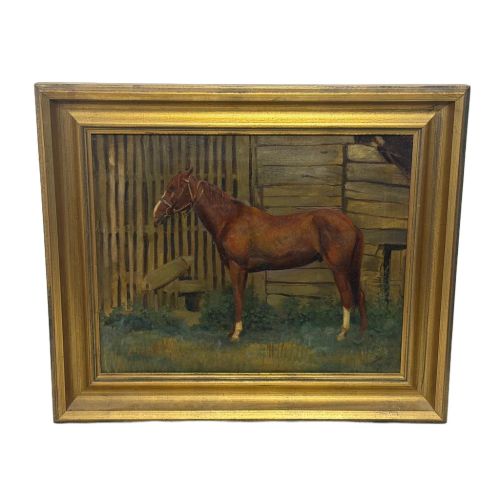

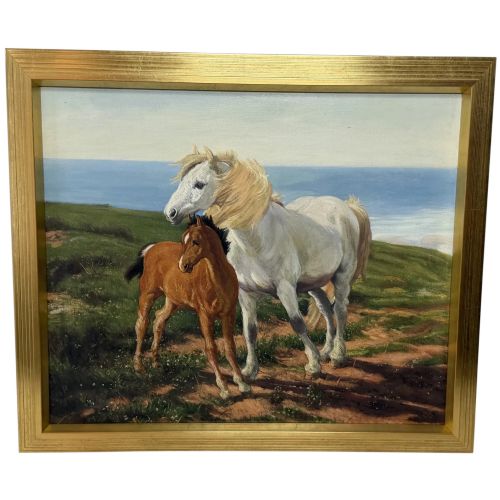


Chestnut Horse Picture
A chestnut horse picture brings the depth of British sporting tradition straight into a room.
Chestnut Horse Picture
A chestnut horse picture is primarily an oil painting capturing equine subjects within British sporting art and equestrian traditions. These works span from the Victorian period through the mid twentieth century, recording hunters, foals, and racehorses in landscapes or stables. Collectors seek these canvases to anchor a traditional study or country interior with period character.
The most common examples on this page are nineteenth century oil paintings framed in wood and gilded gesso. Subjects range from solitary chestnut hunters by named masters to uncredited depictions of horses alongside dogs or riders in river landscapes. Canvas dimensions and framing styles vary, yet the focus remains firmly on the horse.
How they were made
Artists painted these subjects using oil paint on stretched canvas, building up rich coats and musculature with layered pigments. The physical support relies on wood stretchers fitted into heavy frames of gilded wood and gesso.
Makers applied intricate gesso moulding over wooden frames to create decorative borders that complemented the oil paintings within. These materials worked in tandem to preserve the pigment and protect the canvas edges over generations.
Chestnut Horse Picture Retail Price Guide 2026
Typical asking prices for chestnut horse picture among the pieces listed under this phrase on Sellingantiques today, from the lower quarter to the upper quarter. They describe what is for sale here now, not the wider market.
Several canvases manage to squeeze both a chestnut hunter and an observant dog into the same gilded frame.
What varies in quality
Quality rests in the anatomical accuracy of the horse and the handling of light across the landscape. Superior hands render the sheen of a chestnut coat and the tension of a hunter with anatomical precision rather than rigid formula.
The finesse of the framing contributes significantly to the overall presence of the work. Hand-carved or deeply moulded gilded frames paired with accomplished brushwork stand apart from simpler decorative efforts.
John Ferneley Senior·Abraham Cooper RA·Charles Bilger Spalding RA·Lionel Ellis·C W Tuck·Benedict Angell Hyland
The Chestnut Horse Picture Glossary
- Oil on Canvas
- Pigment mixed with drying oil applied to a woven fabric support. This technique allows for subtle blending and rich texture.
- Gilded Wood Frame
- A timber moulding coated with gold leaf or metallic powder. It provides structural support and visual definition to the artwork.
- Gesso
- A paint mixture consisting of a binder mixed with chalk or gypsum. It creates a smooth surface for gilding on picture frames.
- British Sporting Art
- A genre depicting equestrian subjects, hunting, and racing. These works record the rural traditions of the British Isles.
- Equestrian
- Pertaining to horses and horseback riding. This classification unites portraits of hunters, racehorses, and working animals.
Chestnut Horse Picture: Frequently Asked Questions
What periods do these paintings cover?
The listings span from the nineteenth century through the mid twentieth century, encompassing Victorian, Edwardian, and later modernist interpretations.
Victorian and nineteenth century examples predominate, alongside mid century works that offer a different stylistic take on the subject.
How should I hang an oil painting?
Select a wall with stable temperature and humidity away from direct sunlight to protect the canvas and the gilded wood frame.
Ensure the wall fixings match the weight of the heavy wooden frame and hang the piece at eye level for optimal viewing.
Are all these works original oils?
The majority of the pieces consist of original oil paintings on canvas, though the selection occasionally includes prints from the early twentieth century.
Reviewing the material notes in each listing confirms whether the surface is painted canvas or printed paper.
What subjects accompany the horses?
Many compositions feature the animal alone in a landscape, while others include dogs, jockeys taking ditches, or river scenery.
These secondary elements provide context on sporting traditions and rural life during the Victorian and Edwardian eras.