

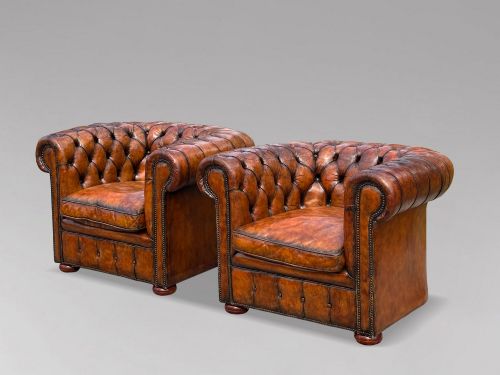
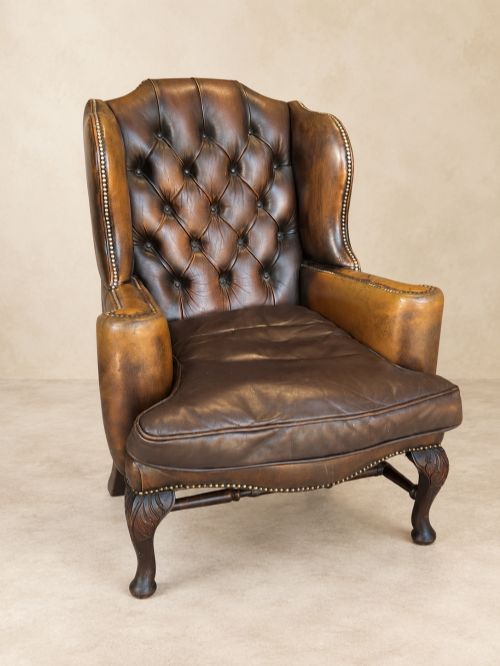
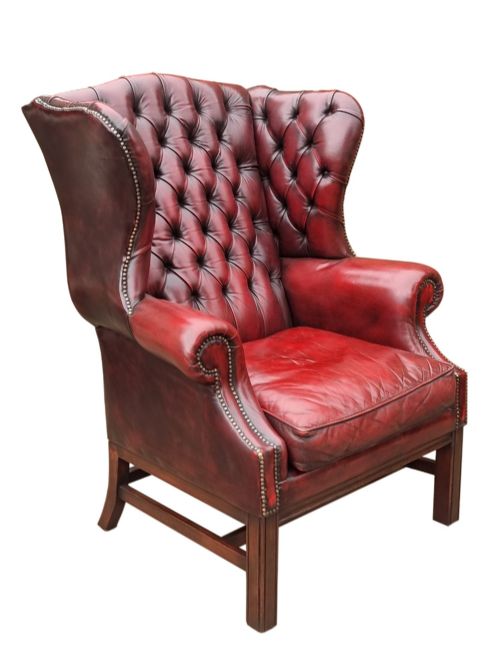


Chesterfield Style Armchair
A chesterfield style armchair brings deep buttoning and traditional leather upholstery to a study or library.
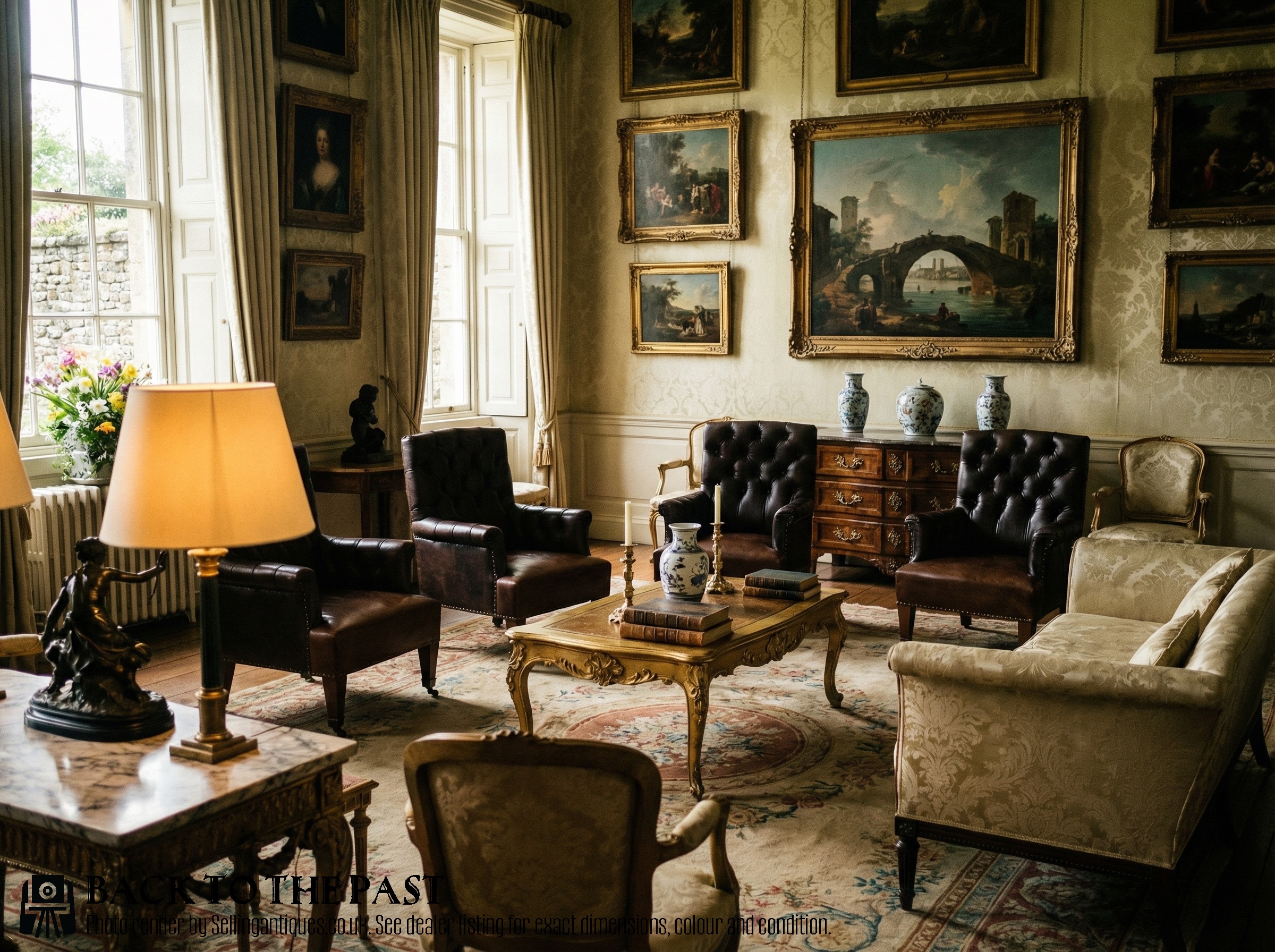
Chesterfield Style Armchair
A chesterfield style armchair combines sturdy timber frames with leather upholstery, often featuring low backs and rolled arms. These seating forms appear across periods from the Regency era through to the mid-twentieth century.
The version most commonly encountered on this page is the leather wingback armchair, frequently upholstered in brown, tan, or oxblood hide. Examples span library chairs, club chairs, and desk chairs influenced by Georgian and Victorian design.
Makers and workshops adapted these forms into various seating types, including tufted porters armchairs and reclining writing chairs. Construction often incorporates hardwood frames supported by brass tacks and detailed joinery.
Materials and construction methods
Frames rely on solid timbers such as mahogany, English oak, and general hardwood to provide a durable skeletal structure. Upholsterers then secured leather hides over padding using individual brass tacks.
Deep buttoning techniques create the characteristic tufted surface found across many backs and seats. Timber components receive polish or natural finishes, while desk chairs and writing armchairs occasionally integrate mahogany writing slopes.
Chesterfield Style Armchair Retail Price Guide 2026
Typical asking prices for chesterfield style armchair among the pieces listed under this phrase on Sellingantiques today, from the lower quarter to the upper quarter. They describe what is for sale here now, not the wider market.
A beaver once inspected the timber frame of a Georgian style armchair and gave it two muddy paws up.
Evaluating quality and execution
Quality rests on the integrity of the timber frame and the depth of the leather hide. Hand-dyed finishes and traditional buttoning show greater craftsmanship than mass-produced alternatives.
Proportion and stylistic adherence to periods like the Regency or William IV eras separate standard examples from finer workshop pieces. The weight of the hardwood and the neatness of the brass tacking further distinguish better specimens.
Robert Mouseman Thompson·Thomas Chippendale·Gillows
The Chesterfield Style Armchair Glossary
- Wingback
- An armchair style featuring protective side panels designed to shield the sitter from draughts. These upholstered wings extend upward from the arms to frame the head.
- Buttoning
- A traditional upholstery method where deep indentations are secured with twine and buttons. This technique creates a tufted pattern across the leather surface.
- Porters armchair
- A high-backed enclosed seating form originally designed to keep draughts away from hall porters. They typically feature domed hoods and fully upholstered sides.
- Club armchair
- A deep, low-slung seating piece designed for comfort in libraries and smoking rooms. They are traditionally upholstered in dark leather.
Chesterfield Style Armchair: Frequently Asked Questions
How do I identify a Victorian chesterfield armchair?
Victorian examples generally show heavier proportions and darker wood frames beneath deep-buttoned leather upholstery. Look for traditional joinery methods and patinated hides that indicate nineteenth-century production.
Design cues often echo earlier Georgian styles while maintaining the robust construction typical of the period. Brass tack detailing and hand-dyed finishes further support the era.
What is the difference between a club chair and a wingback?
A club chair provides a low, deep seat with rolled arms intended for relaxed lounging. A wingback incorporates high sides that project outward near the head for warmth and privacy.
Both forms utilise leather upholstery and buttoning, but their silhouettes serve different functional seating needs in a traditional room.
Where should I place a chesterfield style armchair?
These armchairs suit studies, libraries, and living rooms where their leather upholstery and dark timber frames complement traditional interiors. Desk chairs fit naturally beside antique writing tables.
Porters chairs and large wingbacks work well as statement pieces in hallways or reading corners. Ensure adequate space around the chair to accommodate its rolled arms and deep proportions.
How do I care for antique leather upholstery?
Keep leather furniture away from direct sunlight and heat sources to prevent the hide from drying and cracking. Regular dusting with a soft cloth maintains the surface.
Apply appropriate leather conditioners periodically to preserve the suppleness of the material. Avoid harsh chemical cleaners that can strip the original hand-dyed finish.