




Chesterfield Stool
These chesterfield stool pieces are buttoned leather footstools and ottomans that bring traditional comfort and low seating to a room.
Chesterfield Stool
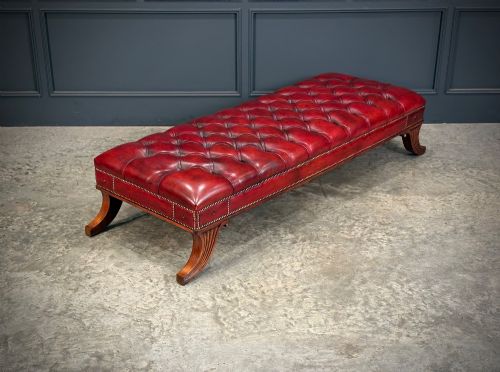
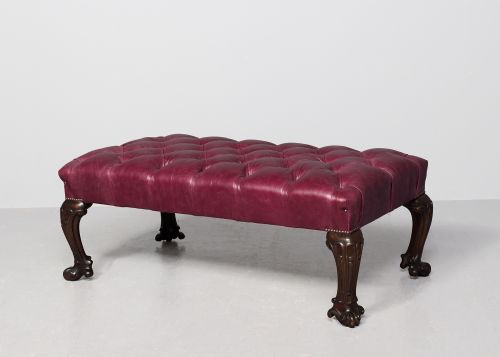
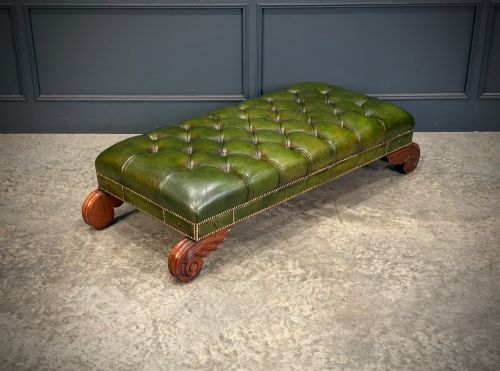
A chesterfield stool is a low upholstered seat designed for resting the feet or serving as an occasional ottoman in a library or drawing room. When you search for this phrase, you find pieces ranging from compact footstools to large country house centre stools.
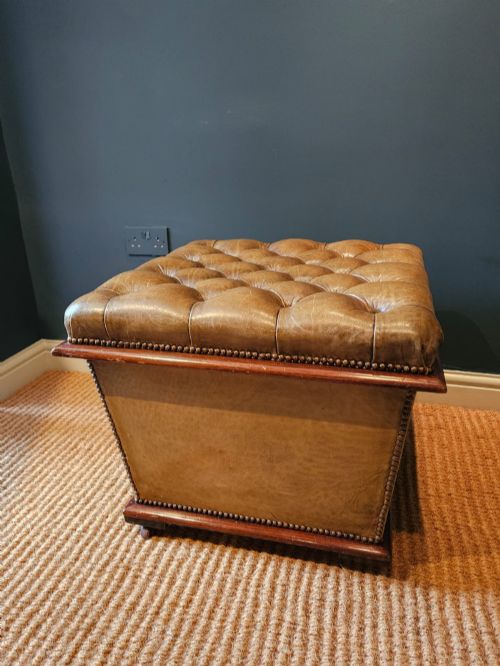
The versions you are most likely to meet on this page date from the nineteenth century and the Regency period, often featuring deep buttoning and traditional upholstery forms. They appear in formats such as square footstools, long window stools, and occasionally paired with armchairs.
Makers built these pieces using robust timber frames covered in hide, designed to withstand daily use while maintaining a formal appearance. Their low profiles and generous padding define the category across all listed examples.
Materials and Construction
The framework of a chesterfield stool relies on dense hardwoods such as mahogany, walnut, oak, and general hardwood to provide a sturdy foundation for heavy upholstery. Wood framers shaped these timbers into low bases, sturdy legs, and structural supports.
Upholsterers covered the frames in leather, hide, and oxblood leather, securing the material with brass studs and deep buttoning techniques. This combination of timber and pegged or nailed leather gave each piece its characteristic taut, dimpled surface.
Chesterfield Stool Retail Price Guide 2026
Typical asking prices for chesterfield stool among the pieces listed under this phrase on Sellingantiques today, from the lower quarter to the upper quarter. They describe what is for sale here now, not the wider market.
Listings span the nineteenth century, Victorian era, and Regency period, utilising leather, mahogany, walnut, oak, and brass.
Quality and Craftsmanship
Quality in a chesterfield stool rests on the selection of timber in the frame and the depth and regularity of the buttoning across the leather top. Finer examples utilise dense hardwoods like mahogany or walnut and precise hand-dyed hides.
The proportion of the piece and the finish of the brass detailing distinguish standard production from superior work. A well-executed stool balances a heavy timber frame with supple upholstery that retains its structure over decades.
The Chesterfield Stool Glossary
- Chesterfield
- A traditional style of upholstered furniture characterised by deep buttoning, rolled arms where applicable, and stud detailing. The term applies broadly to buttoned leather seating from the nineteenth century onwards.
- Buttoned leather
- An upholstery technique where leather is pulled tight and secured with recessed buttons to create a diamond pattern. This method adds structural tension and distinct visual texture to the top of the stool.
- Regency
- A design period spanning the early nineteenth century, known for classical influences and refined furniture proportions. Pieces from this era often feature lighter wood tones and elegant leg turnings.
- Centre stool
- A large freestanding upholstered seat designed to sit in the middle of a room rather than against a wall. These pieces offer access from all sides and provide generous proportions.
- Ottoman
- A padded seat or footstool without a back or arms, often used for lounging. In traditional settings, it serves a similar function to a large footstool.
Chesterfield Stool: Frequently Asked Questions
What is a chesterfield stool?
A chesterfield stool is a low, upholstered seat featuring buttoned leather and timber construction.
These pieces function primarily as footstools, ottomans, or occasional centre seating in traditional rooms.
How were nineteenth-century footstools used?
Nineteenth-century footstools provided foot support alongside armchairs or served as movable seating in libraries and drawing rooms.
Their sturdy hardwood frames and durable leather upholstery allowed them to endure heavy daily use in large country houses.
How do I identify a Regency style stool?
Regency style stools typically exhibit classical proportions, refined turnings, and specific period woodwork influences.
They reflect the design motifs popular during the early nineteenth century before the heavier Victorian aesthetic took hold.
What woods are found in these stools?
Makers constructed the internal frames using traditional hardwoods such as mahogany, walnut, oak, and general hardwood.
These dense timbers provided the structural strength required to support deep upholstery and heavy use.