



Cherub Wall Appliques
Cherub wall appliques bring sculptural illumination to interiors through cast metal and carved wood.
Cherub Wall Appliques
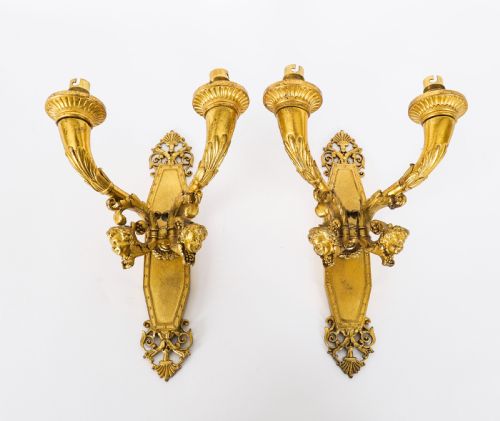
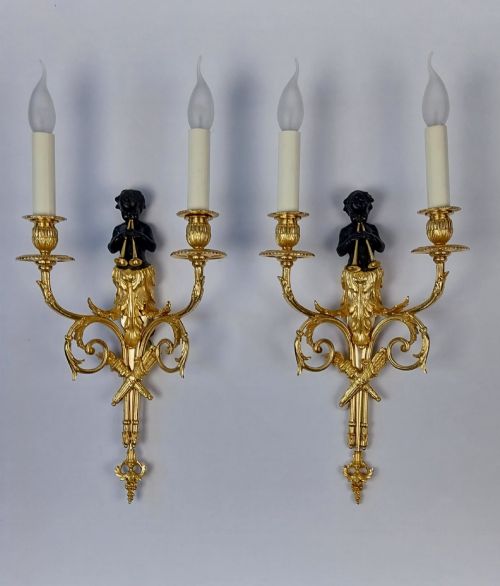
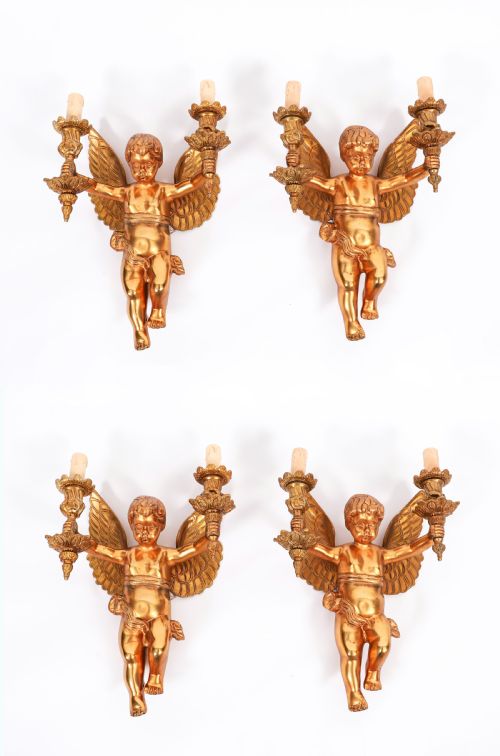
Cherub wall appliques combine figural putti with functional branch lighting or architectural support. These pieces emerge across the nineteenth and early twentieth centuries in forms such as twin arm sconces and carved wall brackets.
Formations range from elaborate gilt bronze and ormolu wall lights to carved giltwood iterations incorporating glass lustre elements. Architectural salvage pieces also appear, presenting moulded decorations such as putti moulded in leathermaché.
How they were made
Metal appliques rely on casting techniques using bronze, brass, and ormolu, often finished with fire gilding or dore surfaces. Gilt bronze and brass components are shaped into detailed cherub figures supporting multiple candle branches.
Wooden examples utilise carved giltwood and gesso applied over a timber base to create ornate relief ornamentation. Glass elements, including lustres, are integrated into early twentieth-century designs to enhance light reflection.
Cherub Wall Appliques Retail Price Guide 2026
Typical asking prices for cherub wall appliques among the pieces listed under this phrase on Sellingantiques today, from the lower quarter to the upper quarter. They describe what is for sale here now, not the wider market.
Materials span gilt bronze, brass, ormolu, giltwood, glass, wood, bronze, and gesso.
What varies in quality
Structural complexity influences standing, with multi-branch sconces and matched sets of four demonstrating higher ambition than single pairs of simple wall brackets. The integration of materials, such as combining carved giltwood with Murano glass, indicates sophisticated workshop output.
The Cherub Wall Appliques Glossary
- Ormolu
- Gilt bronze, specifically referring to a mercury gilding technique applied to cast bronze objects in the eighteenth and nineteenth centuries. This finish produces a deep, warm metallic lustre.
- Putto
- A plump, naked male child figure frequently depicted in classical art and architectural decoration. These figures form the central sculptural motif of cherub wall appliques.
- Giltwood
- Timber, commonly carved wood or gesso, coated with gold leaf or metallic paint. It provides a reflective, ornate surface typical of continental wall lights.
- Applique
- A decorative wall sconce or bracket designed to hold candles or electric lamps. The term frequently applies to continental lighting fixtures of the seventeenth to twentieth centuries.
- Lustre
- A glass pendant or drop suspended from lighting fixtures to refract candle or lamp illumination. These elements appear on twentieth-century wall lights.
Cherub Wall Appliques: Frequently Asked Questions
How do I date cherub wall appliques?
Dating relies on examining the casting techniques, material composition, and stylistic revival indicators present in the piece. Nineteenth-century examples often utilise heavy cast bronze or ormolu, whereas twentieth-century versions may incorporate glass lustres or distinct brass treatments.
Stylistic cues such as Louis XIV revival or Italian Baroque also point towards specific manufacturing eras. Comparing the hardware, fixings, and wear patterns helps narrow down the period of production.
Were these originally wired for electricity?
Almost all antique cherub wall appliques were originally designed to hold candles rather than electric bulbs. The branch configurations and drip pans reflect nineteenth-century and earlier lighting requirements.
Contemporary installations usually involve professional rewiring to safely accommodate modern electrical fittings. Careful conversion preserves the original cast metal or carved wooden structure.
How should I hang heavy wall lights?
Mounting heavy gilt bronze, brass, or carved giltwood appliques requires securing them directly into solid wall studs or using heavy-duty wall anchors. The weight distribution across twin arm branches means proper load-bearing support is essential.
Consulting a professional installer ensures the architectural salvage or wall bracket remains secure. This prevents strain on both the plaster and the antique metalwork.
What is the difference between an applique and a sconce?
Both terms generally describe wall-mounted lighting fixtures designed to project illumination into a room. Applique is often used in a continental context, particularly for French and Italian pieces.
Sconce is the more common English term for the same functional wall light. In practice, dealers use both words interchangeably for cherub wall lighting.