




Cherub Bronze Mantel Clock
A cherub bronze mantel clock combines classical foundry work with functional timekeeping, bringing nineteenth-century French ormolu and marble into domestic rooms.
Cherub Bronze Mantel Clock
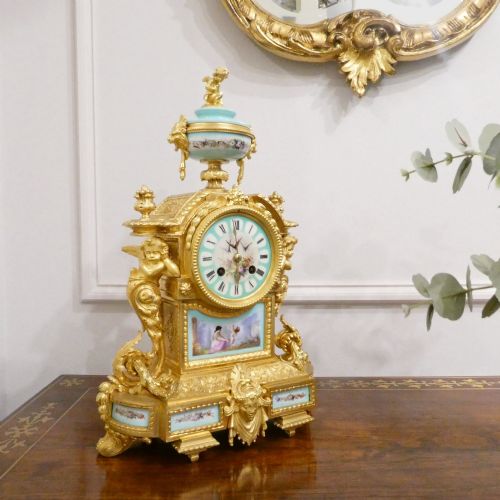
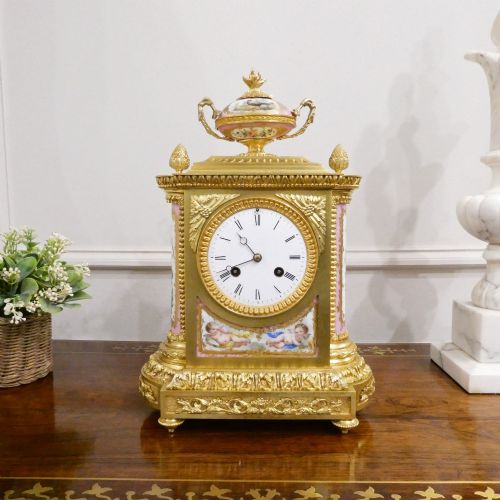
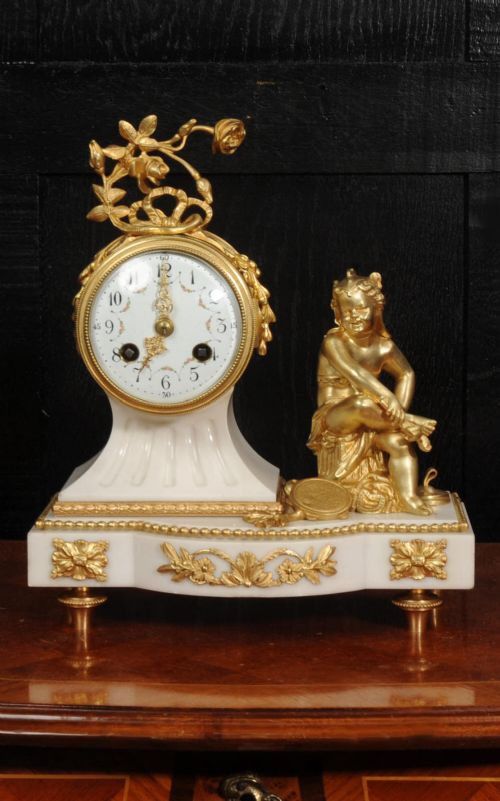
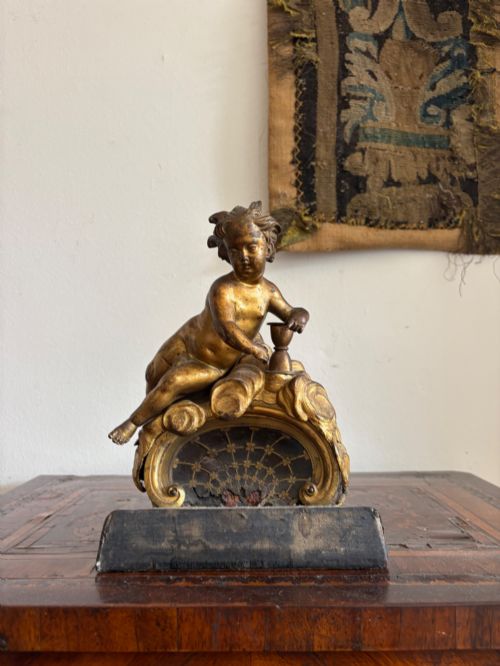
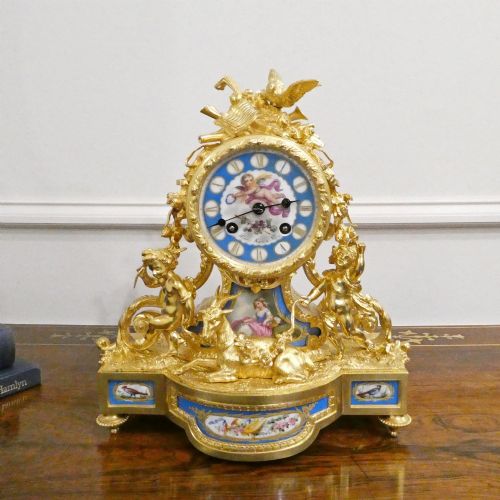
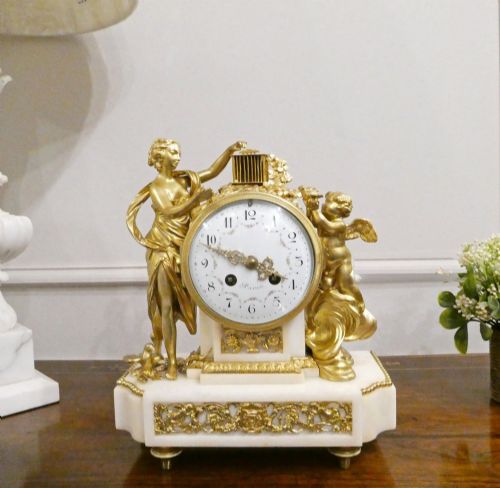
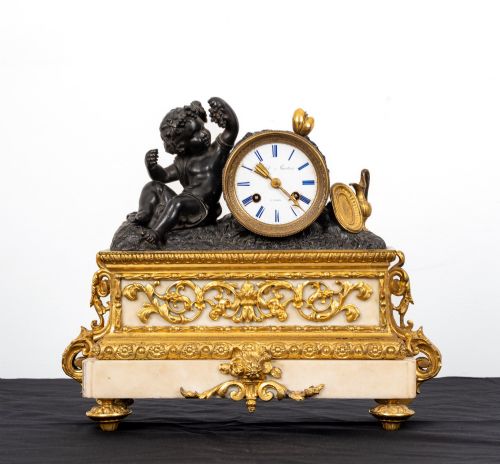
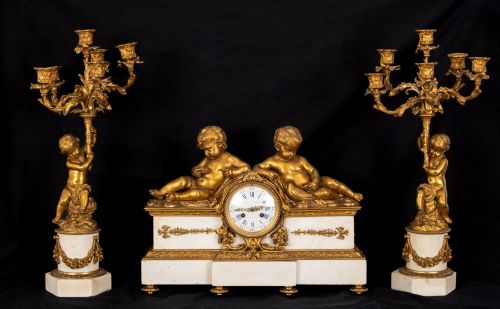
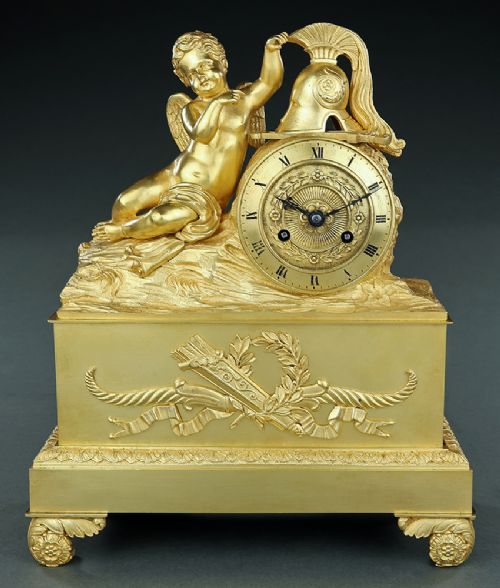
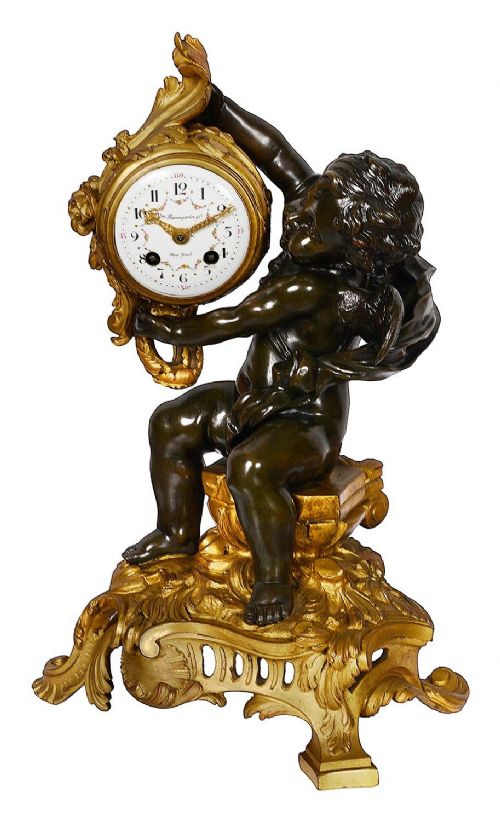
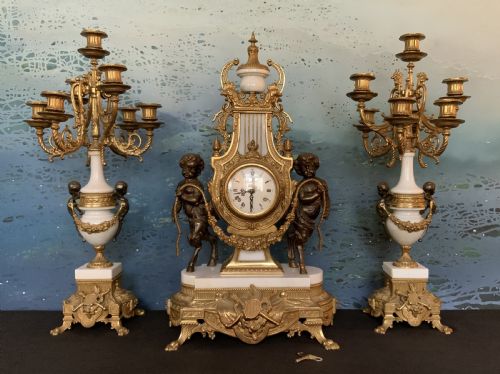
When you search for a cherub bronze mantel clock, you are looking at nineteenth-century French horology featuring figural putti cast in bronze or ormolu. These domestic timepieces range from single mantel clocks to three-piece garniture sets complete with matching candelabras.
The objects frequently combine cast metal figures with contrasting white marble, onyx, or hand-painted porcelain panels. Styles lean heavily into French Rococo Revival, Louis XVI, and Empire aesthetics, reflecting the decorative tastes of the Victorian period.
Most examples originate from French workshops and Parisian makers active during the 1800s. They sit on mantelpieces, consoles, and tabletops, functioning as both decorative centrepieces and working mechanical clocks.
How they were made
Makers constructed these clocks using bronze cast through the lost-wax or sand-casting method, often finishing the surface with mercury gilding to create bright ormolu. This metalwork was then combined with polished white marble or black marble plinths.
Clock faces incorporated vitreous enamel painted with Roman or Arabic numerals, sometimes set within Sevres-style porcelain panels decorated with hand-painted scenes. Mechanical movements were housed behind glazed bezels, driven by spring-wound or eight-day striking trains.
Listings feature periods spanning from the late eighteenth century through the nineteenth century, including Victorian and Regency eras.
What varies in quality
The integration of materials dictates the overall standard. Superior pieces unite fine marble bases, hand-painted porcelain dials, and signed movements from established Parisian clockmakers, maintaining harmonious proportions across garniture sets.
Jean-Baptiste Delettrez·Henry Marc·Japy Freres·Henry Dasson·Leon Message·Samuel Marti·Achille Brocot
The Cherub Bronze Mantel Clock Glossary
- Ormolu
- Gilt bronze produced by applying a mercury and gold amalgam to a bronze base and heating it. This technique creates a durable golden finish characteristic of nineteenth-century French decorative arts.
- Garniture
- A set of matching decorative objects designed to be displayed together on a mantelpiece. These typically consist of a central clock flanked by two matching candelabras or urns.
- Putto
- A plump, naked male child figure frequently depicted in classical art and sculpture. In these clocks, putti appear cast in bronze or ormolu acting as finials or supporting the clock case.
- Movement
- The internal mechanical mechanism that drives the clock hands and strikes the hours. Nineteenth-century French clocks commonly utilise brass eight-day spring-driven movements.
- Sevres
- Porcelain produced by the royal French manufactory or painted in that distinct decorative style. These panels feature cobalt blue grounds and hand-painted pastoral scenes set into the clock front.
Cherub Bronze Mantel Clock: Frequently Asked Questions
What is a cherub bronze mantel clock?
A cherub bronze mantel clock is a nineteenth-century timepiece featuring cast bronze or ormolu figures of putti integrated into the clock case or garniture set.
These pieces typically originate from French workshops and incorporate materials like marble, porcelain, and enamel dials.
How do garniture sets work?
Garniture sets consist of a central mantel clock accompanied by matching side pieces such as candelabras or decorative vases.
They were designed to create a balanced symmetrical display across a fireplace mantel or console table.
How do I wind the clock?
Most nineteenth-century French clocks utilise a key-wound mechanical movement accessed through holes on the enamel dial.
Turning the key winds the internal springs that power the timekeeping and striking trains over an eight-day period.
Where were these clocks made?
The vast majority of these timepieces were manufactured in France during the nineteenth century, particularly in Paris.
Prominent workshops and individual makers produced the movements and bronze castings, often retailing them through high-end horological houses.